
by Beth Trimarco

If your social media feed is suddenly full of bean bowls, chia pudding, and towering salads, you’re not imagining it. Fibermaxxing — the idea that loading up on fiber is the key to better health — is the latest viral nutrition trend. Influencers are dubbing it ‘the protein of 2026,’ sparking conversations around the significance of dietary fiber.
Angie Kalousek Ebrahimi, a certified nutrition coach and the senior director of lifestyle medicine at Blue Shield of California, sees the growing interest in fiber as a positive development. However, she cautions against leaning too heavily on any single nutrient. “I’m old enough to remember the carb-loading era,” Ebrahimi remarked. “People piled their plates with pasta under the assumption that more carbs equaled more energy. It sounds absurd today. No nutrient works in isolation; fiber is essential, but it doesn’t operate alone.”
What Exactly is Fiber?
Traditionally referred to as roughage by our grandmothers, fiber is a type of carbohydrate found in plant foods that the body does not completely digest. It plays a supportive role in gut health, aids in regulating blood sugar levels, helps lower cholesterol, and promotes feelings of fullness. We actually need both soluble and insoluble fiber in our diets. Soluble fiber helps with blood sugar and cholesterol management, while insoluble fiber is crucial for healthy digestion and regularity. The UCSF Health recommends a daily intake of 25-30 grams; however, most Americans are only consuming an average of 15 grams.
“Fiber works best when it’s part of a larger nutritional conversation,” said Ebrahimi. “It should not crowd out other nutrients; it needs to work alongside them.”
Getting Real About Health Trends
In today’s age of constant optimization, it’s tempting to chase after the latest wellness trend. Yet, the spotlight on single nutrients can swing too far. A balanced diet composed of protein, fiber, and various food groups is crucial for sustaining health and energy. “Your body needs a team, not a single star player,” Ebrahimi remarked. “By balancing your macronutrients, you will experience more energy, fewer crashes, and reduced feelings of hunger.”
Kalousek Ebrahimi’s approach to achieving adequate fiber intake is refreshingly simple and sustainable: aim for six to eight servings of fruits and vegetables each day to naturally meet the recommended fiber intake—no tracking necessary. Her advice includes seamlessly incorporating fiber-rich foods into meals you love, such as adding beans or lentils to soups and salads, opting for whole grains, or tossing extra vegetables into stir-fries and casseroles.
Those considering a drastic increase in fiber consumption should heed a word of caution: take it slowly. “Your gut microbiome needs time to adapt. If you jump from a low-fiber to a high-fiber diet overnight, your gut will indeed make itself heard,” she said, emphasizing that excessive intake beyond 35 grams a day doesn’t provide any additional benefits.
The bottom line? While fiber deserves its moment in the limelight, it should not come at the expense of a balanced approach to nutrition. Trends can be fleeting, yet a steadfast commitment to varied and balanced eating paves the way for lasting wellness. Focusing on protein, fiber, and nutrient-rich foods collectively will empower you to support long-term health rather than merely riding the wave of the latest viral moment.
For more nutrition tools, recipes, and lifestyle support, available at no additional cost to most Blue Shield members, visit our digital lifestyle-medicine platform, Wellvolution.
Angie’s Recipe for Lentil and Potato Stew — with a Twist
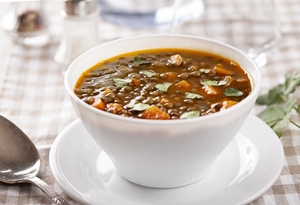
Embrace the flavors of winter with a Ginger Sweet Potato and Coconut Milk Stew featuring kale and lentils. This hearty dish is packed with fiber and micronutrients, establishing itself as a nourishing, flavorful meal for cold days.
Ingredients
- 1 TBSP coconut oil
- 1 medium yellow onion (diced)
- 1/2-1 tsp dried chili flakes
- 1/2 tsp ground coriander
- 1/2 tsp ground cumin
- 1/2 tsp ground turmeric
- 2-inch piece fresh ginger, peeled and minced
- 3 cloves garlic, peeled and minced
- Salt and ground black pepper, to taste
- 1.5 lbs sweet potatoes, peeled and diced into 1-inch pieces
- 1/2 cup dry brown lentils, picked over
- 4 cups vegetable stock
- 13.5 oz can full-fat coconut milk
- 1 bunch kale, stems removed and leaves chopped (about 4 packed cups)
- Chopped cilantro, extra chili flakes, lime wedges, and/or nigella seeds for garnish
Instructions
- Heat a large, heavy-bottomed soup pot over medium heat.
- Add coconut oil to the pot and allow it to melt.
- Add diced onions and sauté until translucent and soft (about 5 minutes).
- Add chili flakes, coriander, cumin, and turmeric; sauté until fragrant (about 1 minute).
- Add the minced ginger and garlic and cook for another minute.
- Season with salt and pepper to taste.
- Add sweet potatoes and lentils, stirring to coat them in the spices.
- Pour in the vegetable stock, stirring to scrape up any browned bits from the pot.
- Season liberally with salt and pepper.
- Cover the pot and bring the mixture to a boil.
- Once boiling, reduce the heat and simmer until sweet potatoes are tender (about 30 minutes).
- Stir in the coconut milk and kale, cooking until the kale is wilted and bright green (about 3-4 minutes).
- Bring back to a strong simmer and taste; adjust seasoning as desired.
- Serve hot, garnished with cilantro, additional chili flakes, and lime wedges.
- Ready in about an hour!
Recipe Notes
- The natural sweetness of coconut milk and sweet potatoes can be balanced with your choice of dried chili for spice.
- Chard or mustard greens can serve as excellent substitutes for kale.
- For additional protein, consider adding chicken or tofu.