Imagine yourself at your favorite band’s concert in a packed arena. The stage transforms into a vibrant spectacle, with colors exploding through the air, perfectly synchronizing with each thundering drumbeat that sends ripples through the crowd. Now, think about the last small show you attended—maybe the lighting was just okay, switching occasionally from red to blue. Same energy and songs, yet the intimate venue felt visually stagnant. The culprit? It’s often the absence of moving lights.
In this article, we will unravel the intricate world of lighting design for live performances. From the birth of moving lights to the essential trio of wash, beam, and spot lights that create a powerful visual narrative, we’ll explore how to elevate a mid-budget gig to an awe-inspiring event. We’ll investigate the technologies that make it happen, offer insights into costs, and bring attention to the challenges faced by smaller venues. So, let’s delve into the vibrant universe of concert lighting!
Assessing the Concert Wow Factor
When we talk about “concert wow factor,” several key elements transform the stage from mundane to magical:
- Visual punch: The impact of how sharply beams cut through the air (and haze).
- Color coverage: Uniformity in color plating the room versus being stuck in a monotonous hue.
- Movement dynamics: The fluidity of pans, tilts, and synchronized light sweeps that reflect the music’s pulse.
- Beam visibility: Whether you can see the path of the light or merely a dot on the back wall.
- Scalability: The capability of the rig to adapt gracefully to both intimate clubs and sprawling festival stages.
Tracing the Origins of Moving Lights
On September 25, 1981, the evolution of concert lighting blossomed during Genesis’s ABACAB tour in Barcelona. Prior to this date, most rock shows relied on fixed lights—rows of PAR cans and a few follow spots, which did the heavy lifting. But within the iconic Plaza de Toros Monumental, a profound transformation occurred. The introduction of 50 prototype Vari-Lite VL1 fixtures created an unprecedented visual experience that stunned audiences and lighting professionals alike.
Rusty Brutsche, co-founder of Vari-Lite, recounted the thrill of witnessing these lights moving in unison, igniting inspiration that rippled through the industry. The ability to choreograph lights similar to dancer movements hadn’t been envisioned until then. Thus began a flurry of innovation among competing manufacturers, equipping designers with tools to mold light into expressive art.
The Triad of Moving Heads: Wash, Beam, and Spot
As you peer behind a festival performance stage, you’ll likely spot a myriad of moving heads. While they may share the same overarching purpose, each type brings a unique flair to the visual tapestry of a concert. The harmonious interplay of wash, beam, and spot heads creates an immersive experience that captivates the audience.
Wash: The Emotional Canvas
Wash moving heads are designed with wide-angle lenses and numerous LEDs, allowing them to cast soft, even spreads of light across the stage. Unlike sharper lights, they create a gentle environment, blanketing the space in slowly shifting colors.
- Ideal for: Crafting ambient color transitions that enhance the stage environment.
- Less effective for: Creating piercing aerial beams that reach through haze.
Think of wash lights as the emotional undercurrent in a film scene—subtle yet crucial to the overall narrative.
Beam: The Showstopper
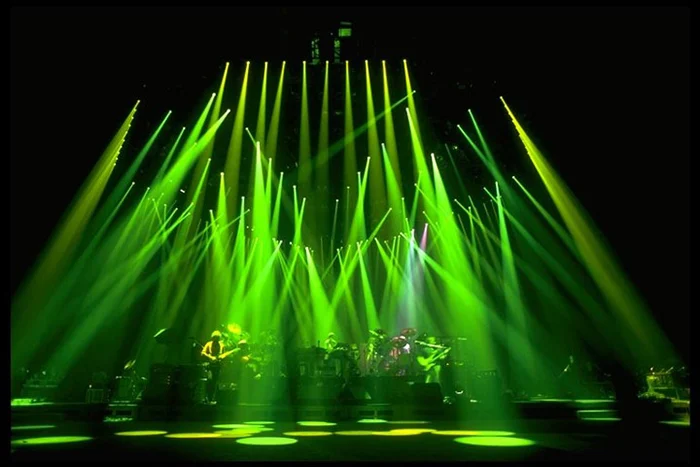
Beam moving heads are the attention-grabbers of the lineup, projecting ultra-narrow, concentrated beams of light that slice through air and haze. Their ability to create dramatic visuals—those swooping columns of light you often see over crowds—has made them a staple at festivals and large gigs.
- Perfect for: Bright, intense beam effects that create depth and excitement.
- Less suited for: Illuminating specific performers; the spotlight category takes that role.
Imagine those beams without haze. They would resemble nothing more than a wandering flashlight beam instead of the awe-inspiring effect we associate with top-tier productions.
Spot: The Versatile Artisan
Spot moving heads excel at producing a focused, adjustable cone of light, equipped with features like gobo and color wheels. This versatility enables them to display intricate patterns, logos, or even textured projections like simulated rain.
- Best for: Highlighting lead performers, generating versatile mid-air visuals.
- Less ideal for: Massive aerial sweeps where beam lights outperform.
When these three types intertwine, they create the engaging atmosphere of headline performance slots: deep, colorful washes carpeting the stage, razor-sharp beams reaching skyward, and spotlights precisely illuminating solo acts.
The Unseen Essentials: Haze and DMX
A little-known secret within concert lighting is that haze is crucial for visibility of light beams. This ultra-fine mist hangs in the air, rendering the light rays visible without turning the venue into a foggy realm. Haze forms the backbone of stunning concert visuals, as NLfx Professional indicates, defining the atmosphere without overwhelming the audience.
Furthermore, the orchestration of moving lights relies heavily on DMX, a digital protocol ensuring seamless communication between the lighting console and the moving heads. It allows operators to command every fixture’s pan, tilt, color selection, and strobing in perfect synchrony—essentially turning the lighting designer into a silent conductor orchestrating a captivating visual symphony.
Why Smaller Venues Lag Behind
Let’s dive into the financial aspect. According to Primal Sounds’ 2026 Stage Lighting Rental Cost guide, festival lighting budgets span from $3,000 to over $10,000 per stage per day, while smaller venues operate within the $1,500 to $4,000 range. A single professional moving head rental may range from $100 to $300 daily, whereas a basic LED PAR can costs around $20–$40.
This stark contrast explains why the lighting setups at your favorite local bar may lack ambition. It’s not a question of artistic vision but rather financial feasibility.
For example, a festival stage might deploy 8 to 12 beam moving heads combined with dozens of wash and spot lights. In contrast, a small venue typically operates with 4 to 6 beam heads and fewer washes. This isn’t purely about quantity but the density and richness of the visual effects.
The good news? LED fixture prices have dropped by 12% since 2023, with increased color accuracy now attaining 95+ CRI. This means a single LED unit can accomplish what formerly required multiple halogen fixtures, creating savings in both budget and logistical concerns.
Smaller venues are beginning to enjoy the fruits of these advancements. Companies such as SHEHDS are producing budget-friendly moving head lights that introduce basic aerial effects to budgets that might previously have been excluded from such technology—albeit with compromises in noise and long-term dependability.
Local Lighting Innovations: Charleston’s Revival
You don’t have to travel far to witness this lighting evolution firsthand. In Charleston, for example, The Riviera Theater recently underwent significant lighting upgrades, blending modern technology into a historic ambiance. Events like Kulture Klash, showcasing immersive soundscapes alongside lights, lasers, and projections, transform vast indoor spaces into dynamic playgrounds of visual delight.
This local revival mirrors broader trends; concerts captured over 36% of the programmable stage lighting market in 2024, with festivals representing the fastest-growing expenditure segment, demonstrating that concert-quality lighting is infiltrating every facet of the live music landscape.
Understanding the Limits: More Lights, Not Always Better
Before dreamily envisioning a world where you can unleash a stadium rig in your basement, a reality check is in order. Lighting should serve as an artistic tool, not a crutch. A poorly designed show overwhelmed by fifty moving heads can distract from the performance rather than elevate it.
Some of the most compelling performances rely on simplicity—a lone spotlight capturing the essence of an acoustic performance in almost complete darkness can have a greater emotional impact than any high-energy light show.
Budget gear comes with its own challenges. While certainly effective for smaller venues or personal DJ setups, low-cost fixtures may lack the refined precision of professional touring equipment.
There’s also an environmental aspect to consider. Yes, LEDs are more energy-efficient compared to traditional halogen lights and boast impressive lifespans. However, the cumulative energy demand at large festivals remains substantial.
The objective is not to overshadow other performances with flashy equipment; instead, it’s about matching the visual intensity with the emotional flow of music. A well-curated light show tailored to the music’s essence will always resonate more than a cluttered spectacle fueled by resources.
The Choreography Behind Concert Lighting
The exhilarating visual experiences you encounter during those brilliant concerts aren’t the result of chance; they’re the product of meticulously planned designs. Wash, beam, and spot lights swing in tandem, set under a delicate haze, all responding harmoniously to a lighting console that orchestrates the entire visual landscape.
On your next night out at a show, be mindful of the skilled choices being made by lighting designers: the subtle color washes that swell during intimate ballads, the piercing beams that shimmer in excitement at musical climaxes, and the focused spot that zeros in on the charismatic front-person while shadows dance around them.
While the gap between club lighting and arena setups might linger, the decline in LED prices and the accessibility of innovative equipment signal promising change. Every breathtaking festival moment connects back to that pivotal night in 1981 when the world first witnessed moving lights in unison, igniting the imaginations of generations of performers and designers. The reverberations of that moment continue to shape our concert experiences today.
- Assessing the Concert Wow Factor
- Tracing the Origins of Moving Lights
- The Triad of Moving Heads: Wash, Beam, and Spot
- The Unseen Essentials: Haze and DMX
- Why Smaller Venues Lag Behind
- Local Lighting Innovations: Charleston’s Revival
- Understanding the Limits: More Lights, Not Always Better
- The Choreography Behind Concert Lighting