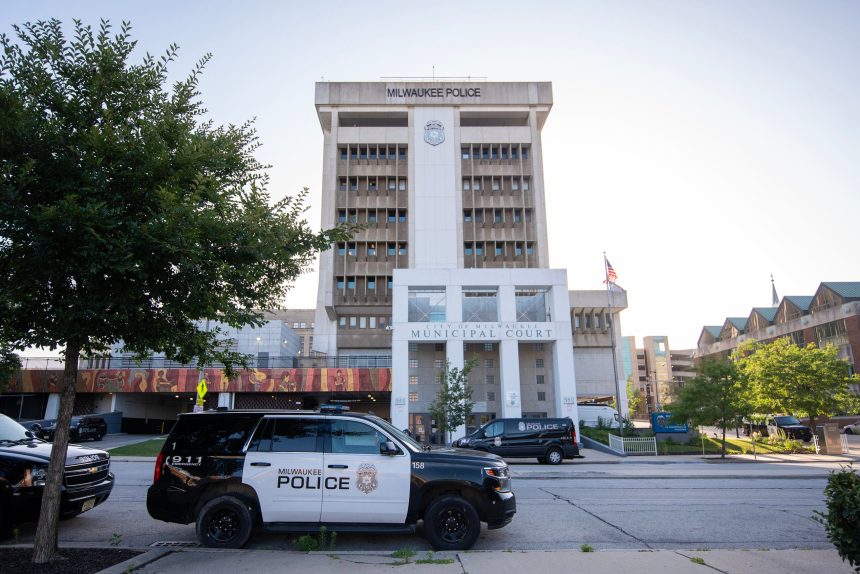
Facial recognition technology is making headlines as a potential “game changer” for police forces across the country. With its promise to identify crime suspects more efficiently, departments like the Milwaukee Police Department are examining its integration into their strategies. However, this growing reliance on technology is accompanied by a chorus of concerns regarding bias, civil liberties, and the fundamental trust between law enforcement and the communities they serve.
Nadiyah Johnson, the CEO and Founder of Milwaukee’s Jet Constellations and its social impact branch, the Milky Way Tech Hub, has emerged as a vocal critic of the technology’s application in policing. In a recent interview with Wisconsin Public Radio’s “Wisconsin Today,” Johnson highlighted that facial recognition systems often exhibit high rates of false positives, particularly affecting young people, women, and people of color due to underrepresentation in the databases on which these systems are trained.
“The issue is not about functionality as much as the bias risks, due process, and public trust,” Johnson stated. She emphasized that the reliance on such technology could undermine the very trust that is essential for effective policing. Her concerns extend beyond accuracy; they touch on the potential for misuse by law enforcement agencies, highlighting the critical need for transparency and stringent safeguards in the adoption of this technology.
During a Fire and Police Commission meeting in Milwaukee on February 5, Johnson was one of over two dozen community members who expressed their apprehensions about the use of facial recognition technology. Attendees voiced their fears about the implications of deploying such tools without a clear understanding of their impact on privacy and civil rights.
Milwaukee Police Chief of Staff Heather Hough addressed the committee, revealing that the department had already been using facial recognition on a limited basis before current Police Chief Jeffrey Norman took office in 2021. She clarified that the technology was employed primarily as an investigative tool designed to generate leads in violent felony cases, rather than as the sole basis for arrests.
Following significant public outcry and the concerns expressed by community members, Chief Norman announced a moratorium on the department’s use of facial recognition until a formal policy could be established. “Despite our belief that this is useful technology to assist in generating leads for apprehending violent criminals, we recognize that the public trust is far more valuable,” a spokesman for the Milwaukee Police Department stated, reinforcing their commitment to work collaboratively with the community to develop a comprehensive policy.
However, the Milwaukee Police Association, representing the city’s police officers, voiced its disappointment in the decision to pause the use of facial recognition technology. The association indicated that while they support transparency and community input in policy development, removing critical tools completely would undermine law enforcement’s ability to ensure public safety. Their statement reflects the tension between technological advancement and the community’s concerns over accountability and oversight.
Milwaukee’s deliberations are not occurring in isolation. The Milwaukee County Sheriff’s Office has revealed plans to enter into a contract with Biometrica for facial recognition software, indicating that there is a broader interest in the technology within law enforcement circles in the region. This move sparks discussions around the ethical implications and operational practices surrounding its use among various departments.
Balancing public safety and individual rights is a challenging task facing law enforcement leaders. Patrick Solar, a criminal justice professor at the University of Wisconsin-Platteville and a former police chief, asserts that while the potential for enhanced public safety is significant, it must be weighed against the risk of misuse of such technology. “We can adopt policies, procedures, and guidelines to dramatically limit the chance of the software being misused,” Solar remarked, advocating for transparency in the formulation of operating procedures for any technology used in policing.
Rise of Facial Recognition Technology

As facial recognition technology becomes increasingly commonplace in law enforcement, experts note that there is a burgeoning market for related software. Derek Riley, a computer science professor and program director at the Milwaukee School of Engineering, noted that many police departments have already adopted this technology, with some leaders surprised that Milwaukee’s deliberations are just now coming to light. He explained that advancements in facial recognition systems enable them to learn from larger databases of faces, improving their predictive capabilities.
However, Riley cautioned that issues such as bias and false positives frequently arise when these systems are deployed in real-world environments, which can vary significantly from the controlled conditions in which they are trained. “The risk here is that you trust it in the wild in these uncontrolled conditions the same way that you trust it under controlled conditions,” he warned. This discrepancy emphasizes the necessity for careful monitoring and tailored guidelines that govern the use of such technology in policing.
Riley also highlighted the everyday exposure most citizens have to facial recognition technologies, whether it’s through smart doorbells or ubiquitous cell phone cameras. While he stresses that the general population need not be overly concerned about nefarious uses of their facial data, the widespread availability of these tools brings with it significant privacy challenges that must be addressed. “You just have to go into this expecting your face and images are going to be out there,” he said, underlining the complexity of navigating the implications this technology has on privacy and societal norms.