
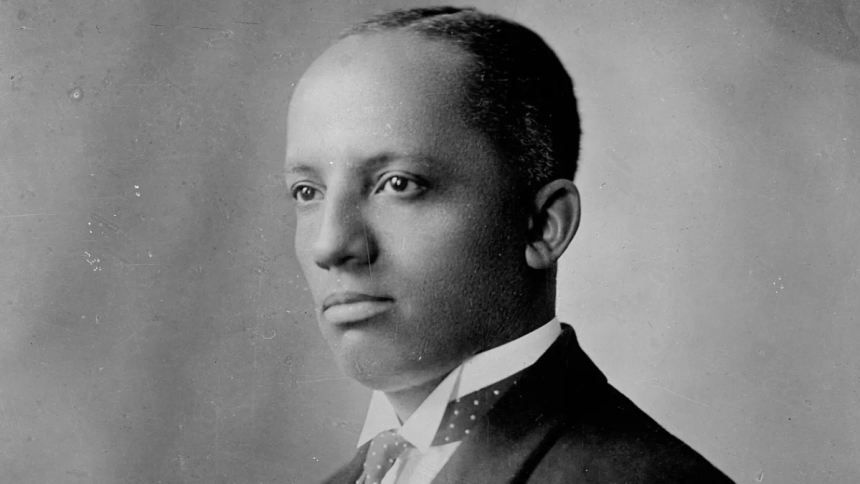
Understanding the Legacy of Carter G. Woodson Through the Lens of Technology Policy: A Dialogue with Danielle A. Davis Canty, Esq.
In the vibrant arena of technology policy, Danielle A. Davis Canty, Esq., shines as a pivotal voice advocating for equity and justice in the digital age. As the director of technology policy at the Joint Center for Political and Economic Studies and the host of The Miseducation of Technology Podcast, Canty draws inspiration from the historical contributions of Carter G. Woodson, a figure foundational to Black History Month. Woodson’s vision for education and his keen insights into the systemic misrepresentation of Black narratives resonate profoundly in today’s discussions surrounding technology and its societal implications.
The Blueprint of Black History Month
Carter G. Woodson was an unwavering advocate for the reformation of education as it pertained to Black identities and histories. In 1926, he initiated Negro History Week in response to the prevalent misrepresentation in educational curricula that sidelined Black contributions and perpetuated notions of inferiority. He sought to rectify this imbalance by championing Black narratives as essential to the American historical landscape.
In his seminal work, The Mis-Education of the Negro, Woodson elucidates how educational systems can distort understanding, teaching individuals to accept biased interpretations of history as truths. This miseducation—rooted deeply in systemic exclusion—encourages a normative acceptance of racial hierarchies and cultural misconceptions that can reverberate through generations.
The Parallels to Technology Policy
Drawing from Woodson’s legacy, Danielle Canty interrogates the narratives surrounding technology today. She argues that similar miseducational structures prevail in how we engage with and understand digital systems. In her view, the dominant discourse perpetuates the notion that technology is inherently neutral, undermining the human choices behind design, implementation, and regulation.
“Digital systems are routinely presented as impartial,” she states, “while the reality is that they often reflect the biases of their creators.” The implications of this miseducation are profound, as they shape public perception and policy decisions that affect marginalized communities.
Miseducation in Tech Discourse
Just as Woodson uncovered the mechanisms of miseducation in traditional schooling, Canty identifies recurring themes in technology discourse. She notes that when digital systems fail, the conversations typically center on technical flaws—bugs or scaling issues—rather than accountability or the underlying biases built into the systems themselves.
In this context, Canty emphasizes that the framing of technology failures often obscures the deliberate choices made in its design. This mirrors Woodson’s findings that societal imbalances are not merely accidental; they are the culmination of choices made by those in power, often operating under the guise of neutrality.
Consequences for Black Communities
For Black communities, the ramifications of this miseducation are stark and tangible. As Canty highlights, technologies such as facial recognition have disproportionately targeted Black neighborhoods, resulting in a surge of wrongful identifications and arrests. Automated decision-making processes in hiring, credit, and healthcare systems have perpetuated existing disparities, masquerading as objective assessments while systematically disadvantaging marginalized groups.
Canty argues that these outcomes, often dismissed as unintended errors, underscore a critical point articulated by Woodson: when the design and governance of systems happen without the involvement of those most affected, inequity becomes an expected, rather than incidental, result.
The Challenge Ahead
Revisiting Woodson’s work prompts a broader inquiry into the structures that sustain today’s technological inequality. Canty articulates a profound conviction: “We do not need to accept the miseducation of technology or its outcomes.” This conviction is succinctly captured in the ethos of her podcast, The Miseducation of Technology, where she aims to dissect and challenge mainstream narratives.
By analyzing the intersections of technology and society, Canty seeks to empower her audience to recognize the complexities of digital systems and to question the accepted norms of technology discourse. She encourages a critical examination of whose voices are amplified in these discussions and whose experiences are deemed legitimate.
A Call to Action
In homage to Woodson, Canty’s work stands as a clarion call; it invites us to engage actively in reshaping our understanding of technology and its place in society. Just as Woodson once resisted the miseducation of his time, we too are challenged to resist complacency in our own era. The work of critically examining and understanding technology—its implications, its biases, and its governance—is an ongoing endeavor that requires vigilance and commitment.
As we approach discussions surrounding Black history and its contributions, it is essential to carry forward Woodson’s legacy and Canty’s insights into the technology landscape. By doing so, we can ensure that narratives are inclusive, equitable, and reflective of the diverse experiences that shape our society today.