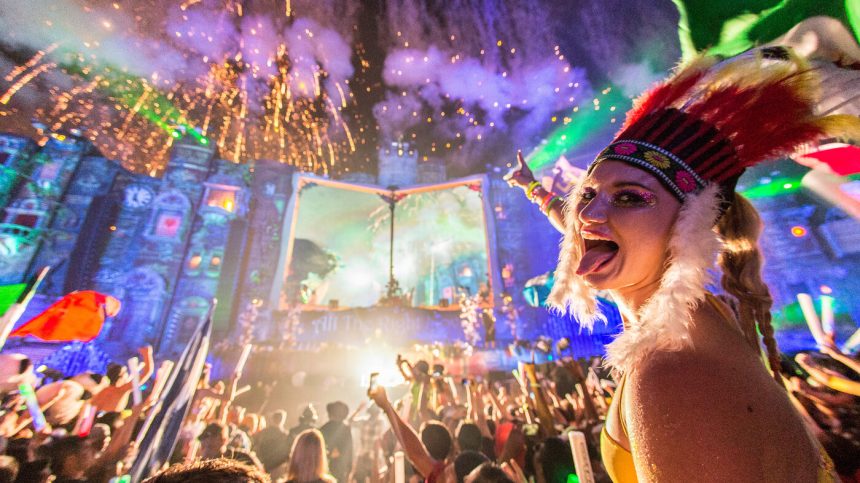

An attendee during the TomorrowWorld Electronic Music Festival on September 29, 2013 in Chattahoochee Hills, Georgia.
Christopher Polk/Getty Images
toggle caption
Christopher Polk/Getty Images
As electronic dance music (EDM) surged into mainstream recognition in the early 2010s, festivals began transforming into massive spectacles celebrated worldwide. Artists like Avicii, Deadmau5, and Skrillex became household names, and the industry flourished, raking in billions. By 2015, EDM had an estimated global value of around $6.9 billion, but a notable shift in the cultural landscape was brewing.
The saga of EDM’s rise and subsequent decline began to be documented vividly around 2015, as critics began to declare the genre “over.” One of the early critiques came from Britt Julious in a piece published in Chicago Magazine, claiming that Lollapalooza’s dance stage was transitioning from the energetic, raucous sounds of EDM to a more subdued style. The festival once celebrated for its thumping beats began to favor the smoother sub-genres. This marked a pivotal moment: if EDM had lost its dominance at such a significant festival, what did that signify for the genre’s future?
Julious’s argument was bolstered by the observation that Chicago’s Wavefront Music Festival, previously inclusive of EDM, had seen a transition to the Mamby on the Beach festival, which focused on electronic music but consciously aimed to sidestep the EDM label entirely. This indicated a transformation in audience preferences and a possible correction in the festival culture itself.
The letters “EDM” had taken on a particular connotation, distinct from a mere abbreviation for electronic dance music. As Mixmag pointed out in 2015, EDM was more than just a genre; it encompassed a moment in music history—marked by its commercial success, festival culture, and crowd engagement, essentially stating: “EDM means the drop-heavy, stadium-filling, fist-pumping sound directed by Michael Bay.” This broad description visually captures the atmosphere at festivals and the elaborate experiences created for large audiences.
As the year unfolded, the dangers lurking within massive events became starkly evident. The 2015 TomorrowWorld exemplified this shift, transforming from a celebrated gathering to an utter chaos as a storm led to disarray. Numerous festival-goers found themselves stranded amid poor organization and mismanagement, with reports emerging of attendees sleeping on cars or folding tables as they waited for assistance.
TomorrowWorld’s failure ushered in wider reflections on the EDM culture itself. That chaotic weekend revealed the shortcomings within the industry, exposing the challenges of managing enormous crowds, with attendees facing shelter, bathroom, and transportation issues. Critiques emerged on social media, with Vice detailing the event as an “Epic Disaster of Near-Riots and Looming Lawsuits.”
Amidst these troubling revelations, history reminds us that EDM was once the pulsating heart of the musical zeitgeist. As Rob Light expressed at the 2013 EDMBiz conference, the shift towards technology-rich experiences mirrored the seismic changes seen in past decades, akin to the Beatles and their transformative U.S. television debut. EDM was branding itself as a generational movement, aiming at a young audience increasingly disenchanted with mainstream music consumption.
The emergence of streaming platforms and social media reshaped the landscape, granting artists unprecedented exposure while dismantling the monopolistic hold that traditional music labels had on young artists. These changes meant that the term “EDM” could swiftly transition into a buzzword, a casualty of its past as it quickly morphed into a marketing tool.
Despite the rapid rise, the pressures surrounding the dominance of EDM began to foster a backlash. There was a growing recognition that while EDM dominated the charts, many within the underground music scene felt alienated. The commercial nature of EDM festivals began creating a schism in the community, as some saw their culture diluted to satisfy the demands of large corporations and consumer bases.
This disenfranchisement was made more pronounced by incidents of cultural appropriation, particularly at festivals. Attendees donned clichéd costumes, often including insensitive appropriations of cultural symbols, leading to stark critiques from various communities striving for representation. This atmosphere fostered a push for more inclusive and diverse spaces within electronic music, transitioning that entitlement to shared cultural experiences into a more equitable reality.
The ongoing evolution of the EDM landscape opened the door for a resurgence of smaller, intimate events that prioritize quality over quantity. Instead of colossal crowds, indie festivals emerged with engaging line-ups featuring emerging artists, facilitating an atmosphere that focused on community rather than mere spectacle. Festivals like CRSSD in San Diego curate performances by artists like Yaeji and Amelie Lens, cultivating an ambiance more in line with the experiential roots of dance music.
Moreover, the overarching shift signals not merely a rejection of the mainstream EDM enormity, but perhaps a desire for authenticity. As promoters like Claude VonStroke highlighted in their preference for less commercialized events, the industry is recalibrating its understanding of success, placing value on the vibes created among smaller communities. The large-scale, environmentally impactful shows, once celebrated, are now seen by many as a hindrance rather than an opportunity.
Today’s dance music scene continues adapting and evolving, merging traditional elements with innovative artistic approaches. There’s an increasing focus on sustainability within the dance community, as highlighted in features by dance culture outlets that explore how DJ culture can contribute positively to the climate crisis. This stands in sharp contrast to the wastefulness often associated with peak EDM events, signaling a redefined approach to festival culture.
The music that fills festivals now treads towards more melancholic explorations than the euphoric anthems of the past, paralleling social trends that champion vulnerability. This sonic shift indicates a broader reflection of society’s mood—one that embraces depth rather than simply seeking the adrenaline high. The forthcoming evolution of EDM might not be defined by sheer volume and scale, but by the authenticity, connectivity, and resonance cultivated within new margins and future sounds.