
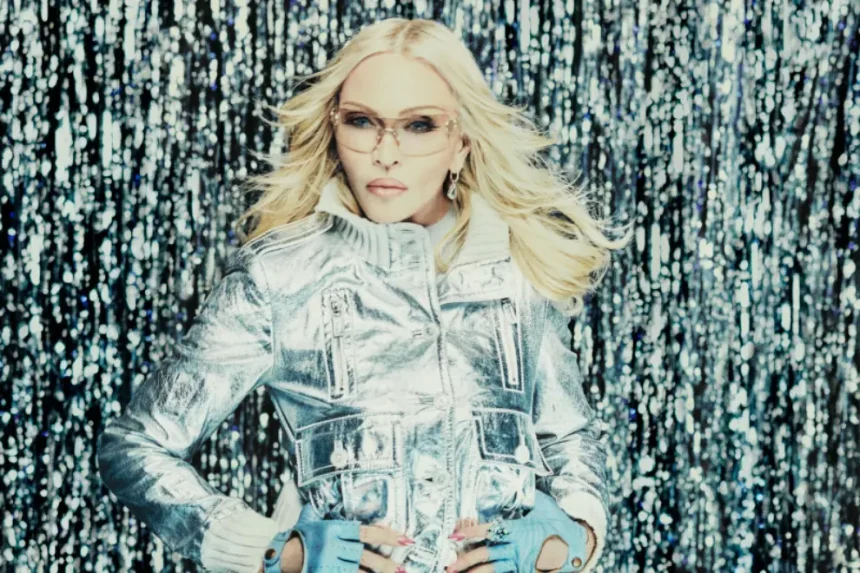
Madonna’s Reflections on Dance Music: A Deeper Understanding
In a recent statement, Madonna articulated a profound belief about dance music: “People think that dance music is superficial, but they’ve got it all wrong.” This assertion sets the stage not only for her love of the genre but also for the upcoming release of her highly anticipated sequel to her iconic 2005 album, Confessions on a Dance Floor. As she gears up to drop Confessions II on July 3, fans are eagerly dissecting her thoughts and the deeper meanings behind her music.
Nostalgia and Anticipation for Confessions II
Madonna’s tenth album, Confessions on a Dance Floor, celebrates its tenth anniversary this November. The decade mark has sparked nostalgia among fans, who have been clamoring for a continuation of the infectious energy and themes from the original album. This excitement is palpable as Madonna prepares to invite listeners back to the dance floor with Confessions II. The teaser and promotional material hint at not just a collection of dance tracks, but a meticulously crafted exploration of the emotions and rituals that accompany movement and celebration.
The Dance Floor as a Ritual Space
One of the most striking elements of Madonna’s promotion and artistic vision is her assertion that the dance floor transcends mere entertainment. She describes it as “a threshold: A ritualistic space where movement replaces language.” This perspective elevates dance music from a fleeting, shallow experience to a deeply profound form of artistic expression.
Madonna and producer Stuart Price regard this philosophy as central to their collaboration on Confessions II. They see the dance floor as not just a place to unwind but as a sacred space where individuals connect with their vulnerabilities. The idea that “we must dance, celebrate, and pray with our bodies” reflects a long-standing tradition found across various cultures, where music, movement, and spirituality are intertwined.
The Artistic Manifesto
Madonna has shared a manifesto that captures the essence of her upcoming album—a manifesto that resonates with anyone who has ever felt the transformative power of music and dance. This declaration states, in part, that “to rave is an art.” Here, the act of dancing becomes an immersive experience, connecting individuals to themselves and to others, fostering community and communication without words.
She emphasizes the effects of “sound, light, and vibration” on human consciousness, suggesting that the experience of dance can alter perceptions and create a trance-like state. The lyrics from her song “One Step Away” encapsulate this perspective, making clear that her forthcoming album aims to delve into the emotional and psychological depths of the dance experience.
Confirmed Tracks and Musical Direction
While fans eagerly await a single from Confessions II, the album will feature confirmed tracks like “I Feel So Free,” “Forgive Yourself,” “Fragile,” and “One Step Away.” This trajectory aligns well with the original Confessions on a Dance Floor, which produced the groundbreaking hit “Hung Up.” The track not only dominated the charts globally but also showcased Madonna’s ability to craft dance anthems that resonate emotionally.
The soundscape of both albums promises to capture the essence of electronic music while maintaining the deep emotional core that characterizes Madonna’s artistic identity. By reuniting with Stuart Price, who played a significant role in the success of the original album, Madonna continues to explore new realms within dance and electronic genres.
Legacy and Impact
Madonna’s celebration of dance music is not just about the beats and rhythms—it’s about the legacy of the genre. Winning the Grammy Award for Best Electronic/Dance Album in 2007 for Confessions on a Dance Floor solidified her influence in the music industry, showcasing her ability to bridge the gap between pop and dance music. The continued exploration of this theme in Confessions II speaks to her understanding of the genre’s potential to impact lives.
By framing dance music as a powerful, transformative experience rather than something superficial, Madonna is poised to challenge listeners’ preconceived notions and invite them to see dance as a medium for healing and connection.
As anticipation builds for the release of Confessions II, it’s clear that Madonna is not just revisiting past successes—she’s on a quest to redefine what dance music can mean in the modern age, encouraging everyone to embrace the healing powers of movement and community once more.



