
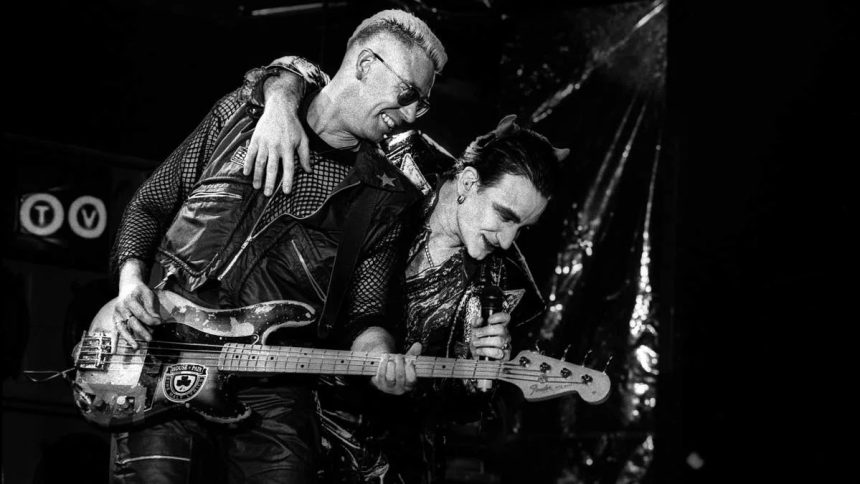
U2’s Creative Renaissance: The Story Behind Achtung Baby
Whenever you find yourself stuck in a creative rut, it’s often time to pivot, explore new directions, and reinvent your narrative. This was exactly the journey of the mega-popular Irish rock band U2 in the early ’90s. After the release of their critically panned album and documentary film Rattle and Hum, the band faced a crossroads that would redefine their sound and ultimately solidify their legacy.
The Turning Point: Rattle and Hum
Released in 1988, Rattle and Hum showcased U2’s blend of rock with gospel influences and live performances. However, the reception was mixed, with many critics expressing disappointment. Faced with a lack of creative spark, the band needed to recalibrate their sound and reestablish their connection with audiences drenched in a rapidly changing musical landscape.
Recording Achtung Baby
The recording of Achtung Baby spanned from October 1990 to September 1991 and marked a significant departure from U2’s earlier work. Produced by the legendary Brian Eno, the album sought to incorporate influences from industrial, alternative, and electronic dance music. U2 embraced a darker, edgier tone, differing sharply from the anthemic quality of The Joshua Tree. Despite this ambitious direction, the process was fraught with challenges, leading to serious tensions within the band. At one point, they nearly disbanded over disagreements regarding the album’s musical direction.
The Breakthrough Moment: “One”
Amidst this turmoil, a breakthrough came with the development of the song “One.” This track not only represented a turning point for the band but also helped to merge their individual creative visions into a cohesive piece. As the song progressed, the tension between band members eased, allowing them to refocus on their collaborative style. “One” would go on to become not only one of their most iconic songs but also a centerpiece in the album’s overarching narrative.
The Singles that Shook the Charts
Achtung Baby was released on November 18, 1991, and featured five memorable singles: “The Fly,” “Mysterious Ways,” “One,” “Even Better Than the Real Thing,” and “Who’s Gonna Ride Your Wild Horses.” “The Fly” marked a significant achievement by hitting No. 1 on Billboard’s US Alternative Airplay chart. “Mysterious Ways” also achieved top spots across two different charts, showcasing the album’s broad appeal and innovative sound.
Commercial and Critical Success
The reinvention embodied in Achtung Baby proved to be a significant boon for U2. The album soared to No. 1 on the US Billboard 200 chart and achieved Platinum status in 14 countries, along with Gold certifications in four. The success did not go unnoticed; in 1993, Achtung Baby won a Grammy Award for Best Rock Album by a Duo or Group. Critics, too, applauded the effort, with Rolling Stone giving it at least four stars and recognizing it as a pivotal moment in the band’s career.
Lasting Legacy and Cultural Impact
Retrospective evaluations have continued to hold Achtung Baby in high esteem. In a 2010 article for Spin, the album was described as U2 becoming “the emblematic band of the alternative-rock era.” Its influence persists, and Rolling Stone has included it in various iterations of its list of The 500 Greatest Albums of All Time, ranking it No. 124 in the 2020 edition. While it may not always be discussed alongside The Joshua Tree, it remains a testament to U2’s daring creative risk-taking and undeniable craftsmanship.
A Cultural Phenomenon
Achtung Baby represents not just U2’s recovery after a challenging period but also their crucial foray into a new realm of sound. It embodies the essence of what it means to evolve creatively and responds to shifting cultural tides—lessons that resonate far beyond the music industry. The album’s innovative character and commercial successes underscore how a bold pivot can reinvigorate a band at a key moment in its history.



