Up To Date Festival has announced a major location change for its 2026 edition, moving away from its original park setting in Białystok following backlash connected to a controversial CircoLoco event held earlier this month in Warsaw.
The respected Polish festival confirmed on May 18 that next year’s edition will relocate to the parking areas surrounding Chorten Arena instead of taking place in the city park environment traditionally associated with the event.
The move comes after intense public criticism surrounding a CircoLoco party organized by Awake Events at Warsaw’s historic Wilanów Royal Palace on May 9.
That event quickly escalated into a wider national debate involving environmental concerns, cultural heritage protection and the commercialization of historic public space.
Located adjacent to the protected Morysin Nature Reserve, the Wilanów Palace site drew criticism over potential ecological damage, excessive noise and the broader implications of hosting large-scale electronic music events in culturally sensitive locations. The controversy intensified further after the dismissal of museum director Paweł Jaskanis, while Poland’s Human Rights Ombudsman officially opened proceedings into how permits for the event were approved.
Although Up To Date Festival was not directly connected to the Warsaw event itself, organizers made clear they wanted to distance their own festival from the wider perception now surrounding electronic events held in protected or environmentally delicate public areas.
In a statement shared via Instagram, the team emphasized that they had already secured all required permits for their original location, but ultimately chose to move voluntarily in order to “set a different example.”
“We don’t want to build culture at the expense of the environment,” organizers wrote.
That statement feels especially significant within today’s wider European festival landscape.
Over recent years, electronic music festivals across Europe have increasingly faced questions around sustainability, environmental responsibility and the use of public or culturally sensitive locations. As festivals continue growing in scale, tensions between nightlife culture, tourism, local communities and ecological preservation have become more visible than ever.
Up To Date’s decision therefore feels less like a logistical adjustment and more like a broader cultural statement.
Rather than defending its legal right to continue using the park location, the festival instead chose a more preventative approach — prioritizing long-term trust and ethical positioning over short-term convenience or image management.
That move aligns closely with the identity Up To Date Festival has built over the years.
Founded in Białystok, the event has earned a strong reputation within European underground electronic music culture through carefully curated programming, socially conscious messaging and a strong sense of community-oriented identity. Unlike many commercially driven festivals, Up To Date has consistently positioned itself as a platform connected to local culture, artistic experimentation and progressive social values.
The lineup for the 2026 edition reflects that continued underground focus.
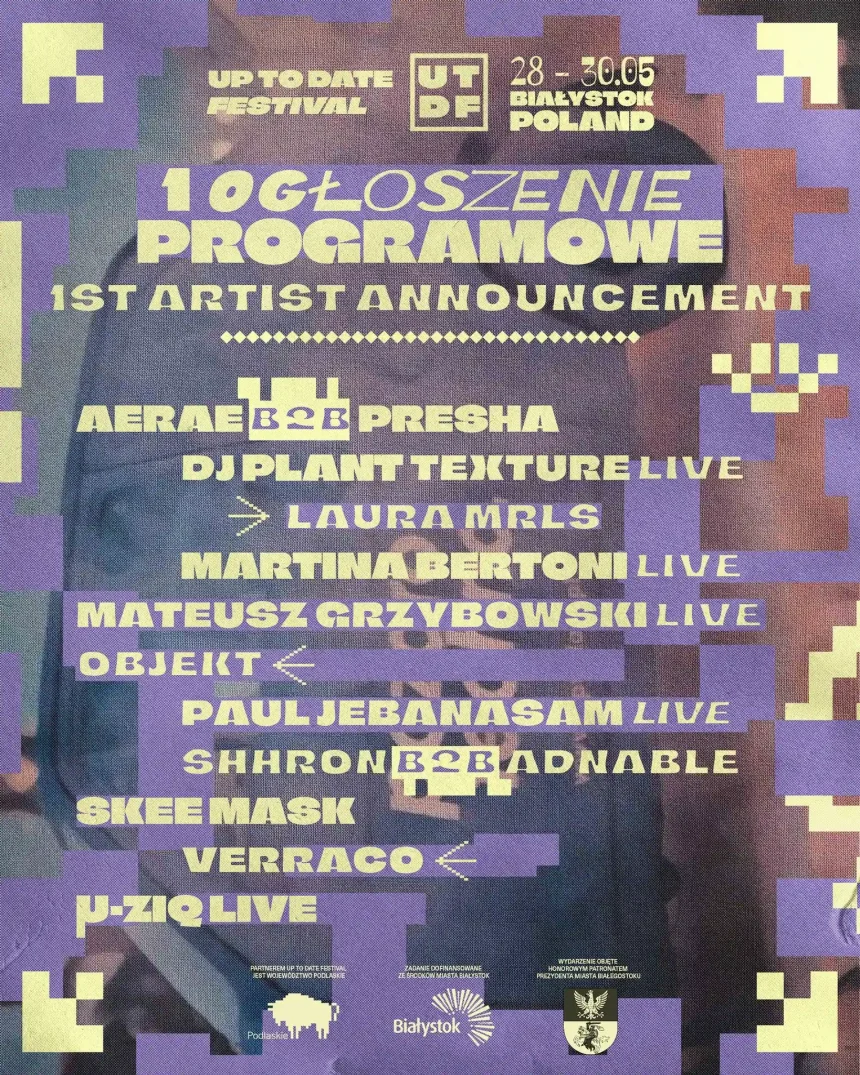
Artists including CCL, james K, Emily Jeanne, Malibu and DJ Plant Texture are already confirmed for the festival, bringing together a wide spectrum of contemporary electronic music ranging from experimental club sounds and ambient textures to hypnotic dancefloor energy.
Despite the venue change, organizers confirmed the event will still take place as planned from May 28 through 30.
And while moving from a green park environment to parking areas surrounding a stadium may initially appear less romantic or visually appealing, the decision arguably reinforces something increasingly important within underground festival culture:
credibility.
At a moment when many events continue prioritizing spectacle, branding and expansion at almost any cost, Up To Date’s willingness to adapt proactively sends a very different message about responsibility and long-term cultural sustainability.
The broader fallout from the Wilanów Palace controversy also raises larger questions for the future of electronic music events in Europe.
As festivals increasingly seek visually spectacular or historically symbolic locations, conflicts around preservation, public access and environmental impact will likely become more common. The challenge moving forward will be finding ways for large cultural events to coexist responsibly with local communities and protected spaces without sacrificing the integrity of either.
Up To Date Festival’s response may ultimately become an early example of how some independent festivals choose to navigate that balance.
In 2026, the music remains.
But the conversation surrounding where and how electronic culture exists in public space has clearly changed.