Daft Punk’s Grammy Awards Night and the Wins That Made History
At the 56th Annual Grammy Awards, Daft Punk achieved a historic feat by winning all five awards they were nominated for. Their album, Random Access Memories, garnered one of the strongest Grammy results for an electronic music album, taking home Best Dance/Electronica Album before clinching the coveted Album of the Year. This moment was particularly significant as the album went head-to-head against massive names like Kendrick Lamar’s good kid, m.A.A.d city and Taylor Swift’s Red. It highlighted how Random Access Memories extended far beyond the dance genre, resonating within the broader musical landscape of the early 2010s.
Daft Punk’s style—infusing disco, funk, live instrumentation, and electronic production—set them apart, creating connections to dance music history while pushing the genre into new territories. Their sweeping triumph during the Grammy night not only demonstrated their artistic prowess but also marked a pivotal shift in how electronic music was perceived within the broader spectrum of esteemed musical awards.
The Night of Wins: A Deep Dive
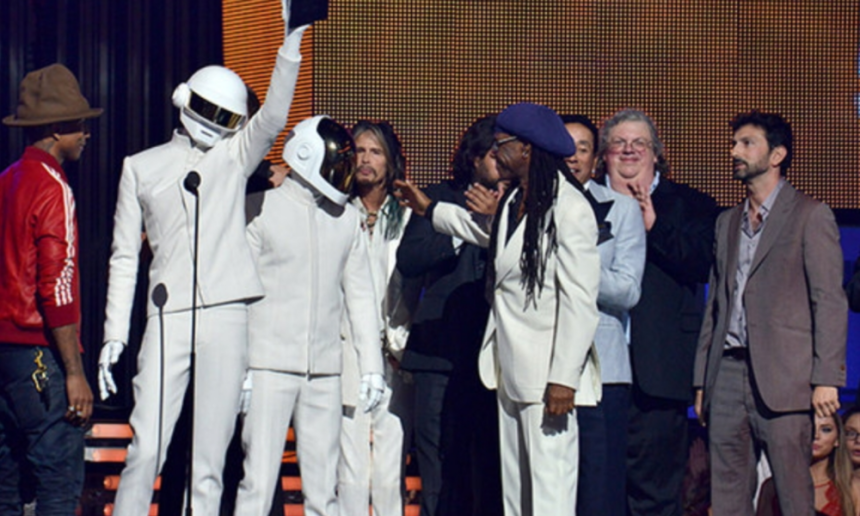
On that unforgettable night, Get Lucky, featuring Pharrell Williams and Nile Rodgers, also won Record of the Year and Best Pop Duo/Group Performance. This victory marked an unprecedented crossover for a dance-centric group into mainstream recognition, showcasing their lyrical depth and production mastery alongside iconic collaborators. Additionally, Random Access Memories was awarded Best Engineered Album, Non-Classical, affirming its technical excellence alongside commercial success. This Grammy sweep illustrated how electronic artists could be viewed and celebrated as holistic musicians, emphasizing their songwriting, collaboration, and cultural significance.
Staying true to their enigmatic persona, Daft Punk opted to remain largely silent throughout the event, allowing their collaborators to accept the awards. The duo did make a striking entrance later in the night, performing Get Lucky with an all-star ensemble that included Pharrell, Nile, and even Stevie Wonder. This memorable live performance encapsulated the essence of Random Access Memories, merging classic influences with contemporary styles in front of a massive audience.
Daft Punk’s Impact on Electronic Music Beyond the Grammy Awards
Before their Grammy triumph, Daft Punk was already revolutionizing the electronic music scene. Their debut album, Homework, established them as pivotal figures in the French house movement with standout tracks like Da Funk and Around The World. Their sophomore effort, Discovery, further expanded their reach, fusing elements of house, pop, and emotion-driven lyrics in tracks like One More Time, Digital Love, and Harder, Better, Faster, Stronger. This innovative approach not only solidified their status within electronic music but also attracted listeners beyond traditional genres.
The duo’s influence extended deeply into popular music, as artists such as Kanye West sampled Harder, Better, Faster, Stronger for his hit Stronger, and The Weeknd collaborated with Daft Punk on Starboy and I Feel It Coming. Their musical language has continued to reverberate through the years, shaping the sound of multiple genres.
Daft Punk’s Legendary Live Shows and Iconic Performances
Daft Punk’s live performances became a defining aspect of their legacy. Their 2006 Coachella set and the subsequent Alive 2007 tour showcased one of the most iconic stage designs in electronic music history—the pyramid. Beyond visuals, the show revolutionized how electronic music could be performed live. Instead of simply playing a list of hits, Daft Punk reimagined their music, blending tracks from various eras into seamless medleys that kept audiences engaged. This innovative approach laid the groundwork for future electronic artists, making live performances an art form in their own right.
Transitioning to Film: Scoring TRON: Legacy
In a bold move, Daft Punk ventured into film scoring with their work on TRON: Legacy. They crafted a full score that blended electronic music with orchestral elements, creating an atmospheric soundscape that resonated with the film’s sci-fi themes. Tracks like Derezzed and The Grid exemplified how Daft Punk could adapt their unique sound for a cinematic experience, demonstrating that electronic artists could thrive within diverse mediums without compromising their artistic integrity.
Daft Punk’s Unique Image and Branding
Daft Punk cleverly maintained their mystique through iconic imagery, helmets, and rare public appearances. This strategic branding ensured that Thomas Bangalter and Guy Manuel de Homem Christo remained enigmatic figures rather than typical celebrity personas. Their distinctive approach also extended into collaborations with brands like the Lotus F1 Team during the 2013 Monaco Grand Prix, seamlessly integrating their musical identity into various cultural contexts.
This level of artistry and branding has influenced not just electronic music, but the broader music industry as artists like Porter Robinson have cited Daft Punk as a significant inspiration. Their impact lies in the precedent they set, showing that electronic musicians could engage with diverse forms of media without the need to conform to mainstream expectations.
Daft Punk’s Lasting Influence in 2026
Even two decades after the release of One More Time, Daft Punk continues to resonate within the public consciousness. In 2026, France adopted their iconic track as the official goal song during the FIFA World Cup. The song played during the national team’s matches, blending the excitement of football with the duo’s infectious beats. This ability for their music to transcend genres and evoke feelings in various contexts speaks volumes about their enduring legacy.
Daft Punk’s artistry has not diminished over the years, as their tracks still manage to captivate audiences, solidifying their place in music history while continuing to inspire new generations of artists.