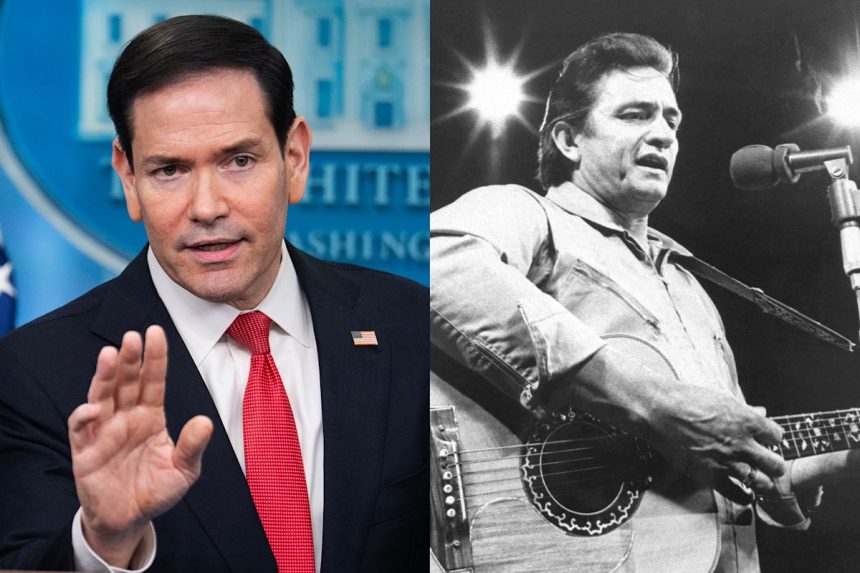
The Musical Tastes of Secretary of State Marco Rubio: An Unexpected Journey
File this under things that don’t surprise us in the least: Secretary of State Marco Rubio has rather peculiar taste in music. Recently, during an appearance on The Katie Miller Podcast, Rubio’s music preferences came to light, and it sparked quite a discussion about the complexity of musical genres and personal taste among politicians.
A Disdain for Country
Rubio’s comments on country music were bold and somewhat controversial. He openly stated that he isn’t a fan of the genre, claiming, “Most of the songs are about, like, somebody whose wife and dog left them.” This characterization reflects a stereotypical view of country music, which often is known for its themes of heartbreak and loss. However, his wife, Jeanette, took it upon herself to advocate for country music, suggesting that he give artists like Morgan Wallen a chance—interesting advice considering Wallen’s vast discography that includes a variety of themes beyond just heartbreak.
While it’s not uncommon for individuals to have strong preferences or aversions to certain genres, Rubio’s dismissive take felt juvenile, akin to the comments of an eighth grader trying to assert his music knowledge without having explored the genre.
The EDM Connection
Perhaps the more surprising revelation was that the one type of country music Rubio admitted to enjoying is an EDM remix of Johnny Cash’s “Ring of Fire.” This remix, popularized by Wuki and frequented on platforms like TikTok, has become a staple in certain party scenes and demonstrates a fusion of genres that Rubio seems to appreciate. He explained his fondness for EDM, suggesting it “fuses classical music, country music,” although one might argue that the traditional essence of the original is lost in these remixes.
Interestingly, Rubio confessed that his music choices, particularly EDM, are often banned in the car due to their headache-inducing nature as noted by his wife. This highlights a common issue many couples face: musical disagreements that could lead to tense moments on the road.
Diverging Opinions on Hip-Hop
In a further twist, when asked who his favorite rapper is, Rubio claimed Tupac Shakur. However, he added an unusual caveat: “obviously he never lived long enough to see what he would have turned into.” This acknowledgment of Tupac’s tragic legacy points to the complex nature of legacy in hip-hop, where an artist’s influence can be profound and long-lasting, even beyond their lifetime. Tupac is not just a cultural icon; he is celebrated for his deep, socially conscious lyrics and storytelling, suggesting perhaps Rubio’s claim of admiration might be surface-level.
It would be fascinating to hear Rubio expound on specific tracks or themes within Tupac’s discography, especially since his comments do not seem to reflect an in-depth understanding of the genre or its evolution.
A Need for Broader Musical Appreciation
The moments shared by Rubio on The Katie Miller Podcast call into question the music knowledge of many political figures. A stark parallel can be drawn with Vice President Kamala Harris, who faced criticism for naming Tupac as a favorite rapper—an awkward misjudgment, considering Tupac’s status as a deceased artist. This illustrates a need for public figures to engage more deeply with contemporary culture, particularly the vibrant world of modern rap and hip-hop, which has become a powerful narrative force in American society.
Reflecting on Previous Interviews
Rubio’s admiration for EDM isn’t new. During a 2016 interview with Anderson Cooper, he emphasized he had never been to a rave but had developed a DJ persona in other social settings. More recently, when situations were dire in the nation, including surging gas prices and ongoing geopolitical conflicts, Rubio was seen entertaining guests at a wedding with Calvin Harris’s “Feel So Close,” which raises eyebrows about the appropriateness of melodies selected during tumultuous times.
Conclusion
Rubio’s musical musings serve not only as entertainment but as a barometer for a broader understanding of culture and representation in politics. Whether through his disinterest in country ballads or his affinity for EDM, there’s an opportunity for politicians to engage more authentically with the rich tapestry of music that shapes American life today. Each genre, from country to rap to electronic dance music, carries its own narratives and voices, inviting politicians to dive deeper rather than drawing surface-level conclusions.