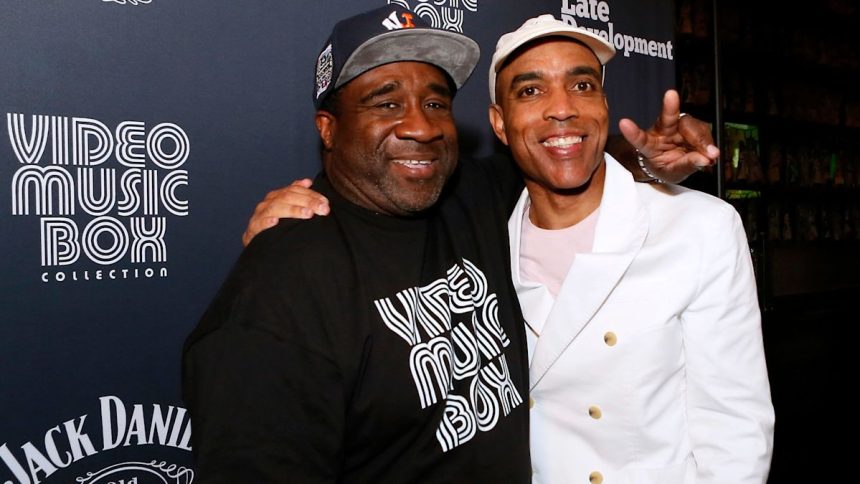
The Jungle Brothers: Hip-Hop Legends at Bastid’s BBQ
Over the weekend, the iconic hip-hop group The Jungle Brothers made a remarkable appearance at Bastid’s BBQ in New York City, where they celebrated a legacy steeped in the rich history of house music. While their performance was a reverberation of decades of influence, it was an unexpected incident involving Afrika Baby Bam that garnered significant attention across social media platforms.
An Unforgettable Moment
During their set at Sadie’s Garden Bar on August 8, the atmosphere was electric as the audience gathered around the stage to enjoy the rich blend of sounds that The Jungle Brothers brought with them. Mid-performance, Afrika Baby Bam was seen engaging with the crowd when he misplaced his footing, resulting in a fall off the front of the stage. The unfortunate slip quickly circulated online, with attendees capturing the moment and sharing it on various platforms. Video clips, prominently shared by outlets like MRECKTV, show the immediate concern among fans as they reached forward to assist him.
Despite the brief flurry of chaos that accompanied the fall, it did not overshadow the essence of what brought the crowd together that day: the music. The Jungle Brothers delivered a powerful performance of their timeless track “I’ll House You,” which first hit the scene in 1988, showcasing their unique ability to meld hip-hop with house music—a fusion that was pioneering for its time.
Bastid’s BBQ: A Festival of Music and Community
Bastid’s BBQ, hosted by the talented Canadian DJ Skratch Bastid, has emerged as a summer staple that celebrates good music, food, and an inclusive atmosphere. Originating in 2011 in Canada, this annual party series has expanded to cities like New York, Los Angeles, and Halifax, offering a space for fans of all ages to converge over a shared love for hip-hop and electronic sounds.
The guiding principle of “Good Music, Good Food, and Good People” aims to attract both seasoned hip-hop aficionados and newer generations discovering foundational acts. This emphasis on community interaction and musical exploration is evident in the diverse lineup that Bastid’s BBQ consistently attracts.
The Impact of The Jungle Brothers
The Jungle Brothers, composed of Afrika Baby Bam, Mike Gee, and DJ Sammy B, were formed in New York during the mid-1980s, at a time when hip-hop was experiencing a radical transformation. They played a crucial role in expanding hip-hop’s sonic boundaries, infusing the genre with jazz samples, Afrocentric themes, and inviting dance rhythms.
Their debut album, Straight Out the Jungle, not only carried playful rhymes but also established them as innovators who refused to be pigeonholed into a single musical lane. Following that, Done by the Forces of Nature and J Beez Wit the Remedy saw the trio exploring even further into uncharted territory, each release pushing the envelope of what hip-hop could involve both lyrically and sonically.
The Jungle Brothers hold a pivotal place in music history, not just for their own works but also as founding members of the Native Tongues collective, which included significant groups like De La Soul and A Tribe Called Quest. This collective reshaped the landscape of alternative hip-hop, promoting messages of community, individuality, and creativity without barriers.
Recent Works and Continued Relevance
Even as they reminisce about their groundbreaking past, The Jungle Brothers continue to contribute to the music scene. Their recent EP, Concrete Jungle, released in June 2026, signifies their ongoing evolution and dedication to creating music that resonates with both new listeners and longtime fans, following their 2020 album, Keep It Jungle.
As they move forward, The Jungle Brothers reaffirm their place not only in hip-hop history but also in the present-day cultural dialogue—continuing to inspire through their innovative approach to music.
This blend of nostalgia and modernity was palpable at Bastid’s BBQ, where the community came together to celebrate the legends of hip-hop while also embracing the exciting possibilities of its future. Through memorable performances and unexpected incidents alike, events like these remind us of the vibrant, ever-evolving tapestry that is music culture.