
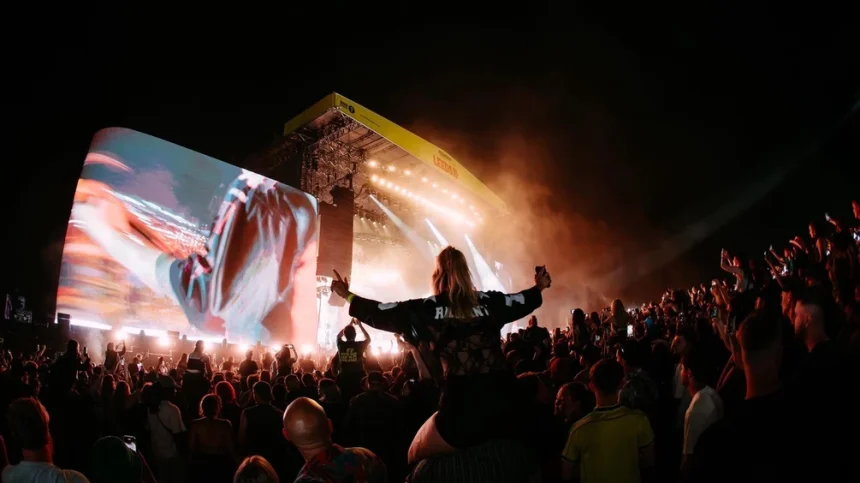
Overcrowding and Safety Concerns Dominate New Dance Stages at Reading and Leeds Festivals
The Reading and Leeds festivals, renowned for their vibrant music atmospheres, encountered significant challenges over the recent bank holiday weekend. Both festivals, running from August 27th to 30th, introduced new dance-focused stages known as The Warehouse. These setups were designed to broaden the festivals’ appeal, leading to an unexpected surge in attendance that resulted in multiple closures of the new areas due to safety concerns.
- Overcrowding and Safety Concerns Dominate New Dance Stages at Reading and Leeds Festivals
- The Exciting Introduction of The Warehouse Stages
- Safety Shutdowns: A Weekend of Cancellations
- Overcrowding Issues at Leeds Festival
- Broader Impacts on Festival Line-Up
- Attendee Reactions: A Mixed Bag of Emotions
- A Call for Improvement
The Exciting Introduction of The Warehouse Stages
Back in March, organizers unveiled plans for The Warehouse, dedicated electronic music spaces aimed at attracting a variety of music lovers beyond the traditional rock and pop audiences. However, this well-meaning initiative backfired as the demand far exceeded the available capacity. Following their introduction, both stages quickly emerged as hotspots for festival-goers eager to dance and enjoy the curated line-ups.
Safety Shutdowns: A Weekend of Cancellations
On Friday, August 28th, safety concerns led to the cancellation of key back-to-back DJ sets featuring Prospa and the grime artist Skepta at Reading Festival. This decision came after authorities determined that the crowd outside The Warehouse posed a potential safety risk. Despite the rain, Skepta’s main stage performance went ahead, but the cancellations of the highly anticipated sets left a noticeable gap in the festival schedule and disappointed many fans.
In a poignant Instagram story, Prospa remarked on the frustrations of overcrowding at such large events, stating, “It’s time to double the capacity of these tents or put dance music on the main stage.” The implications of this issue would unfold throughout the remainder of the weekend.
Overcrowding Issues at Leeds Festival
The Leeds counterpart of the festival faced a similar fate, with The Warehouse forced to close its doors on Saturday and Sunday due to the overwhelming number of festival-goers. DJ Julian Fijma, whose set was interrupted, expressed disappointment through social media, indicating that there were simply too many people for the venue to safely accommodate. The visuals from his set showed a packed audience, highlighting the popularity of the stage and exacerbating frustrations over the closure.
This challenge also affected Skepta’s back-to-back set with East End Dubs, which was similarly canceled due to safety precautions. Skepta expressed his regret on Instagram, recognizing the disappointment for those who came to see him perform.
Broader Impacts on Festival Line-Up
Cancellations during the festival were not limited to a few headline acts. Other artists like Riordan, Omar+, and Silva Bumpa also found their performances scrapped last minute due to overcrowding concerns. Silva Bumpa relayed his disappointment on social media, indicating he was notified just moments before he was set to perform. The sentiment echoed through the festival community, with many artists and fans expressing their grief over missed opportunities.
Attendee Reactions: A Mixed Bag of Emotions
Festival-goers shared a mix of anger and disappointment regarding the overcrowding situation. Lily, an attendee, voiced her frustration about waiting in long lines only to hear of the cancellations, questioning the management’s capacity estimates and overall planning. Similarly, another fan, named Simon, conveyed disappointment, suggesting that organizers underestimated the draw of dance music at the festivals.
Despite the setbacks, Leeds Festival adapted quickly, relocating some DJ sets to the LS23 stage. Performers like Mall Grab and Rossi were able to salvage their performances, contributing positively to the festival’s conclusion.
A Call for Improvement
The challenges faced by The Warehouse stages serve as a crucial reminder for festival organizers about the importance of planning and ensuring that venue capacities meet audience demand. As the festivals continue to evolve, it is clear that addressing crowd control and safety measures is vital to the overall experience, especially when introducing new musical genres aimed at expanding festival demographics.
As the dust settles on an eventful weekend for both festivals, organizers now face the task of evaluating the successes and shortcomings of their latest venture. The future of dance music at reading and Leeds Festivals may well depend on how they address these pressing challenges.



