
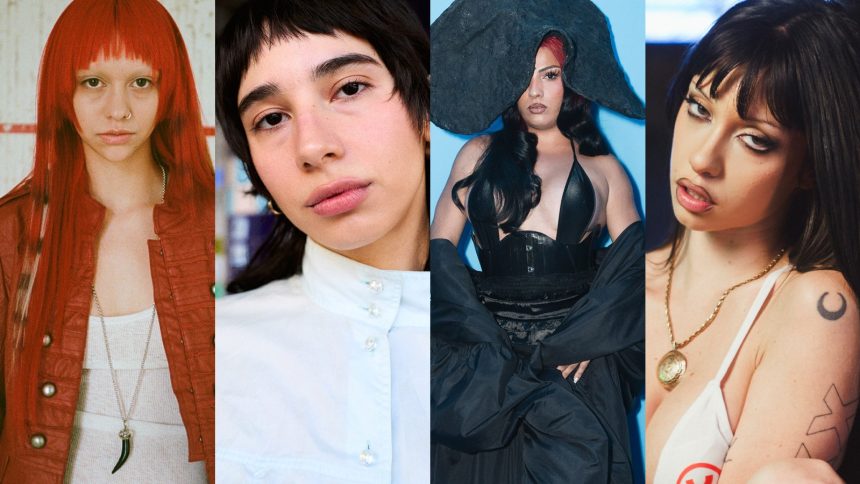
The Rhythmic Revolution: Women at the Forefront of Latin America’s Dance Music Scene
Since the turn of the millennium, Latin America has emerged as a vibrant hub for electronic dance music (EDM), blending traditional sounds with modern beats to create an eclectic soundscape. From the pulsating blocks of urban centers to the atmospheric corners of home studios, a rich tapestry of genres has taken root. The late 2000s marked the ascendance of Mexico’s tribal guarachero, which birthed superstars like 3BallMTY and Erick Rincón, setting the stage for Colombia’s guaracha scene to flourish in the following decade, bringing artists like Fumaratto into the spotlight. Argentina followed suit, where a fusion of cumbia, reggaeton, and EDM birthed the kitschy, high-energy genre known as cachengue. In Brazil, baile funk, a socially charged movement, became a touchstone for European DJs eager to inject new energy into their techno sets. Meanwhile, Venezuelan changa tuki and DJ Babatr’s raptor house sound became staples at sweaty circuit parties worldwide. Additionally, in the Dominican Republic, beatmakers have manipulated reggaeton’s dembow riddim, creating hypnotic dance floor experiences and paving the way for crossover sensations such as El Alfa and Tokischa.
Shifting Paradigms: Women in Dance Music
Despite this dynamism, women have often faced barriers in the Latin American dance music scene, even with an impressive array of talent readily available. However, this narrative is shifting. Labels and collectives such as NAAFI in Mexico, Hiedrah in Argentina, and Salviatek in Uruguay are championing women creators, helping launch groundbreaking careers for artists like Debit, Tayhana, and Lila Tirando a Violeta. These women are not only experimenting with global trends but also weaving local traditions into their music.
One standout example is the Brazilian party Mamba Negra, which has made it a core mission to elevate women, queer individuals, and people of color within the music scene. They foster creative partnerships with a diverse array of multi-disciplinary artists like Cashu, Clementaum, and Jup do Bairro, thereby building a robust community committed to visibility and representation.
A New Wave of Sound: Emerging Female Artists
The dance floor serves as a refuge and a revolutionary space, where women across Latin America are at the helm of a new wave in electronic music. With styles ranging from mutant baile funk to a fresh, sultry take on alt-R&B, these artists are reshaping the soundscape. One of the notable figures making waves is aLex vs aLex—a project by Sofía Insua, who transitioned from fronting the popular shoegaze band Easy Easy in Guatemala to establishing a dynamic solo career in New York City. Her breakthrough track alongside Divino Niño’s Camilo Medina, “centro aLt,” exemplifies a creative fusion of reggaeton and vallenato, signaling her readiness to command dance floors. Insua’s latest EP, cliché, builds on this momentum, positioning her as a major contender in the contemporary music scene.
Similarly, Brazil’s dance music narrative is being rewritten by trans women and femmes. Vita Pereira, originally part of the performance duo Irmãs de Pau, is now carving out a solo career with her vibrant output. Her debut album, Vita’s House, showcases a rich synergetic relationship with prominent producers and is enriched with influences from guaracha to techno. Vita uses her music to explore themes of queer liberation with both raw energy and exuberant flair.
The Perreo-Rave Queen
Among the ranks of rising stars is Francisca Cuello, known artistically as Six Sex. This Argentine powerhouse gained notoriety in the neoperreo genre and has since catapulted into the mainstream with the release of her EP Satisfire, packed with pulsating techno beats and cheeky affirmations. Six Sex’s performances have made her a fixture at major festivals like Lollapalooza, where she brings high-voltage energy and an unmistakable sense of style to the stage.
In Chile, the avant-garde artist Akriila is charting her own path by blending trap with an eclectic mix of genres. From her viral tracks to her introspective acoustic ballads, Akriila’s work exemplifies a refusal to conform, showcasing a diverse sonic palette that resonates with audiences on and off the dance floor.
Celebrating Diverse Soundscapes
The Latin American dance music scene’s current climate is marked by daring experimentation and bold new voices, especially among women striving to redefine conventions. The merging of genres and the fusing of traditions is more than just a musical evolution; it is a cultural renaissance where women play a pivotal role. Their stories enrich the overall narrative of Latin music and emphasize a much-needed shift towards representation and inclusion. As more artists from diverse backgrounds emerge and claim their spaces within the dance music fraternity, they are not just celebrating their roots—they are setting the stage for future generations to follow in their footsteps, crafting music that is as revolutionary as it is infectious.