Raving Through the War: The Resilience of Kyiv’s Nightlife
Kyiv —
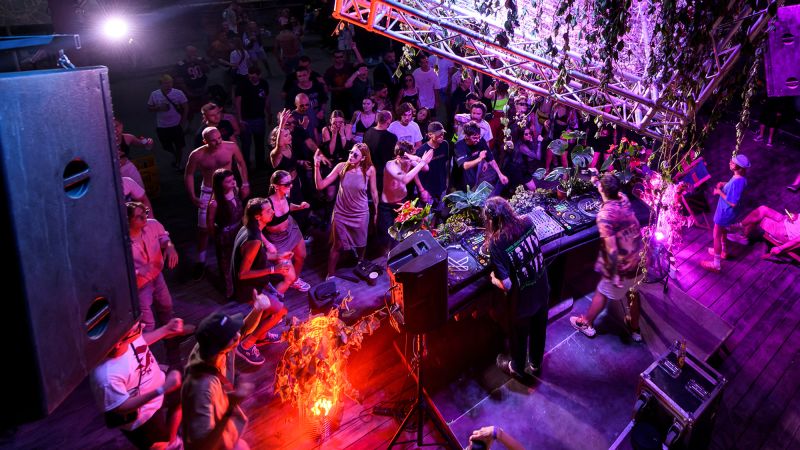
Silhouettes move through dark alleys covered in snow and ice, drawn towards the muffled beat pulsating from a concrete building in central Kyiv. Inside, a dim red light blurs the faces of a dancing crowd, their sweaty bodies pressed against one another in a fervor of movement and sound.
The Escape in Sound
For ravers at Closer, one of Kyiv’s most renowned nightclubs, this vibrant nightlife serves as a much-needed escape from the realities of war. The red glow of the club evokes the low-light torches used by soldiers at the front lines, trying to evade detection by the enemy. Yet, for many attendees, such nights are moments of fleeting joy in the ongoing tumult of conflict. Valeriia Shablii, a 32-year-old attendee, encapsulates this sentiment, saying, “It’s what helps to keep us sane. We say it’s like a war-life balance.”
Cultural Disruption
The war has undeniably disrupted much of Ukraine’s cultural fabric. Since the full-scale invasion by Russia in February 2022, music venues across the country have shuttered doors, with artists either fleeing the scene or taking up arms. However, the spirit of unity and celebration persists as Ukrainians continue to flock to events, seeking solace in the rhythms and beats that characterize their vibrant party culture.
Closer initially closed its doors when the war erupted but reopened just eight months later. The club has hosted music events almost weekly since. With the constant threat of missile and drone strikes, nightlife has adapted, becoming a critical emotional outlet. According to Shablii, “People are just really tired. Coming here and spending some time with your friends… it’s uniting people.”
Raving as Resistance
To understand the significance of Ukraine’s nightlife in this tumultuous time, one must recognize rave culture’s deep-rooted connection to resistance. Before the war, Ukraine’s electronic dance music (EDM) scene flourished, entwined with notions of freedom and expression. Following the Soviet Union’s collapse in the early ’90s, there was an explosion of cultural influences, allowing the local scene to flourish, much like its counterparts in cities like Berlin.
Underground raves and large-scale parties became spaces for both musical experimentation and social unity. The emergence of events like Kyiv’s cult Cxema parties in the mid-2010s showcased this spirit, achieving international acclaim while providing a safe haven for disaffected youth navigating economic uncertainty and systemic corruption.
Slava Lepsheiev, founder of Cxema, stresses the shift in focus since the war began. Resistance, he explains, has transformed from defiance against internal corruption to standing united against an external enemy. “We get together and dance to stay strong,” he shares, capturing the essence of nightlife as a declaration of resilience.
Navigating Nightlife Amidst Danger
But the realities of war complicate the experience of clubbing. Events often occur during daytime due to a nighttime curfew, and safety concerns lead to smaller gatherings. Anton Nazarko, co-founder of Some People, a nightclub in Kharkiv, explains how the energy of the parties has intensified: “The party has more energy,” he states. In a location just 19 miles from the Russian border, the stakes are high, but that doesn’t deter the spirit of his community. “In the morning, friends from our community are fighting in the trenches. And in the evening, they come to our party. They’re dancing like it’s their last day.”
The Duality of War and Culture
The duality of life and death is palpable in Ukrainian nightlife. Venues like Some People operate from sites once marked by destruction. Despite having their original headquarters bombed just days into the war, Nazarko and his team persevered, establishing a new cultural center that also acts as a bomb shelter, allowing the community to gather safely.
“Ensuring the continuation of cultural life in Kharkiv is a contribution to the war effort,” Nazarko asserts, highlighting the symbolic significance of these gatherings. Cultivating a rhythmic heartbeat within the city serves as a form of resistance against the chaos wrought by war.
A New Generation of Ravers
However, not everyone remains engaged with the nightlife. Many notable figures from the scene have joined the military, including Daniel Detcom, a junior sergeant in the armed forces and a former DJ. Though he misses the vibrant community and the carefree nature of life before the war, Detcom remains realistic about the situation, stating, “Life will not be the same ever again.”
Yet, there’s still hope on the horizon. As DJ Denys Yurchenko from Kultura Zvuku observes, the war has inadvertently opened doors for fresh talent. Fewer international acts are traveling to Ukraine, leaving more space on line-ups for local producers, who feel inspired to innovate.
Resilience Through Rhythm
Even amidst the hardship, there is resilience reflecting in the dancefloors of Kyiv. From the outdoor courtyards of Closer, filled with laughter, shared moments, and heartfelt embrace, the mantra remains: “We are waiting for spring.”
As the scene evolves with daytime parties becoming the new norm, the enduring passion for music and unity together offers a glimpse of joy amid despair. After four years of war, one thing remains clear: Ukrainians are not merely surviving—they are raving.