Innovation and Teamwork: CSB and SJU Students Showcase Ingenuity at NASA
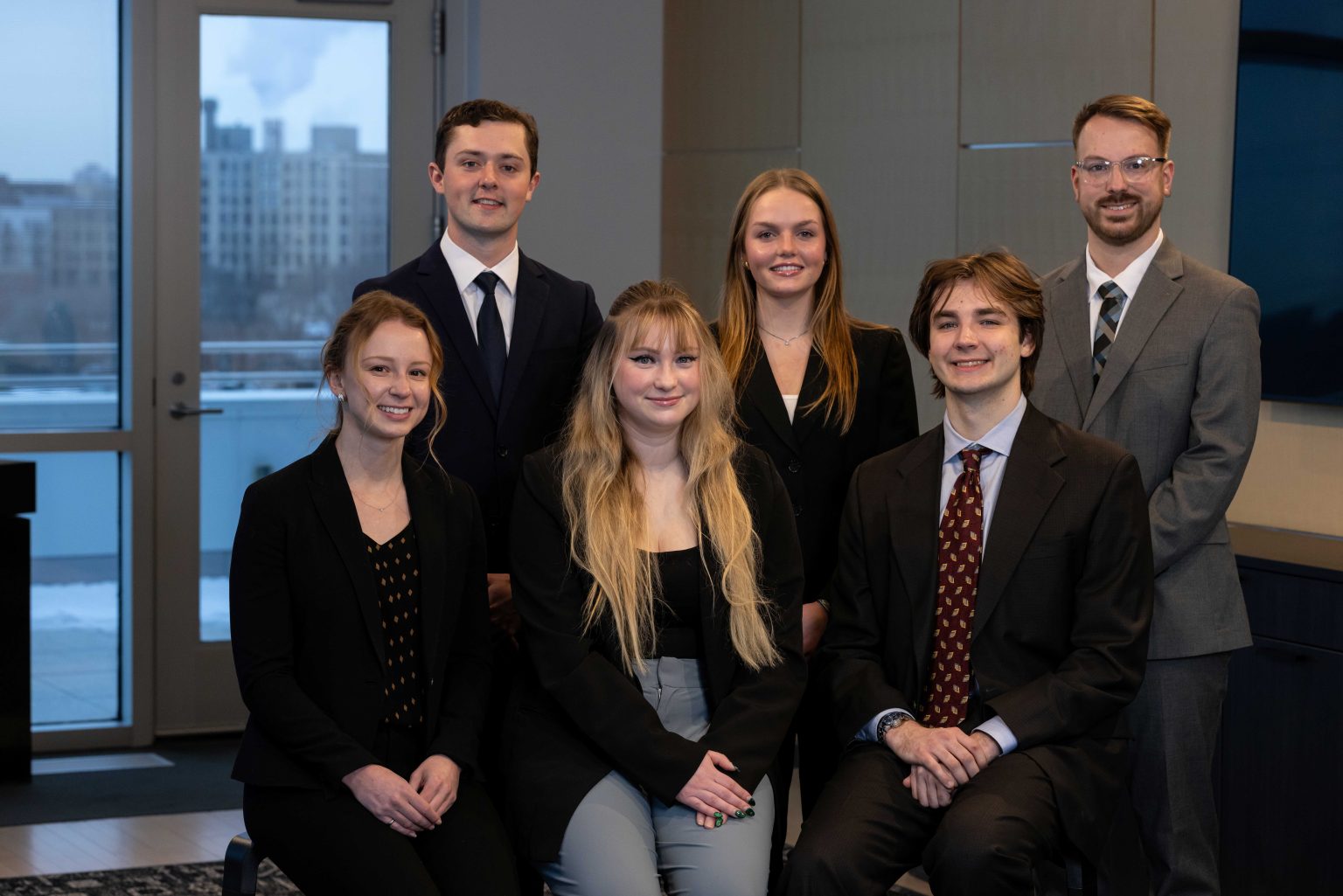
On February 24, six remarkable students from the College of Saint Benedict and Saint John’s University took the stage to present their commercialization strategies for a groundbreaking NASA biomedical technology. Set against a backdrop of large windows showcasing an expansive cityscape, these seniors exemplified a fusion of academic prowess and entrepreneurial spirit within the framework of the 2025-26 Innovation Scholars Program.
Meet the Participants
The star team comprised:
- Madisen Carter from Billings, Montana (majoring in chemistry and biology)
- Tatum Leibke from Lino Lakes, Minnesota (majoring in biology with a pre-med track; minor in Hispanic studies)
- Ben Reddan from Chaska, Minnesota (majoring in biology with a pre-med focus; minor in psychology)
- Wyatt Robertson from St. Paul, Minnesota (majoring in global business leadership; minors in global languages and culture, and English writing)
- Wyatt Schaeffer from Clearwater, Minnesota (majoring in biology; minor in chemistry)
This multidisciplinary cohort spent four months diving into a complex project centered around the Portable Unit for Metabolic Analysis (PUMA) — a cutting-edge device engineered to detect hypoxia, ensuring the health and safety of professionals such as astronauts, pilots, divers, miners, and first responders.
Navigating Complexity with Confidence
Under the mentorship of MBA student Melissa Rose from the University of St. Thomas, the students undertook extensive research to analyze the commercialization potential of this NASA technology. They meticulously crafted recommendations, compiled a thorough final report, and polished their presentation for a panel of NASA technology transfer officers.
The Innovation Scholars program, recognized nationally for its commitment to experiential learning, engages liberal arts students in navigating the intricate processes involved in translational medicine — a crucial journey from “bench to bedside.” Collaborating with prestigious sponsors such as Mayo Clinic and various health care companies, the program celebrates two decades of contributions to academic and professional landscapes.
Faculty Support and Guidance
The students benefited from the dedicated mentorship of CSB and SJU faculty members, notably Clark Cotton, associate professor of biology; Lauri Miller, visiting assistant professor of accounting and finance; and Jennifer Schaefer, professor of biology and interim dean of faculty. Administrative assistance was provided by Trisa Schaeffer, senior associate director in the Office of Undergraduate Research and Scholars.
Melissa Rose praised the team’s achievements, highlighting their ability to navigate ambiguity and transform groundbreaking technology into viable market applications. “What stood out most was the strength of their teamwork,” she noted, praising their collaborative spirit and commitment to mutual support.
Voices of Experience: Student Reflections
The Innovation Scholars program left a lasting impact on the students, as they reflected on their unique journeys through the project:
-
Madisen Carter discussed the project as a capstone experience that enhanced her appreciation for the medical field’s broader aspects. She valued the opportunity for creative freedom and the practical application of her knowledge, remarking on the development of key soft skills like collaboration and technical communication.
-
Tatum Leibke appreciated the program’s role in pushing her beyond her academic limits, engaging her in real-world ideation and innovation. She expressed gratitude for the chance to work at the intersection of science and business and to navigate the challenges of ambiguity.
-
Ben Reddan highlighted the invaluable lessons on communication and teamwork, emphasizing how effective collaboration enriches the group’s creativity and facilitates diverse perspectives.
-
Wyatt Robertson recognized the program as an avenue to explore beyond his academic focus, appreciating the integration of business and STEM disciplines. He noted the strength of their cohesive teamwork, which allowed members to leverage their respective experiences.
-
Wyatt Schaeffer described how the program potentially reshaped his academic and career aspirations, inspiring him to explore tech transfer and consider an MBA in the future. He emphasized the importance of embracing uncertainty and delving into the intersections of science and business.
Creating Future Innovators
Through the Innovation Scholars program, students not only accumulate knowledge and skills but also gain confidence as emerging professionals. As they navigate the complexities of interdisciplinary projects, they cultivate an innovative mindset — one that prepares them for future challenges in their respective fields.
This collaboration between academia and real-world applications illustrates the vital role that programs like Innovation Scholars play in shaping the next generation of thinkers, problem-solvers, and leaders. Amidst the backdrop of innovation and entrepreneurship, these students are not only redefining their careers but also contributing to advancements that could have a life-changing impact on many.