
Germany’s Dance Music Evolution: The Rise of Afro House Amid Techno’s Resurgence
Germany has long been a cultural hub for music, with its clubs serving as a crucible for various genres to intermingle, adapt, and thrive. Recent data indicates a significant shift in this landscape, with afro house emerging as one of the most exciting new currents. At the same time, techno—a genre that has come to symbolize Berlin’s clubbing ethos—has found a new lease on life, especially among Gen Z audiences on platforms like TikTok.
The Shift, by the Numbers
A report by music analytics platform Chartmetric and the sample library Splice, titled “Made First, Heard Second,” reveals that afro house is becoming a prominent sound in Germany, eclipsing its previous largest market in the United States. This genre has been labeled a “sonic hybrid”—a type that does not have a singular dominant market. The findings indicate that the genre’s popularity has surged, corroborated by Splice’s own research. The company’s “Sounds of 2026” report identified a staggering 778% increase in downloads, propelling afro house from the fifth-most-downloaded subgenre of house music in 2023 to its current second-place position by 2025.
Furthermore, interest in afro house among producers has skyrocketed, with searches on Splice climbing 134% in 2022-2023. This growth accelerated to a jaw-dropping 437% in the following year, setting the stage for a genre that is still ramping up its presence on streaming platforms. This pattern underscores a critical insight: what producers gravitate towards often predicts future trends in audience tastes.
What Afro House Actually Is
Afro house, as a distinct subgenre, has its roots nestled in South Africa, particularly in urban areas like Johannesburg and Durban. During the late 1980s and 1990s, local producers melded house music with kwaito and vibrant tribal rhythms. Characterized by polyrhythmic percussion, call-and-response vocal structures, and traditional instruments like djembes, afro house rose to prominence in the late 2000s and early 2010s.
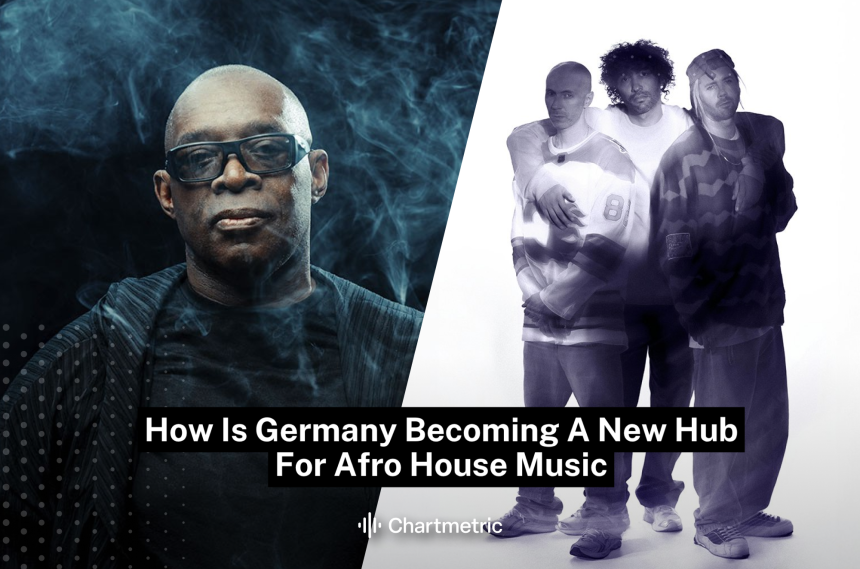
Key figures in the genre’s evolution include Oscar “Oskido” Mdlongwa, who brought house music to a wider audience in South Africa, and DJ Christos, who played a pivotal role in shaping Johannesburg’s early club scene. Osunlade and Black Coffee (Nkosinathi Innocent Maphumulo), recognized as a global ambassador for the genre, are also critical to afro house’s narrative. Today, collectives like Berlin’s Keinemusik are becoming increasingly influential in this genre’s European landscape, symbolizing the cross-cultural exchange central to afro house’s ascent.
On the Ground in Germany
In Germany, the vibrant afro house scene is tangible. Recent event listings highlight a surge of afro house-themed nights across cities such as Berlin, Munich, Hamburg, and Cologne. Resident Advisor’s calendar for Berlin alone features numerous events focusing on afro house, along with recurring nights blending it with deep house in various venues. The presence of dedicated festivals like Munich’s Afro Fusion Festival further emphasizes this trend.
Moreover, the genre often overlaps with afrobeats and amapiano, indicating a broader cultural moment influenced by contemporary African sounds. The popularity of these events hints that the appeal of afro house goes beyond just a growing subgenre; it is becoming an integral part of the German nightlife experience.
A Familiar Playbook: Techno’s Detroit-to-Berlin Blueprint
The unfolding narrative of afro house in Germany follows a familiar blueprint, reminiscent of techno’s transformative journey from Detroit to Berlin. Originating in the early 1980s with pioneering figures like Juan Atkins, Derrick May, and Kevin Saunderson, techno fused funk elements with electronic minimalism, ultimately finding fertile ground in Berlin during the 1990s.
The opening of clubs like Tresor and the establishment of record stores such as Hard Wax facilitated the transatlantic exchange of sounds. Direct relationships were formed between German and Detroit artists, leading to collaborations that would define a sound. As a result, Berlin not only embraced techno; it redefined it, creating its own culture around the genre, recognized formally as part of Germany’s National Inventory of Intangible Cultural Heritage.
Techno Finds Gen Z (Again)
Interestingly, as afro house gains momentum, technois experiencing a resurgence, especially among younger audiences on platforms like TikTok. Hashtags like #RaveTok and #TechTok have transformed how rave culture is consumed, spreading new energy into the techno scene. This TikTok-driven revival is creating a symbiotic relationship between genres, with many younger fans gravitating toward the harder, more extreme hybrids of techno, simultaneously reigniting interest in the original form.
The recent rise in popularity of hyperpop also intersects with this discussion, showcasing a similar trajectory of creator interest leading to mass appeal. As the genres evolve, they collectively influence the landscape of electronic music in Germany, signifying a larger cultural shift.
Whose Import Is It? A More Complicated Question
The evolution of afro house in Germany raises critical questions about cultural appropriation and ownership. While techno’s narrative often downplays its roots in Detroit, afro house retains a direct connection to its African origins, which presents a more straightforward lineage. However, whether this recognition will persist as the genre becomes more mainstream in Germany remains to be seen.
The historical context surrounding genres like Deutschrap and Oriental Hip-Hop complicates the narratives of appropriation. As German music continues to absorb outside influences, it’s crucial to monitor how these connections are acknowledged—or obscured—in popular discourse.
The Takeaway
The landscape of dance music in Germany is shifting like never before. The emergence of afro house alongside a techno revival creates a tapestry woven from diverse cultural influences. With evolving industry practices and a renewed focus on live music, Germany’s club scene stands at a pivotal moment, necessitating close observation of how these elements coalesce moving forward.



