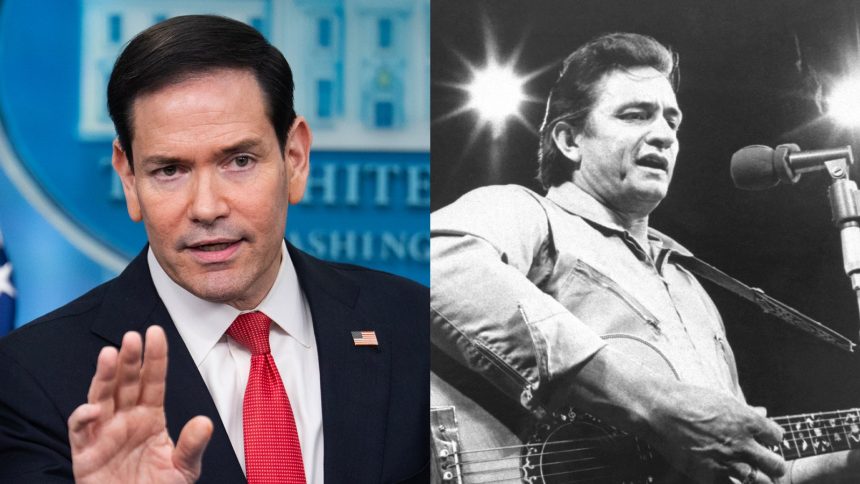
Marco Rubio’s Musical Taste: A Dive into the Unlikely Melody of a Politician
In a political landscape often dominated by debates on policy and reform, it’s not uncommon for public figures to let slip personal preferences that reveal a softer, more human side. However, when those preferences are as outlandish as Marco Rubio’s taste in music, the internet quickly seizes the opportunity to poke fun. From his statements about country music to his surprising affinity for EDM, Rubio’s musical tastes are as colorful and controversial as his political career.
Country Music: “Too Sad” for Rubio
During a recent episode of The Katie Miller Podcast, hosted by Stephen Miller’s wife, Rubio made headline-grabbing comments regarding country music. He dismissed the genre, labeling most songs as tales of heartbreak that revolve around lost wives and dogs. “Most of the songs are about, like, somebody whose wife and dog left them,” he noted, expressing his distaste for what he finds to be overly melancholic. He quickly backed this up with a confession that he finds country music “too sad” to stomach.
However, in a twist of fate, his wife, Jeanette Rubio, came to the defense of the genre, urging him to give Morgan Wallen a chance—an artist who herself seems to sidestep the typical tropes of lamentation that Rubio associates with country music. This amusing exchange captures not just Rubio’s aversion to a staple of American culture, but also highlights how personal relationships can influence musical preferences.
EDM: The Unexpected Favorite
As if the dismissal of country music wasn’t surprising enough, Rubio revealed that the only type of country-infused music he enjoys is the digital vibrancy of EDM. Not just any EDM, mind you—he expressed a certain fondness for remixes of Johnny Cash’s iconic “Ring of Fire.” While specifics of his favorite mix remain uncertain, one popular remix by Wuki has taken TikTok by storm, captivating audiences while likely causing eardrums to cringe for others.
Rubio explained his preference: he finds EDM appealing because it “fuses classical music, country music.” This blend, however, is hardly what a country traditionalist might endorse, and his further admission that he isn’t allowed to play his music in the car because it gives his wife headaches adds another layer of humor to the story. It paints a picture of an unlikely DJ who finds joy in beats while still sensitive to the atmosphere close to him.
The Tupac Paradox: Hip-Hop Inspirations
Surprisingly, Rubio’s taste doesn’t stop at EDM; he also attempts to connect with hip-hop. When prompted by Miller about his favorite rapper, Rubio cited the legendary Tupac Shakur—albeit with an eyebrow-raising caveat. He went on to suggest that Tupac’s potential evolution as an artist was cut short by his early death. While embracing Tupac, who has been a beacon of inspiration and cultural significance in the music world, Rubio seems to unintentionally reveal a humorous ignorance regarding the rapper’s extensive discography.
Unlike many who enjoy Tupac’s music for its raw social commentary and poignant storytelling, Rubio’s casual remark begs for a deeper understanding. As if challenging the rapper’s legacy, he hinted at a lack of familiarity with the more nuanced aspects of Tupac’s artistic contributions. One could argue that a proper dive into Tupac’s lesser-known tracks would do Rubio well, including perhaps an enthusiastic chorus of “California Love” rather than leaning exclusively on the legend’s widely celebrated hits.
The DJing Dabbler
Rubio’s musical interludes are not merely academic; he has even dipped his toes into DJing. Notably, during his tenure as a public servant and amid the backdrop of significant national issues such as foreign affairs and escalating gas prices, he has been spotted behind the turntables. At a wedding, under the weight of political turmoil, he chose to spin Calvin Harris’s “Feel So Close,” a decision that offers insight into how he copes with the pressures of his role.
His previous claims that he had “never been to a rave” add an endearing touch to his attempts at engaging with contemporary music culture, illustrating how one might enjoy the vibrations while distinctly not embodying the lifestyle associated with them.
Moments of Political Musicality
Perhaps amusingly, Rubio is not alone in his unconventional musical remarks. In 2020, Vice President Kamala Harris faced light-hearted backlash when she named Tupac as her favorite living rapper—ignoring the simple fact that Tupac passed away years prior. This suggests a recurring theme among political figures: a gap between authentic engagement with musical culture and performative recognition of its significance.
Rubio’s musings about his music preferences serve not just as a source of entertainment but also as a reminder of the nuanced relationship between public figures and the art forms that speak to them, however whimsically. In a world increasingly defined by cultural polarization, sometimes it’s the unlikely blend of EDM and hip-hop that bumps through the background—a quirky soundtrack to the complexities of modern political life.