
Goldenvoice: A Legacy of Rebellion and Innovation in Live Music
Photo Credit: Head Trip – Official
Goldenvoice has always been synonymous with a rebellious spirit, challenging norms and setting new standards in the live music industry. From its humble beginnings in the early 1980s, organizing underground punk shows at Los Angeles’ Olympic Auditorium, to transforming the Coachella Music Festival into a global phenomenon, Goldenvoice has consistently prioritized a unique relationship with music, artists, and fans. At its core, the promoter’s ethos revolves around a straightforward philosophy: put the music first, respect the artists, and create unforgettable experiences for the audience.
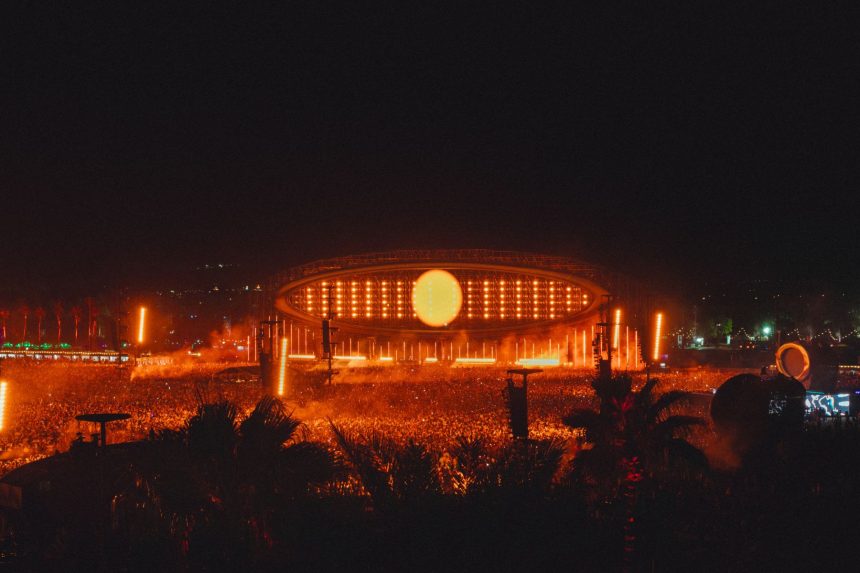
One of the latest demonstrations of this philosophy is Head Trip, the electronic music festival launched at the iconic Empire Polo Club in Indio. Departing from the traditional multi-stage format that often disperses audiences and fragmentizes experiences, Head Trip innovatively centered around a single stage. This design choice facilitated a collective atmosphere, allowing attendees to fully immerse themselves in the performances without the distractions of overlapping set times or the hustle of moving between stages. The result was a festival that fostered a direct connection between artists, their music, and the crowd, creating a more profound communal experience.
The concept of Head Trip parallels Goldenvoice’s rich history in the music scene. Founded in 1981 by the visionary Gary Tovar amid Southern California’s burgeoning punk culture, Goldenvoice initially built its reputation through close-knit relationships with both artists and audiences. The brand reached new heights in the late 1990s when Paul Tollett and Rick Van Santen launched the inaugural Coachella Valley Music and Arts Festival in October 1999. Over time, the company became renowned not just for its impressive lineup of acts, but also for its innovative approach to festival production. The lush green lawns, strategically positioned sound systems, and impressive art installations contributed to an experience that transcended conventional music festivals.
The ethos of Head Trip carried this philosophy into the realm of electronic music. The central stage, conceived by Romain Pissenem’s High Scream team, made a striking statement with its futuristic, reflective design that interacted beautifully with the surrounding desert landscape. The festival also featured dedicated listening areas such as Floating Points’ Sunflower Sound System, creating eclectic spaces to enjoy the music alongside celebrated artists like Avalon Emerson, Ben UFO, Eris Drew & Octo Octa, Four Tet, and Theo Parrish. This thoughtful balance between energetic performances and relaxed listening zones imbued the event with a distinct character and atmosphere.
The two-day lineup showcased a plethora of established talents from the realms of house, techno, and electronic music. Saturday got off to a groove-driven start with a back-to-back set from Seth Troxler and Ben Sterling, setting the stage for a special collaborative performance featuring Peggy Gou alongside Four Tet. The energy soared as Under Construction, the dynamic duo of FISHER and Chris Lake, unleashed powerful house beats to keep the crowd dancing. Although Calvin Harris was scheduled to close the night, unfortunate weather conditions compelled him to cancel, leaving attendees eager for what was to come on Sunday.
On Sunday, the momentum continued with DJ Harvey spinning a distinctive selection before Peggy Gou showcased her seminal hits, filling the air with infectious energy. The collaborative performance from Dom Dolla and KETTAMA followed suit, delivering an electrifying back-to-back set that had the crowd buzzing. Skrillex further elevated the atmosphere with his signature bass-heavy sound, culminating in a grand finale from Swedish House Mafia that perfectly matched the scale and spirit of the weekend. Notably, time allocations for performances extended to 90 minutes or longer, allowing artists to develop their sound and establish a real connection with the audience, rather than being rushed through a shortened set.
Goldenvoice’s extensive experience was evident in every aspect of the event’s organization. The lush green surroundings, ample shaded areas, exceptional sound quality, and diverse menu options contributed to a comfortable festival experience throughout the weekend. Most importantly, the decision to adopt a single-stage format addressed one of the primary frustrations often experienced at modern festivals: the dilemma of choosing between multiple acts performing simultaneously. Head Trip effectively illustrated that a successful electronic music event does not necessarily depend on an abundance of stages, overwhelming production, or a tightly packed schedule; sometimes, the key lies in bringing everyone together in one place and allowing the music to lead the way.