Nagoya’s Electronic Scene Is Hiding in Plain Sight
Back in February, the London electronic label Wisdom Teeth released nagoyaka na kaze / 和やかな風 (quiet wind), a collaboration with Nagoya-based producer Yuya Abe, aka abentis. This compilation shines a spotlight on Nagoya’s electronic music scene, which often struggles for recognition compared to the bustling cultural hubs of Tokyo, Kyoto, and Osaka. Despite being Japan’s fourth-largest city, Nagoya has developed a reputation as a relatively “boring” locale; in fact, the term Nagoya-tobashi—a phrase denoting artists skipping Nagoya during tours—has cemented itself in the lexicon of many touring acts.
The Seeds of Connection
You might wonder why Wisdom Teeth’s co-founders, Facta and K-LONE, chose to feature Nagoya specifically. It all began around 2021 when Abe made field recordings in the mountains of Obara. He tweeted about the percussive sounds he captured, comparing them to London-based producer Tristan Arp’s drum hits. This serendipitous moment caught the attention of Facta, who shared Abe’s tweet on Instagram. This simple tweet evolved into a pathway where Abe introduced his music to Facta, and eventually, his track “Bicycle” was featured in Wisdom Teeth’s compilation To Illustrate. Two years later, during a 10-year anniversary celebration for the label, Abe enlisted rising talents from Nagoya, such as Am Shhara and established acts like baptisma, creating a collaborative backdrop for this burgeoning scene.
Nagoya’s Diverse Musical Landscape
While often overlooked, Nagoya is home to an array of well-respected artists spanning genres. From iconic video game composer Koji Kondo to pop ensemble CHAI, and even the late rapper Tokona-X, the city enjoys a rich tapestry of musical history. In the ’90s, Nagoya birthed the visual kei movement, giving rise to what some have termed Nagoya-kei. Amongst the underground electronic scene, Foodman stands out as a pivotal experimental producer who has returned to his roots after a stint in Yokohama. He has influenced both up-and-coming artists and veterans alike, evident in his collaborations, such as a recent EP with Nikki Nai, highlighting Nagoya’s vibrant and evolving soundscape.
The Pillars of the Scene
The vibrant tapestry of Nagoya’s electronic movement owes much to the venues and parties that have nurtured its growth since the early 2000s. An essential figure is Yoichi Kikunaga, known as baptisma, who was pivotal in running influential venues like Club Daughter and Cafe Domina. At over 60 years old, he remains a significant supporter of the local scene, running Spazio Rita/DUCT Iseyama. As Abe puts it, “Foodman is someone who used to perform at baptisma’s club all the time and hang out there; we consider ourselves ‘baptisma children.’”
The GOODWEATHER Crew
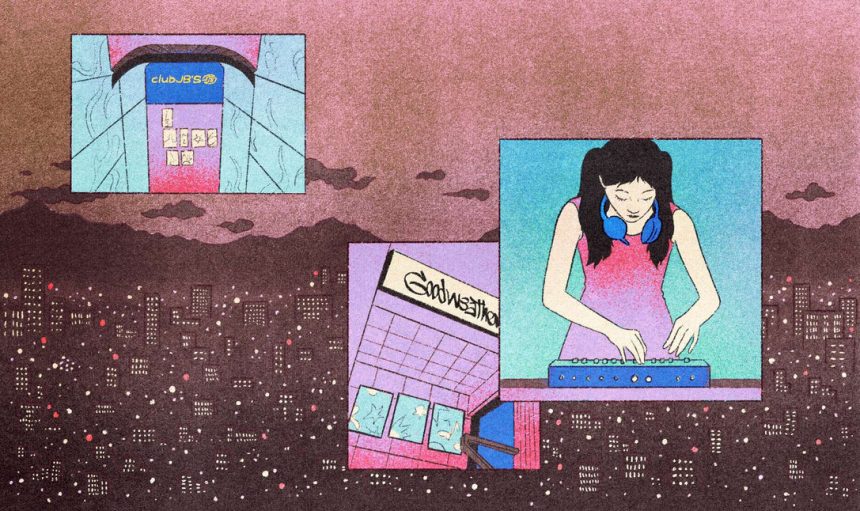
The emergence of clubs like GOODWEATHER has only further enriched Nagoya’s electronic milieu. Founded in 2008 by Eri Ishii, the GOODWEATHER crew has hosted numerous bass music events, launching a label in 2017 and opening a club in 2020. Located in the Shinsakae district, GOODWEATHER features a speaker setup designed by TOKYO SOUNDSYSTEM LABORATORY, delivering an immersive experience that has attracted talent like dubstep pioneer Mala and dynamic Indonesian duo Gabber Modus Operandi.
The Pulse of Grassroots Movement
Despite the challenges faced, Nagoya’s grassroots scene has thrived, thanks to numerous intimate venues and a growing number of dedicated artists. Remote yet interconnected, the scene is exemplified by Yuya Abe’s weekly party Hybrid Bass Freq at Yakuzen Bar Sakae. Starting in 2020, Abe’s initiative quickly gained traction, evolving into a landmark event that has occurred over 80 times in two years. Nearby, Club JBs showcases live jam sessions, blending various electronic genres and providing a testbed for emerging talent.
Cross-Pollination Across Genres
The beauty of Nagoya’s scene lies in its cross-pollination of ideas and styles. Located in the Imaike neighborhood, there’s a vibrant culture of fusion where hip-hop artists and hardcore punk bands mingle seamlessly with electronic music producers. This unity is illustrated by artists such as Methodd and CazU-23, who weave together atmospheric sounds echoing influences from diverse genres, fostering a collaborative ethos throughout the city. Venues like TeTe Curry and Casablanca Cafe serve as cultural hubs where ambient musicians gather, filling a void in a city with fewer genre-specific spaces.
Extending Beyond Borders
Thanks to Nagoya’s central location, the city’s artists often collaborate with talent from nearby regions like Toyota and Gifu. In 2025, the groundbreaking experimental party series Kyōran brought Palestinian artists Basel Abbas and Ruanne Abou-Rahme to Club Mago, showcasing international collaborations as part of the Aichi Triennale. This points to an important growth trajectory for Nagoya’s scene, expanding its influence and gaining recognition both domestically and abroad.
Key Releases to Explore
As we delve into the wealth of musical talent emerging from Nagoya, several key releases stand out. Among them is CRZKNY’s GW VIP, an album created to support the recovery of club GOODWEATHER’s Eri Ishii upon her health scare. The pulsating, hypnotic tracks were crafted specifically for GOODWEATHER’s spatial setup.
Yuya Abe’s Dim Grow captures the tropical essence of his sound, a manifestation of his rhythmic inclinations honed during live performances.
Free Babyronia‘s Parade explores a plethora of genres, boasting compelling production techniques while drawing from hip-hop roots.
The diverse work from these artists, among many others, showcases the rich soundscape that Nagoya has to offer—a hidden gem within Japan’s electronic music culture that continues to evolve and thrive.
Explore the sounds of Nagoya, and you’ll find a narrative woven through experimentation, collaboration, and a vibrant community that refuses to be sidelined.