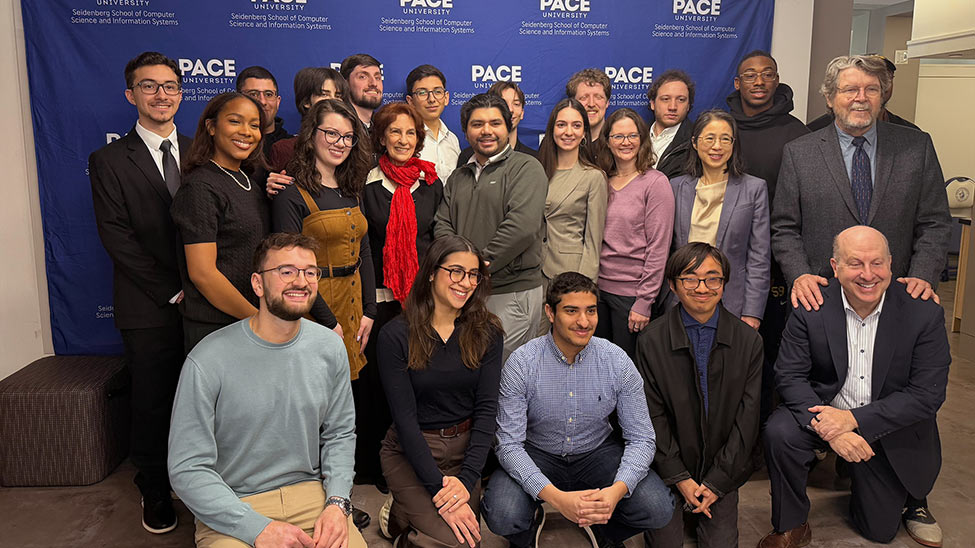
New Data Lab Advances Environmental Right-to-Know Through Real-Time Monitoring and Public Health Innovation
Pace University recently celebrated a pivotal moment in its commitment to environmental technology and policy with the inauguration of the Gale Epstein Center for Technology, Policy and the Environment. This state-of-the-art facility, located at the Seidenberg School of Computer Science and Information Systems, signifies a major leap forward in the university’s leadership role in advancing innovations aimed at protecting both community health and the environment.
The centerpiece of this celebration was the opening of an enhanced data laboratory designed to monitor environmental conditions in real time. This initiative reinforces the public’s right to know about water quality and other environmental factors that directly affect their health and safety. With a new technology lab positioned along the Hudson River, the Gale Epstein Center aims to be a regional hub for fostering innovations in information technology and environmental policy.
Generously funded by New York City philanthropist and business leader Gale Epstein, the Center builds on the successful foundation laid by Seidenberg’s Blue CoLab. Its mission stresses that informed decisions regarding public health are rooted in accessible, timely, and accurate environmental information. This becomes ever more critical in our fast-changing world, where information can be both a weapon and a shield against unforeseen environmental crises.
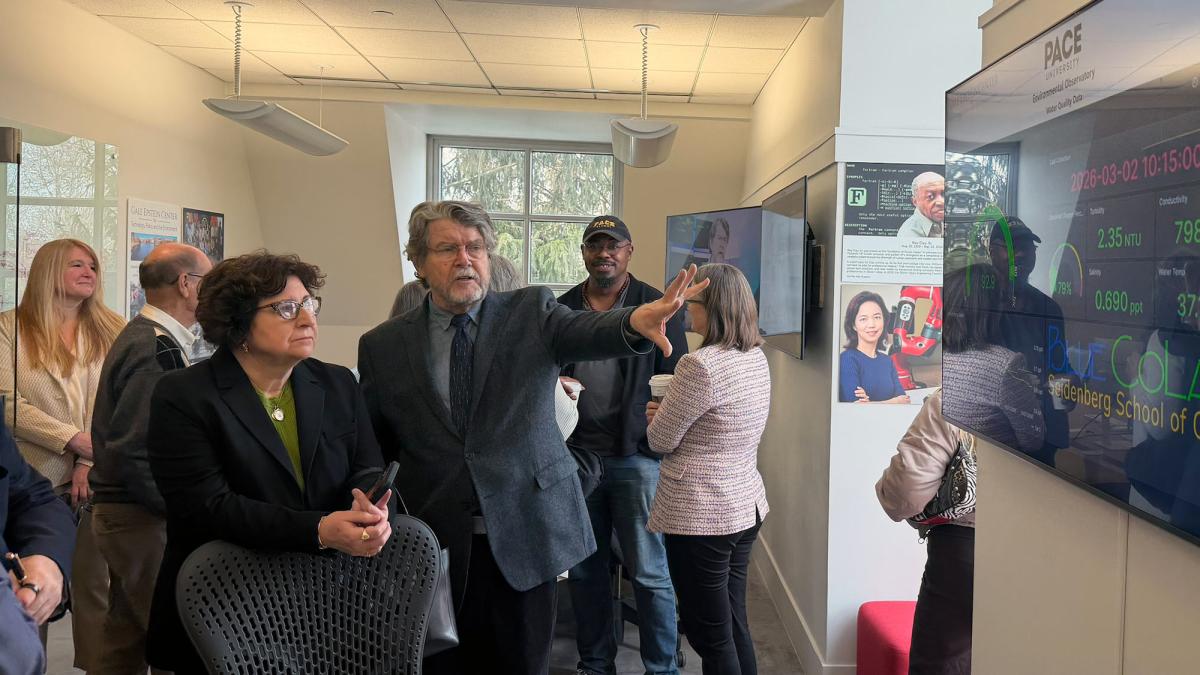
During the ribbon-cutting ceremony, Pace University President Marvin Krislov emphasized the innovative spirit behind the Gale Epstein Center. “This Center represents innovation with purpose,” Krislov remarked, expressing gratitude for Epstein’s vision and contribution. By merging technology, data science, and policy leadership, the Center strengthens the university’s capacity to address pressing public health and environmental challenges.
At the heart of the Center’s initiatives is the development of cutting-edge real-time sensing and alert systems. These technologies are designed to detect contamination in drinking water swiftly, thereby alerting the public to potential risks as quickly as possible. The integration of applied research, artificial intelligence, and machine learning further enhances the capability to respond to environmental threats effectively.
Executive Director John Cronin highlighted the urgency of such early warning systems. “Whether facing incidents of drinking water contamination, climate-related emergencies, or the emergence of new pollutants, immediate alerts can save lives and protect community health,” Cronin asserted. The Gale Epstein Center seeks to provide the tools necessary for developing these crucial technologies.
Epstein herself spoke to the importance of accessible environmental information, stating, “Access to accurate, timely environmental data is essential for protecting public health.” Her vision aligns seamlessly with the Center’s mission, which focuses on using technology and education to empower communities, ensuring that they are well-informed and equipped to protect their health and environment.
Li-Chiou Chen, PhD, interim dean of the Seidenberg School, elaborated on the educational benefits offered by the Center. “This initiative allows students to actively apply emerging technologies to real-world environmental challenges,” Chen said, stressing the emphasis on experiential learning that characterizes programs at Pace University. Students gain invaluable experience in data analytics and real-time systems through targeted, hands-on projects in various environmental contexts.
For students like Silas Gonzalez, a sophomore majoring in computer science and law, the Center has had a transformative impact. “From day one, I felt this was where I belonged,” said Gonzalez, underscoring how the faculty challenge and support students in their academic journeys. He noted the importance of initiatives like the United Nations Millennium Fellowship in demonstrating the intersection of technology and environmental science in crafting a sustainable future.
The Gale Epstein Center operates a comprehensive program of innovation, research, training, and policymaking. Students engage with coursework related to real-time instrumentation, technology policy, and data analytics, while gaining practical experience through involvement with various monitoring sites along the Hudson River. Collaborative efforts across multiple disciplines, including partnerships with the Dyson College’s Environmental Studies and Science Department, the Elisabeth Haub School of Law, and the NYC Design Factory, support academic and policy initiatives aimed at generating solutions to contemporary environmental challenges.
The grand opening witnessed attendance from not only Epstein and Pace leaders but also faculty, students, alumni, and community supporters. Among those present was Assemblymember MaryJane Shimsky, highlighting the importance of political support for such significant initiatives. Following the ceremony, attendees had the opportunity to explore the laboratory and engage with faculty and student researchers, fostering a collaborative atmosphere that epitomizes the Center’s mission.
About Pace University
Founded in 1906 and celebrating its 120th anniversary in 2026, Pace University champions real-life learning combined with rigorous academics to prepare students for rewarding careers. With campuses in New York City and Westchester County, it serves approximately 13,600 students across a diverse range of undergraduate, master’s, and doctoral programs offered by various schools, including the College of Health Professions, Dyson College of Arts and Sciences, Elisabeth Haub School of Law, Lubin School of Business, Sands College of Performing Arts, School of Education, and the Seidenberg School of Computer Science and Information Systems.
About the Seidenberg School of Computer Science and Information Systems
The Seidenberg School of Computer Science and Information Systems at Pace University is recognized as a premier institute for technology education. Providing an expansive curriculum at both undergraduate and graduate levels, the School is strategically situated in the heart of New York City’s tech ecosystem. This location enhances opportunities for students to connect with established companies and innovative startups alike. Through partnerships with leading tech firms, government agencies, and global institutions, Seidenberg’s programs emphasize practical, hands-on experiences that lead to outstanding internships and career prospects. The faculty includes experts in artificial intelligence, cybersecurity, data science, and more, enhancing students’ learning experiences through direct involvement in labs and centers.