The Sentimentality of “I Love My Computer”
There is something strangely sincere about calling an album “I Love My Computer.” For many born just before Y2K or just after the new millennium, computers were not just tools; they were steadfast companions during formative years. As technology expanded and online experiences multiplied, the computer transformed into a venue for creating memories. Whether it was personalizing music by downloading albums for the first time, discovering online communities to delve into “Lost” fan theories, or witnessing the dawn of viral videos on YouTube, the connection to the internet and computer culture became integral to shaping identities. Ninajirachi’s album explores this unique experience, capturing the essence of being raised in the embrace of a digital landscape.
- The Sentimentality of “I Love My Computer”
- A Diary of Digital Nostalgia
- The Intertwining of Technology and Music
- Ninajirachi: A Product of Evolving Internet Culture
- Bold Statements and Core Truths
- Musical Memories of a Digital Age
- A Contemporary Look at Nostalgia
- Resonative Narratives of Online Culture
- A Mishmash of Cultures
- Computers: The Central Character
- Beyond Online Music Trends
- Evolving Cultural Narratives
- Sonic Storytelling
A Diary of Digital Nostalgia
“I Love My Computer” is more than mere nostalgia. It reads like a diary of adolescent reflections, chronicling the highs and lows of navigating a digital adolescence. This dance record encapsulates high school moments marked by the bittersweet pleasure of knowing those social media posts would eventually be deleted. Yet the magic of this album lies in its deep dive into digital-native storytelling, revealing insights from an artist for whom the internet wasn’t a later-life discovery but a pivotal part of growing up.
The Intertwining of Technology and Music
Electronic music and technology are akin to two sides of the same coin. From Kraftwerk crafting novel soundscapes in the 1970s to contemporary DJs rocking the turntables of Ibiza, the evolution of EDM is tightly woven into the fabric of technological advancements. The aesthetic of electronic music—blending ethereal synths, heavy drum machines, and innovative production software—has not only defined the genre but also continuously reshaped its vocabulary. Artists like Daft Punk embraced technology with their robot personas, while Justice blended genres, establishing a bridge between EDM and rock that resonated through clubs and online downloads alike.
Ninajirachi: A Product of Evolving Internet Culture
Ninajirachi does not come from a traditional EDM background; rather, she represents a new wave of creators who grew up as technology evolved. Her journey through early chat rooms, comment sections, and the rise of social media allowed her to discover herself against the backdrop of an ever-changing online landscape. The connection she has with her computer goes beyond utility; it mirrors a transformative relationship that many have experienced as digital natives.
Bold Statements and Core Truths
In one of the standout tracks, she boldly sings, “I want to fuck my computer. ‘Cause no one in the world knows me better.” While provocative, this line drives home a central truth about the album: it embodies the core of early internet nostalgia while also recognizing the deep connections formed within that experience. This exploration is particularly poignant as the cultural lens begins to shift again; society is starting to reminisce about the era of Flash games and AIM, embracing a shared sentiment of nostalgia that transcends time.
Musical Memories of a Digital Age
Tracks like “iPod Touch” evoke vivid memories, illustrating the life of a digital native. Lines such as “sounds like iPod Touch, yellow Pikachu case” resonate with anyone who grew up during that era, creating a deeply personal connection to the music. Ninajirachi artfully captures the bittersweetness of those formative digital memories, reminding listeners how technology has shaped their experiences. The album brilliantly intertwines these reflections, asserting that even in nostalgia, digital daydreams are inextricably tied to identity and creativity.
A Contemporary Look at Nostalgia
Despite its nostalgic undertones, “I Love My Computer” invites listeners to balance the past with the present. Tracks like “CSIRAC” produce sounds reminiscent of Y2K club mixes, while others, such as “It’s You,” could seamlessly transition into sets performed by contemporaries like Porter Robinson or Madeon. Ninajirachi skillfully balances nostalgic sounds with modern EDM trends, drawing from both the past and current digital landscape to create music relevant for today.
Resonative Narratives of Online Culture
Navigating through various facets of online culture, Ninajirachi captures the evolution of message boards into spaces like Reddit, Tumblr, and Twitch. “I Love My Computer” serves as a reflection of this transformation, each song evoking the intricate tapestry of shared experiences—everything from community-building to personal trauma and joy. It encapsulates moments only accessible through shared digital interactions, echoing the feeling of being part of something greater than oneself.
A Mishmash of Cultures
The album is a collage of EDM influences, anime openings, meme culture, and gaming lore, all seamlessly intertwined without requiring explanation. Each reference contributes to a rich narrative illustrating how the internet has reshaped cultural connections over the decades. The more online you are, the more you can decipher the layers of Ninajirachi’s work, turning it into an engaging dialogue with audiences well-versed in internet culture.
Computers: The Central Character
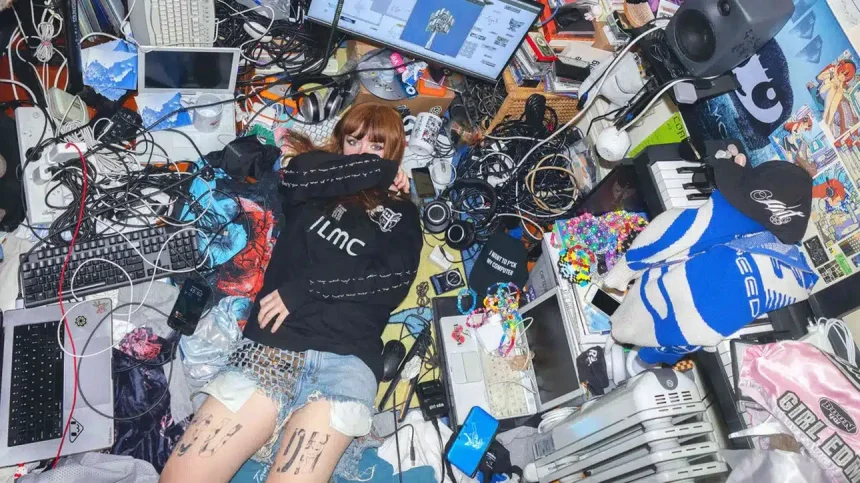
What sets “I Love My Computer” apart is its portrayal of the computer as a central character in the narrative. Ninajirachi invites listeners into a world where the computer is an indispensable part of life—serving as a jukebox, library, social hub, and creative studio. The album’s cover art, featuring a flurry of computers, wires, and gaming paraphernalia, symbolizes the intimate relationship between the artist and technology, hinting at a world where the computer is much more than a device—it’s a lifeline to creativity and connection.
Beyond Online Music Trends
“I Love My Computer” transcends simple observations about the online experience; it delves into commentary on how culture shifts through the influence of an expansive online populace. Even as physical formats like vinyl make a comeback, music discovery has increasingly migrated online, progressively evolving how artists and listeners engage with sound. The album is a testament to this evolution, charting the development of music and culture through the internet’s lens.
Evolving Cultural Narratives
As the boundaries of music continue to get blurred, the internet allows artists to draw from a rich palette of global influences, giving rise to a more nuanced understanding of genre and communication. Ninajirachi emphasizes this evolution, pushing against oversimplified narratives of finding music online by showcasing her experience as a musician raised amid digital thinkers and creators.
Sonic Storytelling
Ultimately, “I Love My Computer” encapsulates the experience of growing up online, weaving a rich tapestry of shared memories and cultural references. The album goes beyond merely recalling the past; it compels listeners to consider the profound impact of growing up in an interconnected world. Through sound, Ninajirachi narrates the complex yet joyous journey of being “raised by the internet,” inviting everyone to reflect on their digital origins while celebrating the connections it fosters.
In a world where the internet has altered every facet of life, “I Love My Computer” stands as a powerful embodiment of resilience and nostalgia, urging listeners to embrace the rich landscape of their online experiences.