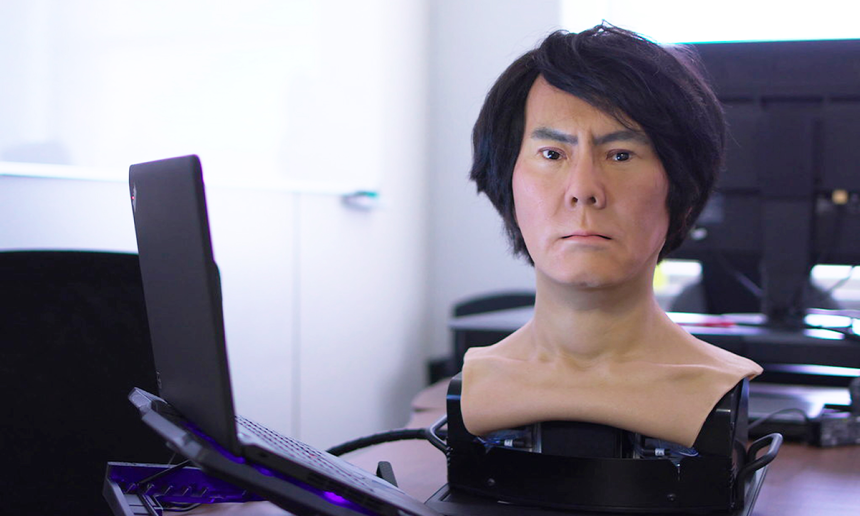

I got off the elevator at the 18th floor of a gleaming skyscraper in Tokyo last month and walked to the office of robot pioneer Hiroshi Ishiguro. At the front desk, I was met by a smiling female avatar on a computer screen who asked for my information. A knee-jerk rebellion made me turn away and walk down a hallway where I found a young man who showed me to the roboticist’s office.
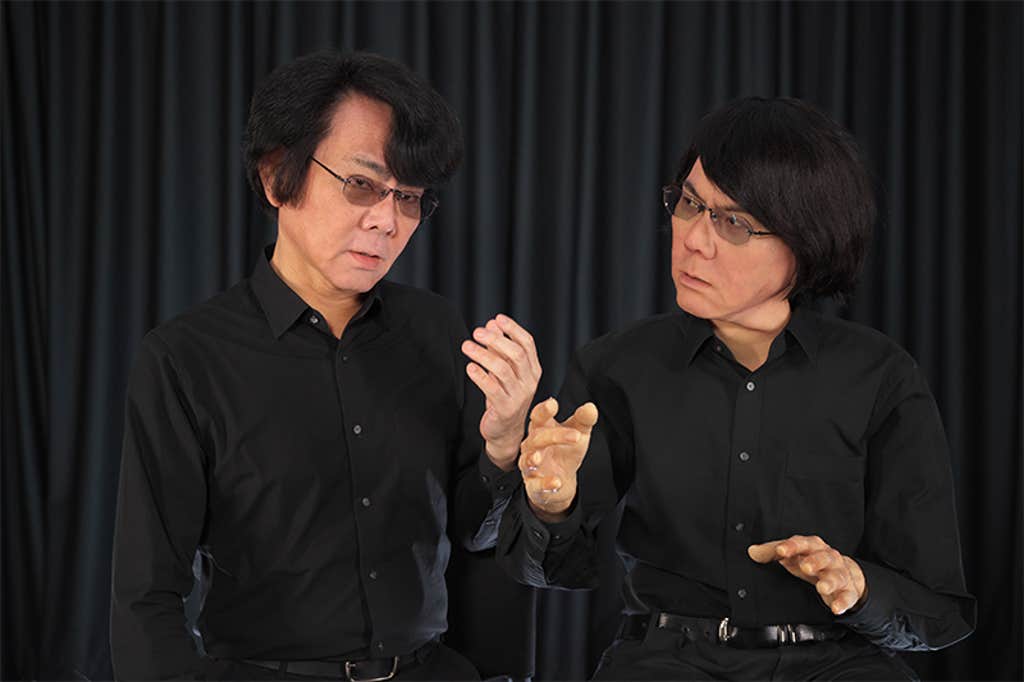
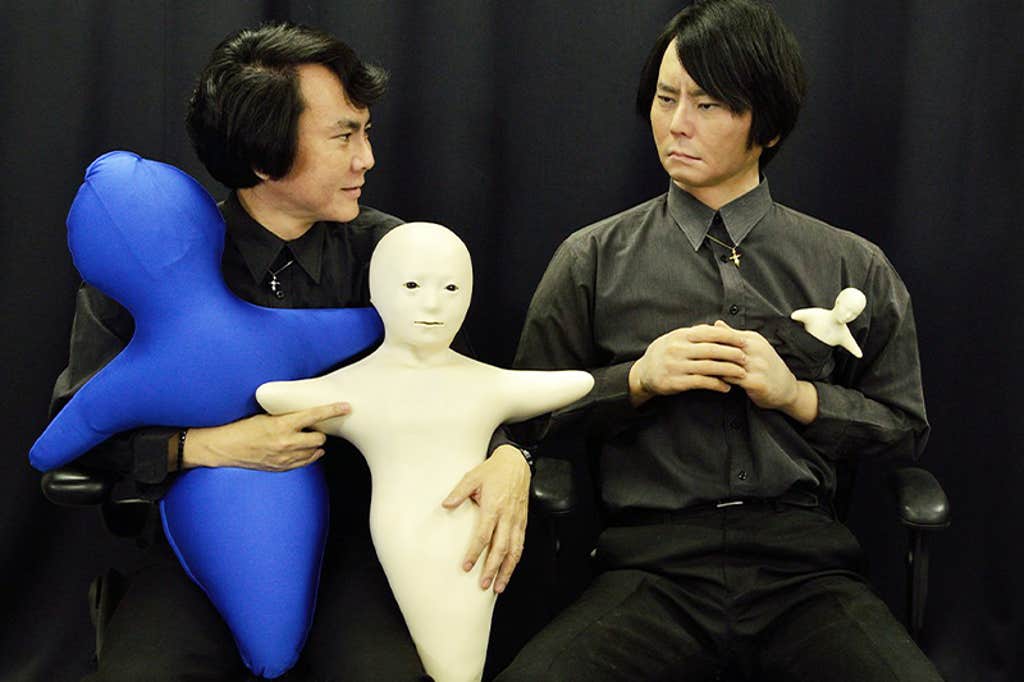
For over 20 years now, Ishiguro, 63, has been creating robots that look and act uncannily like people—notably himself. He calls his silicone and electronic doppelgangers “Geminoids,” after the Latin term geminus, which means twin. One of his earliest and eeriest twins is the robot he modeled on his daughter, Risa, when she was just four years old. Ishiguro has programmed a multitude of his books and media interviews into his latest iteration of himself, an android he utilizes for conference lectures and lectures at Osaka University. His company, Avita, headquartered in Tokyo, is developing avatar systems meant for various industries.
We cannot separate the human and the technology. It is part of our brains and our bodies.
Under the darkening sky of artificial intelligence, I recently read and was enchanted by Ishiguro’s 2020 book, How Human Is Human? The book is a compelling exploration of the fluid boundaries between humanoids and humans, carefully investigating the relationship between the robot and its operator. Ishiguro presents a parallel reality where technology respects human comfort and dignity, a refreshing take amidst fears surrounding AI integration into our daily lives. The contrast between Ishiguro’s thoughtful programming of his Geminoids and the troubling headlines about AI abuses poses a poignant question: What delineates humane technology?
Ishiguro’s office resembled a NASA control center. Rows of busy desks filled with people interfacing with computers surrounded him. I momentarily mistook him for one of his own Geminoids. Yet it was Ishiguro himself, bursting with energy and keen on understanding humanity by mimicking it. Born and raised in Japan, his speech oscillated between clipped English and philosophical musings.
The Geminoids are strange.
Why?
My reaction is not how strange it is to have a copy of you. What is strange is making a copy and then observing people’s reactions to it. Unlike traditional views of human-like technologies measured by the Turing test, your approach treads another path.
Yes. The traditional Turing test is merely a text-based conversation, easily manipulated. But humans engage across multiple modalities—gestures, eye contact, and myriad other factors create our interactions. My fundamental approach investigates whether we can evoke a genuine human-like presence. This is the essence of robotics. We can replicate human-like robots, but we lack a concrete definition of what it means to be human. As a result, the Turing test falls short.
That makes a lot of sense. The Turing test carries its own cultural weight.
Indeed. This differs fundamentally between cultures, especially between Europe and Japan. In European thought, humanity is often viewed as distinct, divine even, while in Japan, we find humanity interwoven with nature. We perceive many forms of humanity in natural elements, and our cultural practices embody this belief. Thus, our endeavor to develop robots can alternatively reveal our understanding of humanity.
We are the species that creates and engages with our creations. How do you measure humanity’s closeness to technology?
We observe and refine our understanding of humanity as we enhance robotic performance. Our creations, like smartphones, become intuitive, and the designers may not fully recognize their social impacts at the outset. Technologies have the potential to refresh our understanding of human interaction.
That’s a noble vision.
Why did you embark on the journey of creating robots that emulate people?
My initial robot was a copy of my daughter; later, I felt it essential to create a version of myself for comparison. Today, I’m employing a large language model (LLM) to facilitate my android’s ability to communicate in my manner. This current exploration centers around the idea of forming the ego—essentially a mosaic of personalities. Interestingly, my android often seems more astute than I!
We are nothing. When we die, we return to nature. Nothingness is significant.
What current Geminoid project are you working on?
We are developing a Geminoid for Sōseki Natsume, an influential Japanese writer who graces education curricula throughout the nation. His literary brilliance is underscored by his complex personality, which included domestic violence. This has sparked significant debate among researchers about how to design his android, particularly concerning the portrayal of less savory aspects of his character. I propose we approach this ethically; after one’s death, we often choose to remember the high points, similar to how statues symbolize the essence of individuals.
I understand your perspective, but it seems contrived. We have multifaceted individuals with a spectrum of good and bad actions; the combined narratives deepen our understanding.
Yes, but we currently lack the technology to replicate true personalities. With advancements, we can learn to portray a more multifaceted Natsume. If we can eventually build robots embodying diverse personalities, we will facilitate a more comprehensive understanding of human nature itself.
In what ways do you envision humanity evolving with technology?
People’s behaviors can adapt remarkably to diverse situations. Technology offers individuals who struggle with social interactions, like some autistic individuals, a chance to express themselves freely, ultimately broadening our options and enriching our human experiences.
Your assertion resonates—a robot can empower people to overcome shyness not merely by observation but by merging personalities and experiencing newfound comfort.
Precisely! Extending this to society, we feel collective pain, a profound aspect of humanity. Our brains and our bodies evolve, influenced by external connections—familial and broader social networks alike. For instance, I occasionally felt a profound loss when my rental car broke down during my time in the U.S.—it was as if I had temporarily lost a part of myself.
As a traveler in Japan, I often notice stark cultural differences; one being how the West distinctly separates memory and imagination, whereas in Japan, there is a fluidity.
Our worldview doesn’t necessitate this differentiation. Ultimately, we understand we are a part of nature, returning to the earth after death. This philosophy underpins our acceptance of technology as extensions of ourselves rather than separate entities.
This holistic perspective is captivating, particularly how it intertwines with lineage, illustrating a more extended sense of self.
I propose that Japan’s unique geographic history fostered a collective familial bond among its people, blurring distinctions between individuals. Our nature binds us into a cohesive tapestry of shared experience, unlike the neighborly concerns often central to European mindsets.
In Greece, our environment—rich with and sometimes deadly nature—shapes identity and social structures.
Absolutely, and deities often mirror our technological advancements. We embrace new technologies as integral aspects of our existence, thereby naturally welcoming innovation.
You developed a performance piece, Sayonara: Android-Human Theatre, where a female Geminoid recites poetry for a dying girl. Your description of the robot’s presence evokes religious imagery like the Virgin Mary.
Such moments feel natural to people, provoking emotional responses in ways a human performer may struggle to replicate due to inherent doubts in trusting a live performer.
Could it be that audiences perceive the robot less as a machine and more as a revered figure or a statue, amplifying the emotional experience?
It’s crucial to inspire human imagination. Humanity encompasses varied emotional landscapes and a plethora of personalities. Sometimes reducing the complexity can spark greater imaginative expressions.
Your assertion that science and technology should serve artistic expression diverges from prevailing AI development trends.
This perspective is vital as we navigate murky theories requiring imagination—what best can push boundaries and spark new initiatives. Collaborating with artists fosters creativity; it isn’t merely about analytics but capturing the heartbeat of human curiosity.
Lead image: Ishiguro Lab, University of Osaka