
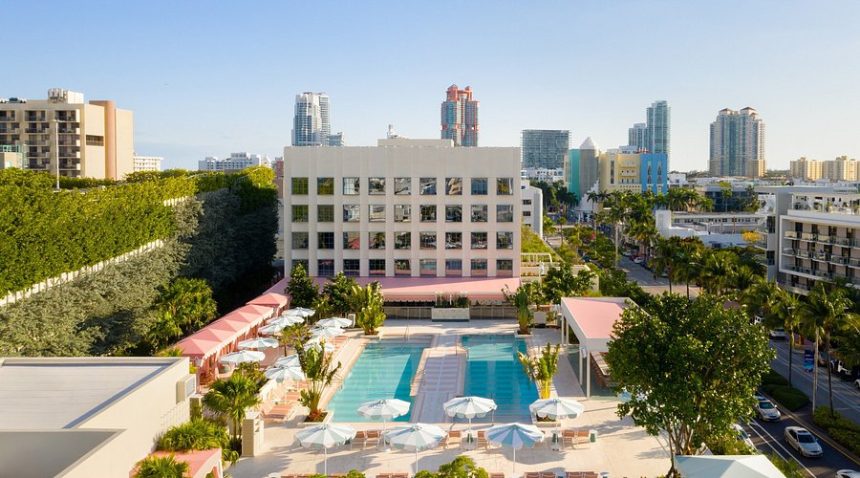
Miami’s glittering nightlife just took a serious hit. The celebrity-backed The Goodtime Hotel, a pastel-soaked playground tied to Pharrell Williams and nightlife mogul David Grutman (with indirect ties to Bad Bunny through Miami’s elite dining circuit), is reportedly preparing to terminate its entire workforce as operations grind to a halt.
According to filings, the hotel’s operator plans to cease managing the property by the end of May, putting over 100 employees out of work in one sweep. The layoffs extend beyond the hotel itself to its high-energy poolside concept, Strawberry Moon, a venue that once embodied the city’s day-to-night party ethos.
For a venue that opened in 2021 as a curated collision of music, design, and Miami excess, the fall feels especially abrupt. The Goodtime wasn’t just another boutique hotel. It was a physical extension of Pharrell’s aesthetic universe, wrapped in art deco tones and influencer-ready chaos. But behind the Instagram glow, the financial reality has been far less photogenic.
A reported $149 million foreclosure battle has been looming over the property, with lenders alleging missed payments and defaulted loans tied to the hotel’s ownership group. Add in ongoing legal disputes over unpaid operational costs, and the writing has been on the wall for months.
What’s still unclear is whether The Goodtime will shut down completely or re-emerge under new management. The hotel is still being marketed and accepting bookings, suggesting this could be more of a behind-the-scenes reset than a full-on disappearance.
Still, for Miami’s hospitality and nightlife ecosystem, this is a warning shot. Because if a high-profile, celebrity-fueled concept like The Goodtime can unravel this quickly, it raises a bigger question: how sustainable are these experience-first, brand-heavy venues when the economics tighten?
In a city built on bottle service, weekend energy, and global tourism, losing over 100 jobs at a single property isn’t just a business story. It’s a culture shift in real time.