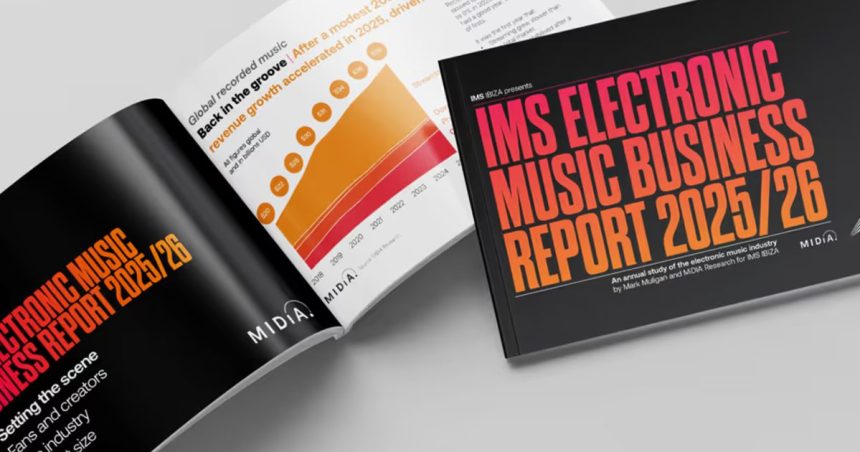
The Resilient Rise of the Global Electronic Music Industry: Insights from the 2026 IMS Business Report
In a remarkable turn of events, the global electronic music industry has underscored its resilience, with the latest data from the 2026 IMS Business Report revealing a market valuation that has surged to an impressive $15.1 billion. This significant growth of 7% in 2025—up from 6% in 2024, when the total market valuation reached $14.2 billion—highlights a new peak for a sector known for its vibrant culture and dynamic evolution.
A Year of Growth Amidst Global Uncertainty
The findings, presented during IMS Ibiza’s opening day on April 22, shed light on the ongoing vitality of the electronic music scene. Mark Mulligan, the founder of MIDiA Research, emphasized the importance of this growth, stating, “2025 was another good year for the global electronic music market with growth rooted in thriving scenes.” His assertion captures the essence of how, even amidst global uncertainties and rapid technological changes, the electronic music industry has showcased both resilience and relevance.
This resilience is closely tied to the dance floor’s escapist role. In times of turmoil, individuals increasingly turn to music and live experiences for a sense of connection and relief. The dance floor has transformed into a sanctuary, offering a communal space where people can momentarily escape the complexities of the outside world.
Shifting Landscapes: Creation and Consumption
Not only is the electronic music market growing, but there is also a noteworthy shift in how music is produced, consumed, and monetized. This transformation is indicative of the industry maturing in response to technological advancements and changing consumer preferences.
With the rise of digital platforms, artists now have unprecedented opportunities to reach a global audience. The democratization of content creation has led to an influx of independent artists who leverage Social Media and streaming platforms. As a result, electronic music has become more accessible, allowing diverse genres and voices to flourish.
This paradigm shift is not just about access; it’s also about consumption patterns. Listeners are no longer tied to traditional album formats; instead, singles, EPs, and playlists have taken center stage. This evolution reflects a broader trend, where the bite-sized consumption of music aligns with the fast-paced lifestyles of today’s listeners.
Monetization Innovations in Electronic Music
As the industry continues to evolve, new monetization strategies are being embraced. The traditional avenues of revenue—concerts, merchandise, and record sales—are complemented by innovative approaches such as digital collectibles and virtual events. With the advent of blockchain technology and NFTs (Non-Fungible Tokens), artists can now engage with their fans in novel ways while generating additional income streams.
Virtual concerts have gained traction, particularly during the pandemic, and they continue to remain popular as they lower barriers to entry for global audiences. These events not only provide a unique experience but also open up new avenues for sponsorship and brand partnerships, further enhancing monetization potential.
The Vibrant Ecosystem of Electronic Music
The electronic music scene thrives on its diversity, with sub-genres and local scenes weaving a rich tapestry of cultural expression. From techno in Berlin to house in Chicago and trance in Ibiza, each scene contributes its unique flavor, fostering international collaboration and innovation.
The festival culture continues to be a significant driver for the sector. Major events attract thousands, creating a sense of community and shared experience that is unmatched in other genres. Not just music, these festivals become full-fledged events, offering art, food, and interactive experiences that engage attendees on multiple levels.
Conclusion-Free Exploration of Trends
While the statistics from the 2026 IMS Business Report highlight robust growth, they also underscore the importance of adaptability in a rapidly changing environment. The electronic music industry, buoyed by an enthusiastic audience and innovative creators, reflects a vibrant and resilient cultural force that is always in motion.
In summary, the global electronic music industry not only thrives as a commercial powerhouse but also serves as an essential outlet for creativity and connection in our ever-evolving world. Its journey of resilience, adaptation, and growth is a testament to the enduring power of music to uplift, unite, and inspire.