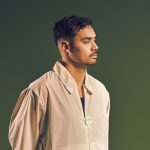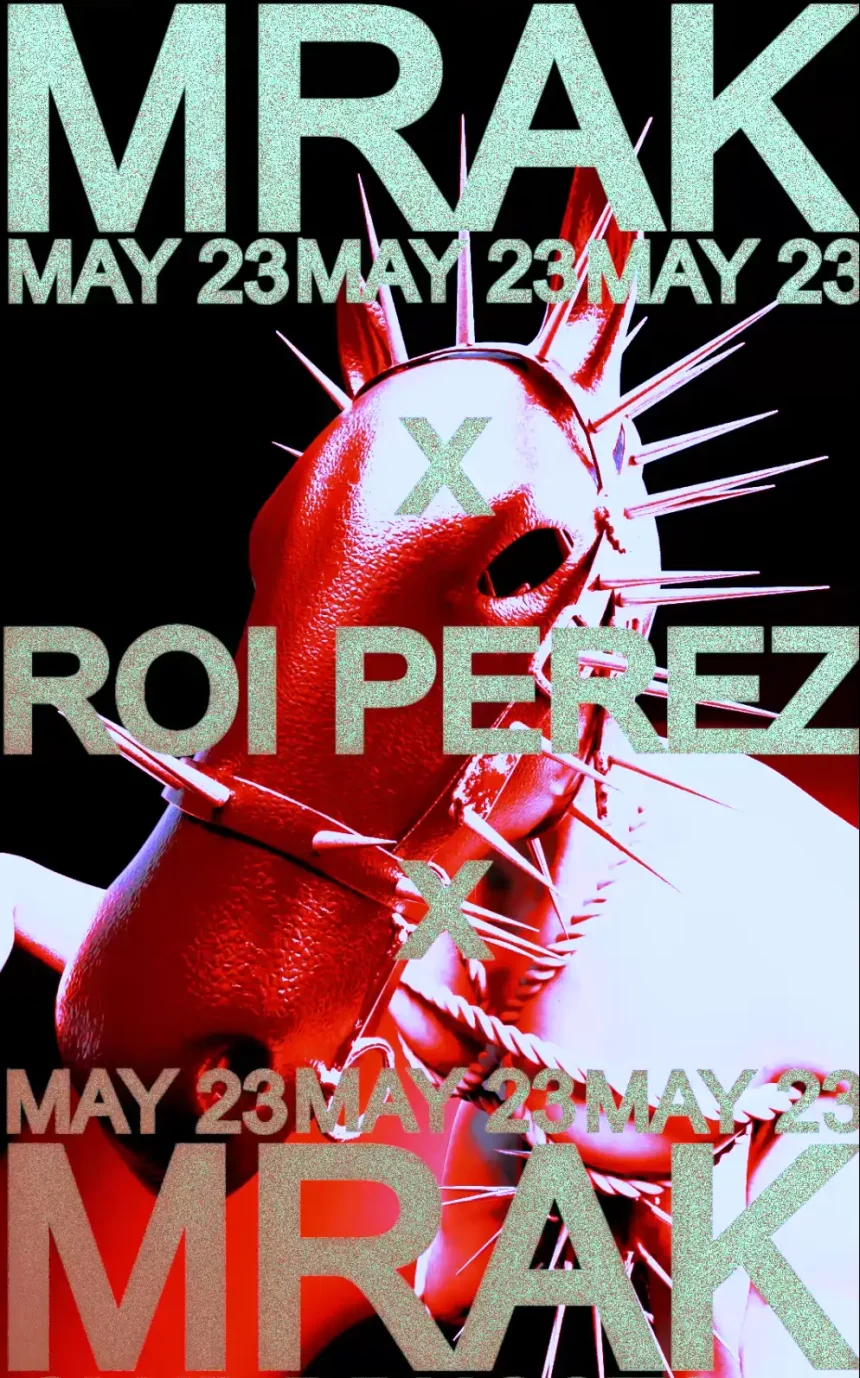
MRAK closes its current season on May 23 with the return of one of contemporary club culture’s most beloved and emotionally intuitive selectors — Roi Perez.
The Berlin-based DJ returns to Drugstore Belgrade for his third appearance within the MRAK series, following two nights that still carry near-mythical status among regulars of the venue.
First came the unforgettable Black Room session in 2020.
Then the Garden takeover in 2021.
Now, five years later, Roi Perez returns at a moment where groove, fluidity and emotionally open dancefloors feel more relevant than ever.
Few DJs embody that atmosphere quite like him.
Originally from Israel and now deeply embedded inside Berlin’s underground ecosystem, Roi Perez has built an international reputation through sets that resist rigid genre boundaries while creating extraordinarily human dancefloor experiences. House, techno, disco, tribal rhythms, acid and psychedelic textures all move fluidly through his selections without ever feeling forced or performative.
His DJing feels instinctive rather than calculated.
There is always movement, sensuality and emotional unpredictability inside the room when Roi plays.
That quality made him a natural fit for Panorama Bar, where he has remained a resident for more than a decade. Within Berghain’s upstairs sanctuary, Perez became known for marathon sets capable of shifting effortlessly between intimacy and euphoria while maintaining an unmistakable sense of flow.
At the same time, his connection to Berlin’s queer underground remains equally central to his identity.
As a regular at the legendary fetish institution Lab.Oratory and co-founder of the LAUNDRETTE party series alongside Partok, Roi Perez represents a strand of electronic music culture where openness, sexuality, emotional freedom and dancefloor energy exist inseparably together.
That spirit has increasingly resonated far beyond Berlin itself.
In recent years, audiences globally have gravitated back toward DJs who prioritize groove, storytelling and emotional depth over maximalism and aggression alone. The current resurgence of groove-oriented club music feels perfectly aligned with Perez’s long-established philosophy behind the decks.
And Drugstore remains one of the few venues in the region truly capable of supporting that kind of immersive experience.
The industrial Belgrade club has built its reputation precisely through nights where atmosphere matters more than spectacle — where long-form journeys, hypnotic sound systems and deeply committed crowds transform the space into something far beyond standard nightlife.
MRAK has consistently existed inside that same emotional territory.
Rather than chasing trends, the series continuously focuses on artists capable of creating tension, intimacy and psychological movement across entire nights. Roi Perez fits that identity almost perfectly.
His previous appearances at Drugstore became memorable not through dramatic peak moments, but because of the way the room gradually dissolved into collective movement over hours — subtle transitions, unexpected records and the kind of groove that quietly takes control of the entire dancefloor without anyone realizing exactly when it happened.
That is where Roi Perez operates best.
Not in spectacle.
Not in obviousness.
But somewhere deeper inside the emotional mechanics of nightlife itself.
As MRAK closes another season, bringing Roi Perez back feels less like a booking and more like a reunion between artist, space and audience that already understand each other instinctively.
On May 23, Drugstore once again becomes the setting for that connection.