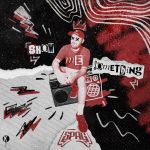
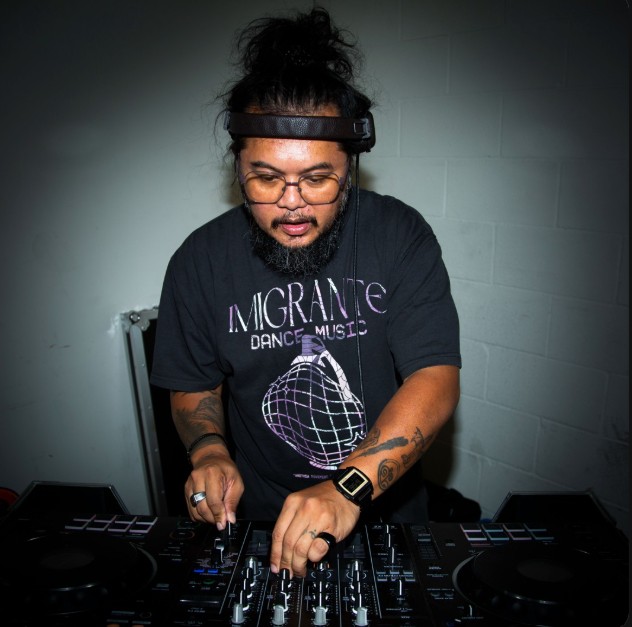
Filipino electronic producer Qolaj continues to carve out a distinctive place within underground dance music with the release of Re-Adoption, a new EP on Angry Dog Records.
Blending hardgroove, techno, breakbeat influences, and rave energy, the project explores ideas of reconstruction, transformation, and cultural identity while pushing beyond the boundaries of traditional club music.
More than a collection of reworks, Re-Adoption reflects Qolaj‘s broader artistic philosophy: embracing tension, experimentation, emotional honesty, and community through sound.
Following his success in Beatport‘s 2024 Global Remix Challenge and an official release with Warner Music Group, Qolaj is entering a new chapter that further expands his unique approach to dance music.

We caught up with him to discuss the meaning behind Re-Adoption, genre mutation, belonging within underground culture, and why care remains the most important ingredient in today’s electronic music scene.
Meaning of “Re-Adoption”
“Re-Adoption” is such a loaded title. What does it mean to you personally, culturally, and musically?
A lot of my process when working on remixes is about re-adapting a track so it fits my set, but also so it feels like it belongs in a different emotional and rhythmic environment.
I’m not trying to preserve the original in a traditional sense; I’m trying to stress it, stretch it, and see what it becomes under different pressure.
At the same time, there’s a playful layer to it, especially in relation to Angry Dog’s identity and energy. It becomes less about fidelity to the original and more about reinterpretation, almost like translation rather than reproduction.
On a personal level, that idea of “re-adoption” runs deeper. It’s about reclaiming parts of myself that got buried through survival, expectation, or adaptation, and allowing them to re-emerge in a new form.
Culturally, it reflects what it feels like to move through spaces where you’re constantly translating yourself, shifting between contexts, and re-establishing identity over and over again.
Musically, it ties everything together: taking fragmented influences, sometimes even conflicting ones, and reassembling them into something intentional and alive.
The Attraction of Friction
You’ve described your sound as a mutation between genres. What attracts you to friction instead of purity?
For me, friction creates movement. A lot of the moments that really stay with me in music are when ideas don’t naturally “fit” on paper, but something about the collision ends up unlocking a new kind of energy.
It might be rhythmic elements that feel slightly off-center, textures that don’t traditionally belong together, or structures that resist predictability. That resistance is where the interest is.
I think when things are too polished or too resolved, they can lose a bit of their life. Perfection can flatten the emotional edge. Tension, on the other hand, keeps things active. It creates a sense of uncertainty that pulls the listener forward, almost like the music is still becoming itself in real time.
What excites me is when those contradictions start to form their own emotional language. It’s not about forcing chaos, but about letting incompatible ideas coexist long enough that they start to communicate something new.
Belonging Within Underground Culture
As a Filipino producer navigating underground spaces, where do you feel most ‘inside’ the culture, and where do you still feel like an outsider?
I feel most connected through shared emotional release and community building. That’s really the core of why I’m drawn to dance music in the first place, the idea that people from completely different lives can end up in the same space, responding to the same sound in real time. That kind of collective energy is powerful and grounding for me.
At the same time, there are moments where underground spaces can feel culturally narrow or aesthetically gatekept, where certain sounds, backgrounds, or approaches are more readily accepted than others. It can create an unspoken sense of having to translate yourself or prove your place in the room.
As an immigrant, my heritage sits in that space with me too. It shapes how I listen, how I move through scenes, and how I interpret belonging. There’s always a dual awareness of where I come from and where I’m trying to fit in, and that tension naturally finds its way into the music.
In-Between Movement
There’s a recurring feeling in your work of movement without full arrival. Is that intentional?
Yeah, I think a lot of my music exists in transition rather than resolution. I’m more interested in momentum, searching, and becoming than landing on something fully fixed or final.
That unresolved energy feels closer to how life actually moves, especially when you’re constantly evolving creatively and personally.
Instead of clean endings or perfect answers, I like leaving space for things to feel open-ended, like they’re still unfolding. That tension is where the emotional weight sits for me.
Capturing the Present Moment
A lot of producers chase “timeless.” Your music feels more like it’s trying to capture tension in the present moment. Do you agree with that?
Definitely. I want the music to feel alive right now, like it’s responding to a specific moment rather than trying to exist outside of time. There’s something more interesting to me about capturing the pressure and emotion of the present than aiming for something that feels “timeless” in a polished, detached way.
Even if trends shift or sounds evolve, I think emotional honesty and urgency leave their own kind of timestamp anyway. You can usually feel when something was made with intent and immediacy, even years later. That’s what I’m chasing more than permanence.
Experiential Freedom on the Dancefloor
Your projects seem connected by this idea of experiential freedom and expansive expression. How does that philosophy translate onto a dancefloor?
I want people to feel permission. Permission to move differently, feel deeply, be loud, vulnerable, intense, emotional without overthinking it. The dancefloor, at its best, becomes a temporary space where people can expand beyond their normal boundaries and expectations of themselves.
For me, it’s less about controlling how people respond and more about creating conditions where they can let go a bit. If that leads to intensity, stillness, chaos, or reflection, it’s all valid.
That openness is what makes a dancefloor feel alive, like it’s constantly reshaping itself with the people inside it.
Misunderstandings of Underground Scenes
What’s something people misunderstand about underground electronic music scenes right now?
People often confuse “underground” with exclusivity or obscurity, like it’s defined by how hard something is to access or how niche it looks from the outside. But for me, that misses the point entirely.
Underground should be about experimentation, community, and cultural freedom. It’s a space where ideas can evolve without needing to be immediately packaged or optimized for mass consumption. When it becomes more about aesthetic signaling or gatekeeping, it starts to lose the openness that actually made it powerful in the first place.
Fluidity and Categorization in Production
Your work doesn’t sit neatly inside one lane. Has refusing easy categorization ever cost you opportunities?
Absolutely. It can make marketing and booking conversations harder because people like clear labels. But creatively, staying fluid is more important to me than being easily digestible.
Balancing Aggression and Vulnerability
There’s intensity in your music, but also vulnerability buried underneath the percussion. How do you balance aggression with emotionality?
Absolutely. It can definitely make marketing, positioning, and booking conversations harder because people like clear labels, and the industry often relies on those shortcuts to make decisions quickly.
But creatively, staying fluid is more important to me than being easily digestible. I’d rather have the freedom to evolve and explore different directions than lock myself into a version of my sound just because it’s easier to package or explain.
Diaspora’s Influence
What role does diaspora play in your artistic identity, even indirectly?
Diaspora creates this layered way of experiencing identity. You’re constantly navigating multiple cultural frequencies at once, and that naturally shows up in how I combine sounds, emotions, and perspectives.
As an immigrant, that feeling becomes even more present in a day-to-day sense. There’s always this dual awareness of where you come from and where you’re currently trying to exist, and sometimes those spaces don’t fully overlap.
You end up translating yourself quite often, whether it’s culturally, socially, or creatively. That tension between belonging and in-betweenness can be challenging, but it’s also become a creative driver for me.
Confrontation in Rhythm
A lot of dance music branding leans escapist. Your work sometimes feels confrontational instead, almost like an invitation to self-examination through rhythm. Is that fair?
Yeah, I think that’s fair. I’m interested in dance music as transformation, not just distraction. For me, it’s not always about escaping what’s going on, but sometimes about moving through it, processing it, or reframing it in real time on the dancefloor.
There’s something powerful about rhythm as a mirror. It can pull out emotions you weren’t fully aware of and turn them into movement. So even when the music feels intense or confrontational, it’s not meant to shut things off; it’s more about opening them up.
Beyond Traditional Ravering
You’ve talked about “club-adjacent” people before. Who is this EP for beyond traditional ravers?
It’s for people who are drawn to intensity, connection, and release, even if they don’t fully identify with nightlife or “club culture” in the traditional sense.
Not everyone finds their way into dancefloors directly; a lot of people are circling around it for a long time before they ever step inside.
So I think of it as being for the emotionally restless, the culturally in-between, the ones who feel things deeply but don’t always have a clear space to put that energy. People who might not call themselves ravers, but still understand movement, tension, and release in a very real way.
The Importance of Care
What do you think underground scenes need more of right now: experimentation, accessibility, political consciousness, joy, or something else entirely?
Care. Real care is the foundation everything else depends on. It’s what creates the conditions for experimentation, accessibility, joy, and even sustainability.
When care is present, people are more willing to take risks, more open to different sounds and identities, and more intentional about how they engage with each other. Without it, scenes start to feel extractive, like they’re consuming people, ideas, and cultures without really supporting what’s behind them.
With Re-Adoption, Qolaj delivers more than a club-focused release. The EP serves as a reflection on identity, transformation, and the evolving role of underground dance music as a space for connection and self-expression.
Through his willingness to embrace contradiction, challenge conventions, and blur the boundaries between genres, Qolaj continues to build a sound that feels both deeply personal and forward-thinking.
As he continues to explore new creative territory, one thing remains clear: Qolaj is less interested in fitting into existing categories and more focused on creating meaningful experiences that resonate both on and beyond the dancefloor.
Be sure to check out Re-Adoption, out now via Angry Dog Records.
- Meaning of “Re-Adoption”
- The Attraction of Friction
- Belonging Within Underground Culture
- In-Between Movement
- Capturing the Present Moment
- Experiential Freedom on the Dancefloor
- Misunderstandings of Underground Scenes
- Fluidity and Categorization in Production
- Balancing Aggression and Vulnerability
- Diaspora’s Influence
- Confrontation in Rhythm
- Beyond Traditional Ravering
- The Importance of Care