
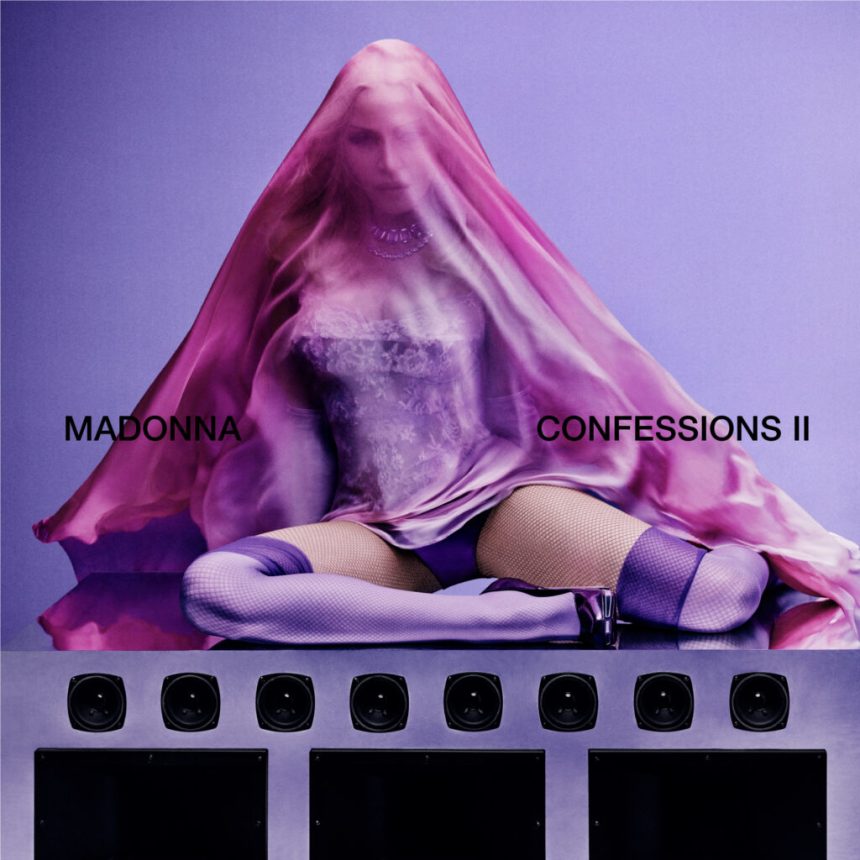
Madonna has always been a force of nature in the music industry, and her latest album, Confessions II, once again underscores her unwavering connection to dance music. “People think dance music is just superficial,” she boldly asserts, challenging the perception of rhythmic beats and catchy hooks. To her, the dance floor transcends beyond a physical space; it is a “threshold, a ritualistic space where movement replaces language.” This introspective perspective echoes throughout her career, from the neon-lit clubs of the 1980s to today’s vibrant dance scenes.
In Confessions II, the sequel to her critically acclaimed 2005 album, Confessions on a Dance Floor, Madonna partners once more with Stuart Price, the British producer known for his disco-infused sound. This new album serves as a sonic tapestry, richly woven with threads of dance music’s diverse history while reflecting on Madonna’s iconic trajectory within that landscape. Spanning an impressive 64 minutes, the album stands as both a celebration and an exploration of various subgenres of dance, showcasing Madonna’s evolution as both an artist and a cultural icon.
What sets Confessions II apart from its predecessor is its exploration of heavier themes. The album delves into love, trauma, loss, and healing, proving that the dance floor can be both euphoric and cathartic. The opening trio—“I Feel So Free,” “Good for the Soul,” and “One Step Away”—sets an energetic tone where Madonna reflects on her intrinsic need for the dance floor, while tracks like “Danceteria” emerge as joyous tributes to the iconic New York nightclub that marked the beginning of her rise to fame. The personal touch extends to “The Test,” a poignant duet with her daughter, Lola Leon, revealing the complexities of their mother-daughter relationship. Meanwhile, the closing ballad, “L.E.S. Girl,” takes listeners back to a youthful Madonna navigating the streets of the Lower East Side, hungry for both fame and life’s experiences.
Madonna’s collaborations enhance the album’s richness. She teams up with Sabrina Carpenter on “Bring Your Love,” a song that not only made waves at Coachella but also topped the UK Club Chart. In “Read My Lips,” featuring the Colombian artist Feid, Madonna offers an anthem that resonated widely, especially as it was adopted into FIFA World Cup 26 celebrations. The haunting track “Bizarre,” featuring Martin Garrix, introduces a darkly layered sound, while the cinematic “My Sins Are My Savior,” created in collaboration with Stromae, captivates with its gripping narrative of spiritual conflict.
The rollout for Confessions II is as ambitious as the album itself. The immersive film experience, Confessions II: The Film, premiered at the Tribeca Film Festival, artfully bringing to life the first six songs through stunning visuals. Madonna’s guerrilla-style performance in Times Square—announced just thirty minutes before she took the stage—attracted a whopping fifty thousand fans, demonstrating her magnetic pull even decades into her career. The live-streaming of this event exclusively on Grindr adds another layer of cultural relevance, perfectly encapsulating Madonna’s ability to adapt and harness the power of modern platforms.
Confessions II is not merely a nostalgic revisit but a dialogue between Madonna and her own storied past. It’s an exploration shaped by love, loss, and the lessons learned throughout her illustrious career. By insisting that the dance floor is a vital lifeline—an oasis for escapism, connection, and survival—Madonna invites listeners to reflect on their own relationships with music and movement. This album stands as a testament to the resilience of the human spirit in finding solace and community through rhythm and sound.
Confessions II is now available through Warner Records, poised to captivate both longtime fans and new listeners alike.