
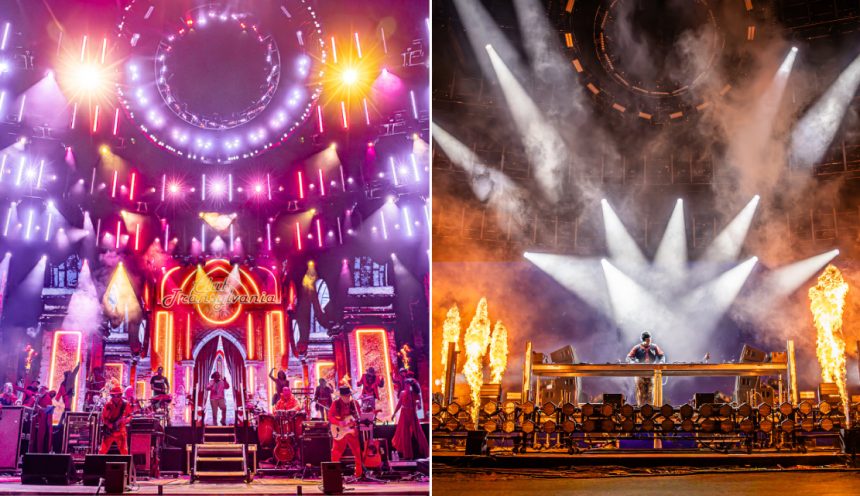
In a recent AMA session on the widely-followed r/electronic music subreddit, veteran festival promoter Michael Berg unveiled a nuanced perspective on curating the annual music and camping extravaganza, Hulaween 2026. This beloved festival takes place at Live Oak, FL’s Spirit of the Suwannee Music Park, and has built a legacy since its inception in 2013.
Berg emphasized a community-first approach, likening his lineup programming to a Venn diagram. He stated, “It’s like a Venn diagram to us, and we try to keep as much of it near the middle as possible.” This concept has led him to strike a balance between fan requests and the acts he personally enjoys. He was adamant about the importance of listening to the feedback from fans, saying, “The best thing we can do is listen to the community and act on their feedback to the best of our ability.”
However, during the session, some comments bordered on accusations rather than constructive critiques. One user lamented, “Where is the jam?” while another starkly asked, “What’s the decision-making process that leads to festivals like Hula slowly declining into mainstream dubstep festivals? Is there pressure from above? Greed?”
On the surface, these grievances may seem valid. For years, Hulaween has been predominantly headlined by jam icons like The String Cheese Incident. Berg, who has played a pivotal role in the festival’s evolution, believes this backlash overlooks critical factors in an ever-changing music landscape.
“We are fighting to keep the culture alive.” – Michael Berg
Berg reaffirmed the festival’s commitment to diverse musical genres. Addressing accusations of losing its soul, he retorted, “Sucking the soul out of this festival is just your opinion; I beg to differ.” He proudly listed over 30 groups from the realms of jam, rock, bluegrass, and more slated to perform in 2026.
Reassuring fans, Berg declared, “I can say with full assurance that Hula will remain a multi-genre festival and will never go full dance.” He discussed the cultural overlap between jam and dance music, noting that such evolution was inevitable as music scenes converge. Yet, he also highlighted a sobering reality: many jam fans express their frustrations online rather than attending festivals.
“We are fighting to keep the culture alive,” he reiterated, acknowledging how life circumstances—like starting families and new careers—have shifted community involvement. Berg noted that while he is a self-proclaimed jam band enthusiast, incorporating a variety of acts—from bass-heavy DJs to instrumental bands—does not diminish Hula’s essence. He argued that this blend is essential for survival in a fluctuating festival ecosystem.
As a case study, Berg brought up his experience with two other projects: North Coast Music Festival, which shifted focus purely to EDM, and Sacred Rose, a jam-centric festival that failed to sustain excitement beyond its first year. The contrast highlighted the challenges faced by traditional jam festivals in drawing crowds. “I can proudly say [Sacred Rose] had one of the best lineups of our generation, but it didn’t do well enough to make it to year two,” he shared.
For Berg, the lean toward a more electronic lineup is not indicative of an abandonment of jam culture. Instead, it represents a strategic response to shifting consumer preferences and market trends. He notes, “Today’s best options amount to ‘a multi-genre show like Hula, or promoters like us disappear.’”
In conversation with Live For Live Music, Berg delved deeper into these issues, particularly addressing the frustrations voiced by long-time jam fans. He mentioned how the jam band scene is currently under pressure, citing the lack of large-scale events focused solely on bands. “You could look at Summer Camp going away and the downsizing of other shows,” he remarked, pointing to the evaporating opportunities for jam fans and artists alike.
He highlighted the necessity of adapting to survive, explaining, “If adding some bass acts to the show helps us sell tickets and we like the music, why would that be greedy?” In other words, the inclusion of electronic genres is not merely a trend but a lifeline to keep the festival thriving and jam music alive.
Berg also commented on the different dynamics of audience engagement, contrasting jam fans’ trends with those of EDM fans. “The jam band people often express dissatisfaction online but are not showing up to buy tickets,” he explained, while noting that the bass music crowd tends to be more reliable, ensuring ticket sales.
He pointed to the structural challenges faced by pure jam-focused festivals. At Sacred Rose, for example, a lineup exclusively dedicated to jam acts led to scheduling conflicts. Berg stated, “When it’s an all-jam band show, now there are conflicts. When you go to Hula, it’s like, ‘I’m either going to go to the Warren Haynes Incident or I’m going to go see a DJ.’” This compartmentalization of genres is vital for ensuring fans maximize their experience and feel they are getting their money’s worth.
Reflecting on his own connection to the scene, Berg shared, “I am ride or die jam band,” and expressed a deep commitment to sustain the legacy of this music. He acknowledged that while some festivals succeed by sticking to specific genres, others like Hula must navigate a multifaceted approach to remain relevant in the current market.
For Berg, the blending of genres doesn’t dilute the jam experience; it enriches it. He believes that pairing electronic acts with traditional jam bands allows for a dynamic festival where every attendee can curate their own musical journey. “You don’t have to go to a dubstep set,” he reassured skeptics, emphasizing that there’s ample opportunity to enjoy the jam-centric performances they cherish.
Hulaween, set for October 22nd–25th, 2026, brings a captivating combination of DJs, jam bands, and a rich tapestry of musical acts to the Spirit of the Suwannee Music Park. Tickets and the full lineup can be found here.