
Portola Music Festival: A Balancing Act of Beats and Borders
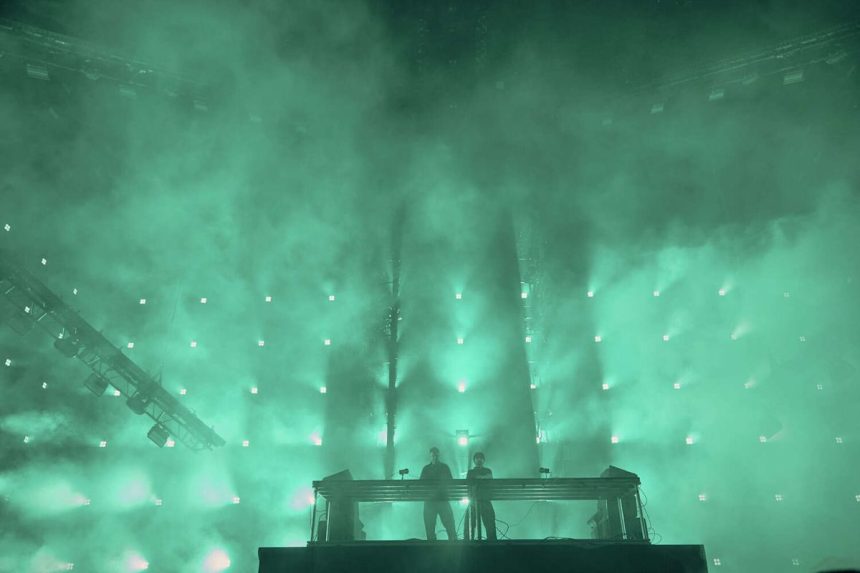
The Portola Music Festival, now in its fifth year, has become a prominent fixture in San Francisco’s burgeoning music scene, particularly for fans of electronic dance music and pop. Held at the stunning Pier 80, the festival attracts thousands of attendees, who flock to see renowned artists like Robyn, Fatboy Slim, and the dynamic DJ duo Dog Blood, which features Boys Noize and the local phenomenon Skrillex. Yet, as the festival garners more popularity, it faces a growing challenge: balancing the exhilarating energy of live music with the peace and quiet sought by nearby residents.
The Sound Dilemma
One of the most significant issues surrounding the Portola Music Festival has been the sound, specifically the low-frequency bass that permeates the atmosphere and travels beyond festival grounds, causing disturbances for residents across the bay in places like Alameda. In the years since its inception, numerous complaints have poured in from community members, frustrated by the thumping beats that seem to infiltrate their homes.
Michael Devine, an outspoken critic and Alameda resident, exemplifies the concerns of many. He has filed several complaints over the years and has become vocal about his dissatisfaction with how the event has been managed. “I don’t think they’re interested in accommodating the community,” Devine expressed in a recent interview, articulating a sentiment that resonates with many who feel their peace is compromised in pursuit of entertainment.
City and Organizer Initiatives
In an effort to address these concerns, the festival’s producer, Goldenvoice, in collaboration with the city, has rolled out various initiatives aimed at mitigating sound levels. Adjustments have included repositioning stages and sound systems further from residential areas and introducing acoustic blankets designed to absorb sound. Moreover, a live hotline for complaints has been established, providing residents an immediate channel for expressing their grievances.
Despite these measures, the festival’s sound levels have remained a contentious topic. In a proactive decision, city authorities set sound limits at 104 dBA Leq10 and 114 dBC Leq10 for the festival. These limits were notably reduced by 2 decibels in 2024 in response to previous complaints, reflecting the city’s commitment to balancing the needs of music lovers with those of nearby inhabitants.
A 2023 Sound Assessment
To gauge the impact of the festival on local residents this year, the San Francisco Chronicle took a hands-on approach by sending reporters equipped with decibel meters to measure sound levels at various locations. One was stationed at Pier 80, while another was positioned in Alameda, the epicenter of noise complaints. Their findings indicated that while music from the festival remained audible in Alameda, it was considerably less disruptive than in the past. Reporters recorded decibel levels oscillating between 45-55 dBA and 60-80 dBC during a particularly bass-heavy set by Dog Blood, revealing a marked improvement compared to the intrusive soundscapes of previous years.
This subtle decline in sound disruption was evident to residents as well. Devine articulated a notable shift, stating, “Verdict at home is I can tell it’s going on but it is not disruptive for me.” This suggests that the measures taken may be gradually fostering a better relationship between the festival and the nearby community, albeit cautiously.
Looking Ahead: Predictions and Potential
As the festival gears up for its final day on September 27, 2026, which boasts an impressive lineup including Swedish House Mafia, Tiësto, and Zara Larsson, eyes are focused on whether the quieter trend will hold. Historically, the festival tends to draw more complaints on its second day as attendees revel into the night, potentially disrupting the sleep patterns of residents before the start of a workweek.
The delicate dance between a booming live music experience and the requirements of those living nearby will continue to play out as both the city and Goldenvoice strive to refine their strategies. Portola Festival’s evolution reflects broader themes in urban entertainment: the challenge of fostering community spirit while respecting the tranquility of those who call the surrounding areas home.



