The Evolution of Cabaret Voltaire: A Journey Through Sound and Time
Cabaret Voltaire, the iconic band that emerged from the gritty landscapes of Sheffield in the 1970s, has undergone a remarkable evolution over its more than 50-year history. Formed by Richard H. Kirk, Stephen Mallinder, and Chris Watson, the group’s journey is marked by artistic innovation and a refusal to conform. In a recent performance at Cardiff’s Globe, the remaining founding members, Mallinder and Watson, reassembled to revel in their storied past, proclaiming this tour as a culmination of their long and varied career.
Origins in Sheffield
The original Cabaret Voltaire trio burst onto the music scene in the mid-1970s with a sound that was deeply rooted in the industrial noise of their hometown. This period was characterized by an avant-garde approach where the trio challenged conventional musical norms, opting instead for abrasive, experimental sounds. Their pioneering work laid the foundational stones for what would later be recognized as industrial music, influencing countless artists and genres in the process.
Transition and Change
After Chris Watson’s departure in 1981, Mallinder and Kirk continued to forge a new path, adapting their sound through the 1980s. With the societal backdrop of post-punk culture, the duo began to incorporate electronic elements into their music, shifting from a purely industrial style to one that embraced the burgeoning electronic dance scene. This seamless transition not only showcased their versatility but also foresaw the growing significance of dance culture in mainstream music. Their evolution culminated in a unique fusion that would influence genres like synthpop and techno.
A Nostalgic Performance
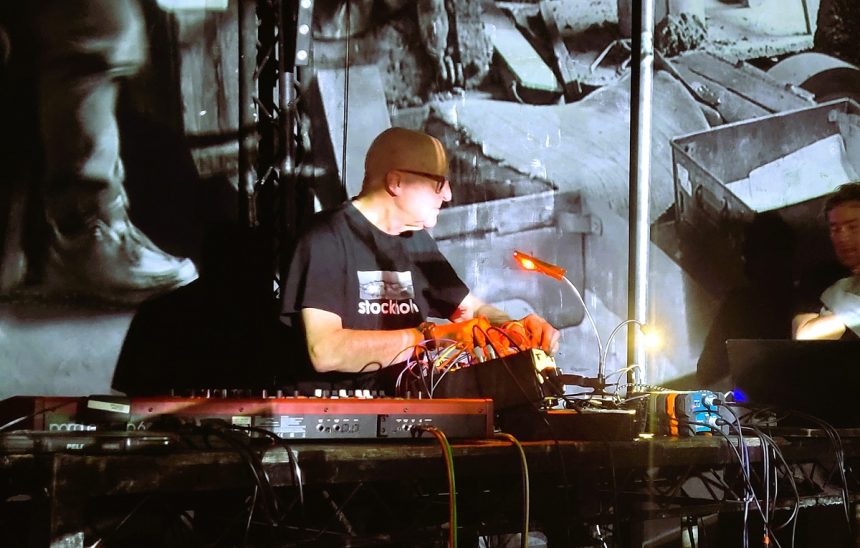
The recent performance at Cardiff featured a four-piece lineup, with synth players Benge and Eric Random rounding out the group. This change in configuration allowed Mallinder and Watson to delve into a setlist rich in nostalgia, focusing primarily on the era between 1979 and 1985, a time when the band’s impact was felt most acutely. As they took to the stage, it was clear that the aim was to engage both older fans and newcomers by delivering faithful renditions of their well-loved tracks.
Opening the show with “24-24,” a track emblematic of their transition from noise to groove, the duo brought back memories of an era where Cabaret Voltaire was not just a musical force but a cultural phenomenon. The song’s clever sampling and looped rhythms encapsulated their growing interest in Black American dance culture, which they themselves would go on to influence in the years that followed.
The Instrumentation and Visuals
The live performance showcased Watson’s unassuming yet pivotal role on various modular and analogue synths. His subtle contributions were integral to bridging the gap between their industrial roots and the electronic soundscapes that defined their later work. Mallinder, donning an anorak reminiscent of the Britpop era, effortlessly alternated between keyboards, bass, and lead vocals, his voice cutting through the mix with clarity.
Adding to the auditory experience were Benge’s powerful electronic drums, which provided a significant underpinning to their sound. The visuals projected by Dan Conway further elevated the performance, complementing the music with an array of striking images that resonated with the innate avant-garde spirit of the band.
An Encore of Classics
As the concert reached its climax, the trio launched into a three-song encore that was nothing short of electrifying. Kicking off with “Nag Nag Nag,” arguably their most recognized track, Mallinder delivered the lyrics with punk-infused fervor that evoked the raw energy of their earlier work. The encore continued with “I Want You” and “Sensoria,” showcasing the band’s innovative ability to blend post-punk, synthpop, and electro in a uniquely compelling manner. Each performance served as a reminder of their position at the forefront of musical experimentation, making it clear why their influence remains palpable today.
Reflections on Legacy and Future
With Mallinder and Watson reuniting after years of separate artistic pursuits, their return to the Cabaret Voltaire name and sound signifies more than nostalgia; it represents a vital reaffirmation of their legacy within the music arena. Their willingness to embrace their past while engaging with contemporary audiences is a testament to their unique journey—one that has always thrived on exploration and innovation.
As they step onto the stage for what they have proclaimed as their final tour, fans are greeted with a profound sense of appreciation for the band’s contributions. Their music, characterized by constant evolution and experimentation, continues to inspire future generations of artists, ensuring that the spirit of Cabaret Voltaire will live on long after the final note fades.
Cabaret Voltaire, Pioneers of Industrial Dance, Perform in Cardiff for Final Tour