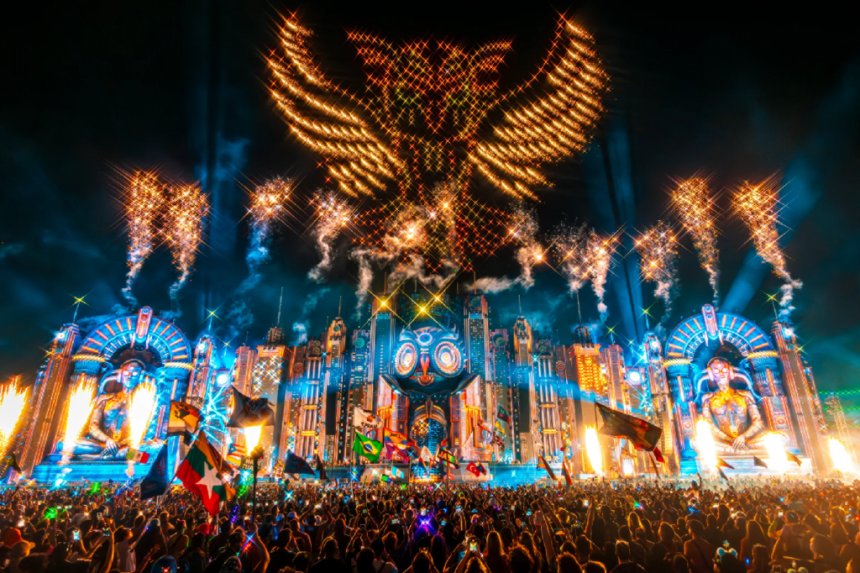
*Image Credit – EDC Website
This summer, many of us danced beneath starlit skies at festivals, lost ourselves in packed club shows, or eagerly scrolled through exciting lineups for upcoming events. If you resonate with any of these experiences, you’re likely aware of the impressive growth of electronic music in the U.S. New data from Luminate’s 2026 Midyear Report reveals that dance and electronic music ranks among the fastest-growing genres as we head into the latter half of the year. While R&B and hip-hop claim the top spot overall, accounting for about one in every four streams nationwide, the surge of electronic vibes is hard to dismiss.
The statistics speak volumes. Electronic music is drawing in new enthusiasts and expanding its footprint across the country. Notable artists like John Summit and Disco Lines have emerged as significant figures in this genre’s ascension. Anyone who has frequented major music festivals in recent times can likely feel this wave of momentum. With both artists becoming beloved mainstays on prominent lineups, their growing fan bases vividly illustrate the enthralling journey of electronic music.
It’s Not Just New Music Driving The Growth
It’s worth noting that the growth of electronic music isn’t solely due to new releases. The report highlights a fascinating resurgence of interest in older tracks, particularly those released between 2015 and 2017. For many fans, this specific timeframe captures some of the most exhilarating moments from the previous EDM boom. It’s as though fans are reconnecting with their earlier love for electronic beats, rediscovering the timeless tracks that once ignited dance floors.
This report comes at a pivotal moment when the global electronic music industry has been valued at an astounding $15.1 billion. The combination of streaming growth, soaring demand for major festivals, and a steadfast global interest in dance music indicates that the genre shows no signs of slowing down. Dance music enthusiasts aren’t just witnessing an industry boom; they’re experiencing a cultural movement that has the potential to shape the music landscape for years to come.
For those of us who have spent years supporting our favorite artists, exploring new sounds, and forging lifelong connections through shared moments on the dance floor, these figures resonate deeply. Dance music has never been about mere numbers—it’s about community, the unforgettable memories we create, and those unique experiences that unite thousands of strangers with a shared love for the same melody. While the data reflects electronic music’s impressive rise, anyone who has immersed themselves in a festival crowd knows that something extraordinary is unfolding.