How Women DJs are Moving Detroit Dance and Hip-Hop Culture Forward
by Kahn Santori Davison, Outlier Media | May 21, 2026
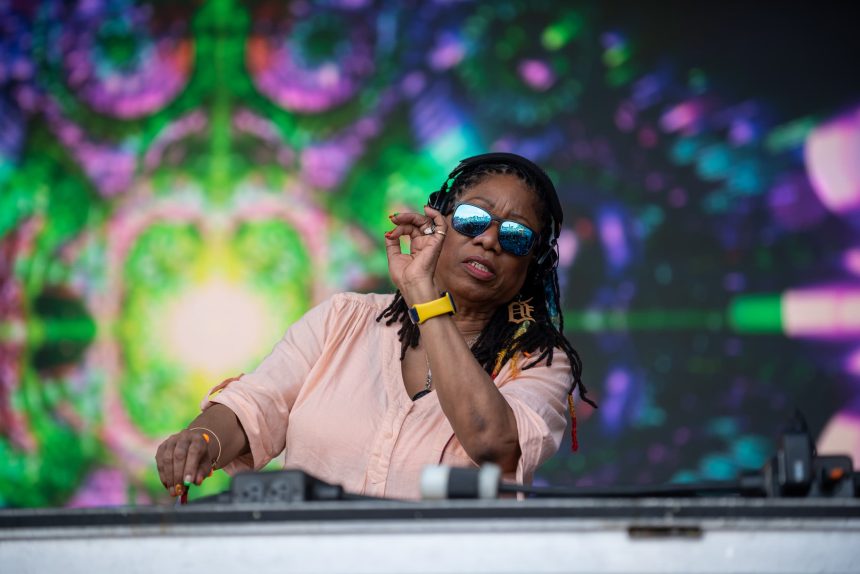
Detroit’s annual Movement Music Festival is not just another event on the calendar; it’s a vibrant manifestation of the city’s rich musical heritage. Opening this weekend, the festival will showcase legendary figures like Stacey Hotwaxx Hale, who has been an integral part of the festival since its inception 26 years ago. Joining her will be emerging talents like DJ Killa $quid and a diverse lineup of women DJs, all set to transform Hart Plaza into a pulsating techno and house music hub for fans from Detroit and around the globe.
A Shifting Landscape
While the festival has historically seen a male-dominated lineup, recent years have indicated a notable shift towards equity. The increased presence of women DJs this year reflects the hard work and pioneering spirit of women like Hale, often called the “Godmother of House.” In the early days of the festival, when it was known as the Detroit Electronic Music Festival, women were alarmingly underrepresented. Hale notes, “They weren’t paying attention to women. And not to be at fault, that was just our society at the time.”
Hale, a legendary figure in Detroit’s music scene, began her journey in the late 1970s as the city transitioned from disco to house and techno. It was her passion for music—sparked by her older brother—that led her to discover the turntables. By the age of 21, she had found a mentor in renowned DJ Ken Collier, setting her on a path that would inspire future generations of female DJs.
Defying the Odds
Breaking into a male-dominated scene was challenging for Hale. The 1980s were rich with notable male DJs like The Electrifying Mojo and Jeff Mills, but Hale carved out her own space by honoring the music she loved. “It was a vibe, and it was a feeling,” she reflects. The clubs of that era—Cheeks, Club Heaven, and the Chess Mate—became sanctuaries where women like Hale could express themselves freely and authentically.
Zana Smith, another key figure in Detroit’s music landscape, recalls the vibrant atmosphere of that time. “It was a real danceable era,” she emphasizes. “A lot of times when you go out now, people are just nodding their heads.” The music being played was different—rarely found on the radio—and this exclusivity elevated the status of those spinning the records.
By the mid-1980s, Hale was a fixture on Detroit radio, dominating competitions like the 1985 Motor City Mix against 600 rival DJs and rappers. “I was catching hell because I could whoop their ass on the turntables,” she admits candidly, underscoring the envy her success provoked among some male counterparts. Yet, her intent was never to overshadow men but to honor her own musical roots.
Inspiring the Next Generation
Stacey Hotwaxx Hale did not just break barriers for herself; she became a mentor for the next wave of women DJs, including DJ Stacyé J. Growing up in Detroit, Stacyé J started her career in the mid-2000s, crafting beats on entry-level equipment. “I wanted to blend, I wanted to scratch,” she declares, indicating her commitment to raising the energy of any room she enters.
As the underground rave scene waned, Movement continued to grow, and events featuring diverse musical styles flooded the clubs of Detroit. Similar to Hale, Stacyé J found her own mentors in successful Detroit DJs. This mentorship has been essential to her growth as an artist, helping her gain recognition in art and hip-hop spaces throughout the city.
A New Wave of Empowerment
Emerging alongside Stacyé J is DJ Killa $quid, who represents a fresh wave of women DJs making their mark on Detroit’s music culture. Her musical roots run deep—her family has long-standing ties to the industry. “I want to fuse as much as I can,” Killa $quid expresses passionately, aiming to rekindle people’s love for music and provide an escape from everyday life through her sets.
Killa $quid’s journey has not been without challenges, including issues of underpayment and harassment, which resonates with Hale’s experiences decades earlier. “Men and women are wired to want to pay the men more than women,” Hale states. “That still exists, even coming from women.” Such revelations underscore the ongoing struggle for equity within the industry.
Festival Season and Celebrations
Both Hale and Killa $quid are eagerly anticipating their performances at this year’s Movement festival, a platform that promises to propel them closer to their artistic aspirations. For Killa $quid, the festival represents a significant milestone, stating, “I feel like I finally did it.” This acknowledgment of achievement after years of persistence illustrates the profound shift taking place.
Hale recognizes the importance of events like her Sheometry Music & Arts Festival, which spotlight women DJs and help nudge larger festivals like Movement to pay closer attention to female talent. Along with rising stars, Hale and Killa $quid will be joined by other influential women DJs, ensuring that the landscape of Detroit’s electronic music culture is rich with diverse voices.
As the festival approaches, there is an undeniable energy in the air; one that resonates with the history of Detroit itself. The poignant irony is that as more women take the stage, the conversation around gender representation is evolving. “Now it’s a lot of women DJs to the point where we don’t have to say, ‘it’s a woman DJ’ anymore,” Stacyé J concludes.
This seismic shift is not merely a trend, but a profound transformation of Detroit’s dance and hip-hop culture—fueled by resilient women who have paved the way for future generations.