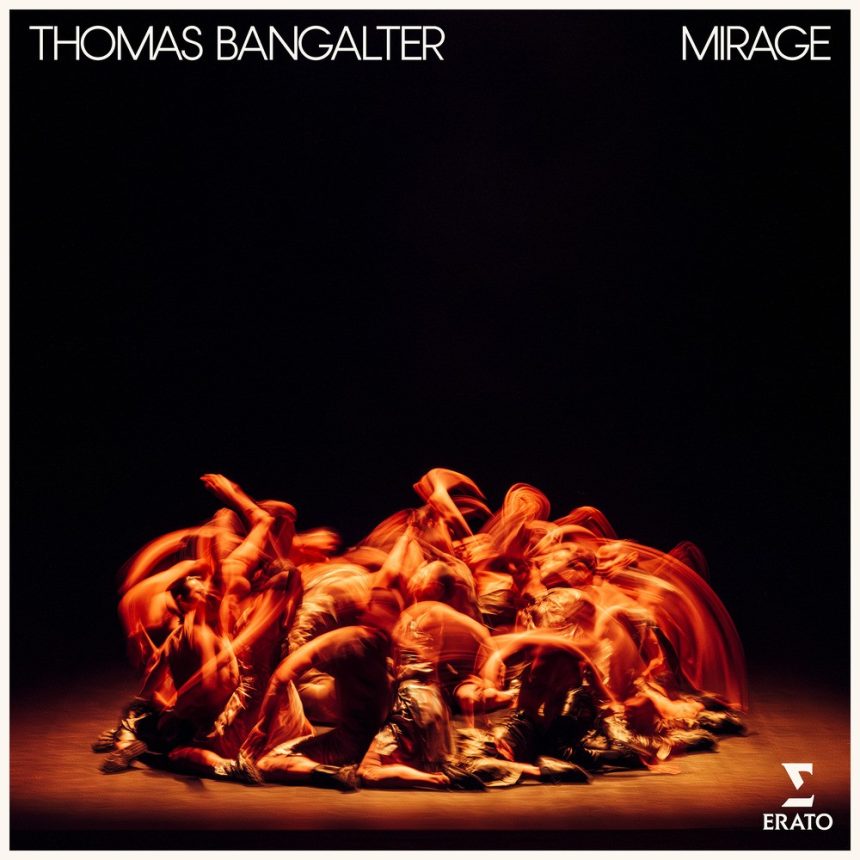
Thomas Bangalter: Bridging New Realms with Mirage — Ballet for 16 Dancers
When an artist departs from their well-trodden path, they face a crossroads: continue in their established style or venture into uncharted territory. Following the disbandment of the iconic electronic duo Daft Punk, Thomas Bangalter has opted for the latter, embarking on an audacious, boundary-pushing journey with his latest project. His new album, Mirage — Ballet for 16 Dancers, represents not just a new chapter, but also a bold reinterpretation of his musical identity.
The Evolution of Sound
Thomas Bangalter’s career shift towards contemporary ballet, particularly highlighted in his partnership with choreographer Angelin Preljocaj in 2023’s Mythologies, marks a significant deviation from his electronic music roots. This 88-minute orchestral journey, performed by the Orchestre National Bordeaux Aquitaine, showcases a dramatic and ornate complexity. The transition is striking; one could easily mistake this for the work of an entirely different composer. Bangalter’s foray into the worlds of dance and orchestration serves as an experimentation with soundscapes where synthesizers once dominated.
Following this, his subsequent work, CHIROPTERA MATIERE PREMIERE, followed a similar experimental vein but stretched to nearly six hours, resulting in a vast auditory landscape that few conventional listeners might endure. Drawing parallels with artists like The Knife, Bangalter continues to carve a niche that recognizes how sound can transform perception and movement, even as it challenges standard musical composition.
Resonance in Rhythm
Mirage serves as a key exploration into the marriage of dance and electronic music, boldly rejecting the constraints often associated with “dance music.” The opening track, “Part I,” immerses listeners in a rhythmic depth charge, a sonic wave resonating gently yet profoundly. The subtle bass pulse and minimalist approach echo the quiet solitude of a dancer navigating a wide-open space. Even without the accompanying visual performance, the auditory elements create an almost palpable atmosphere, drawing listeners into an empty expanse.
As the album progresses, it shifts dramatically. “Part II” exchanges the initial solitude for an ominous ambiance, layering electronic beats with metallic rhythms that evoke a sense of abstract movement. The evolution between the parts of the album showcases Bangalter’s keen ability to create varied landscapes of sound; from haunting isolation to more complex and immersive experiences that suggest both human connection and abstract abstraction.
Intrinsic Complexity
Tracks like “Part IV” and “Part VII” exemplify Bangalter’s commitment to exploring organic versus inhuman elements within music. The juxtaposition of chimes that suggest nature’s elements with heavier electronic influences points to Bangalter’s ongoing dialogue with both worlds. For example, while “Part IV” presents sounds reminiscent of rain on steel drums, “Part VII” invites listeners into a shimmering, ethereal space—akin to the haunting compositions of artists like Tim Hecker or Daniel Lopatin, yet distinctly Bangalter. His minimalist style, while spacious, aims to evoke feelings from a place of collective memory, nostalgia, and haunting absence.
Audience Reception and Expectations
At 50 minutes with eight tracks, Mirage can demand a considerable level of engagement from listeners, especially those unaccustomed to such abstract musical expressions. It challenges listeners to embrace its idiosyncratic beauty rather than seeking conventional hooks or overt musicality. This structural decision unavoidably tests the patience of listeners, particularly those unfamiliar with Bangalter’s visionary approach. Listeners invested in a more mainstream narrative might find themselves grappling with the expectations set by electronic dance music, which Mirage notably strays from.
This unique endeavor, while tied to a visual performance, poses intriguing questions about the intersection of sound, movement, and interpretation. As Bangalter continues to widen his artistic scope, it remains to be seen if he will further explore these landscapes independently or transform them within a collaborative context.
Anticipation for What’s Next
Ultimately, Thomas Bangalter’s Mirage — Ballet for 16 Dancers not only marks a significant milestone in his post-Daft Punk career but also sets the stage for future explorations of avant-garde soundscapes. The expectation grows for how this former robot will navigate artistic bounds, perhaps synthesizing more personal projects that challenge listeners in new, unexpected ways. The journey is undoubtedly fascinating, leaving audiences eager for his next creative step into the unknown.