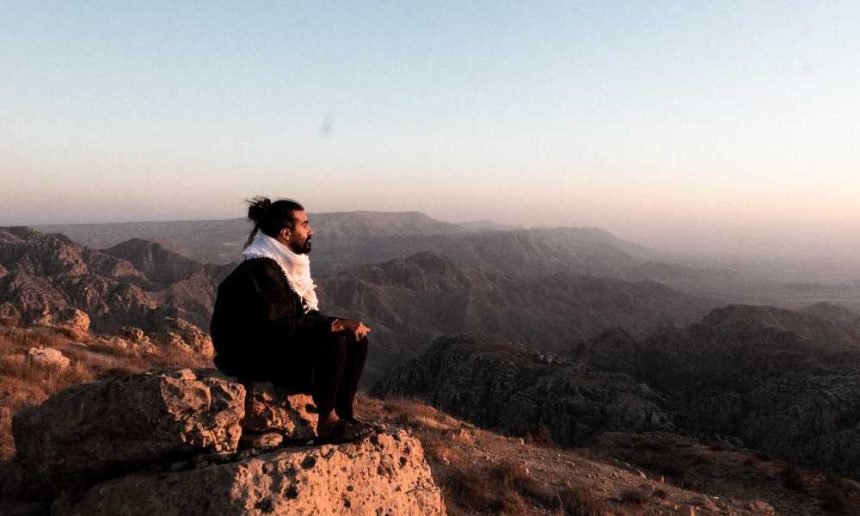
As a musician and songwriter, Yazan Sarayrah unquestionably stands apart from his peers in the evolving landscape of contemporary electronic music. Hailing from Jordan, Sarayrah brings a unique perspective and an innovative sound, evident in his latest record, IRTH-TONIC. This album is a testament to his artistic vision, reimagining melodic electronic music through the intricate lens of Arabic maqam, a melodic framework that encourages improvisation. With a focus on creativity and experimentation, Sarayrah crafts a distinctive style of microtonal melodic techno that expands the boundaries of electronic music.
The Cultural Journey
IRTH-TONIC reflects Sarayrah’s ongoing exploration of cultural identity, a theme that runs deep throughout his work. He delves into the idea that heritage is not merely something to be preserved in the past; rather, it continually evolves and shapes contemporary creativity. His music is infused with influences from historic locations, oral traditions, and the rhythms of desert life, grounding his sound in the richness of Jordanian and Bedouin culture. Sarayrah challenges conventional narratives and seeks to present a fresh perspective on electronic music, drawing inspiration from the region’s unique artistic language.
The Live Experience
A defining aspect of Sarayrah’s artistry is his live performances, which bring an extraordinary depth to his work. Incorporating voice, electric guitar, analog synthesis, and MIDI controllers, his shows are a dynamic amalgamation of sound and technique. The real-time performance techniques enhance the listening experience, allowing audiences to join him on a holistic auditory journey.
Insight into IRTH-TONIC
In a track-by-track breakdown of IRTH-TONIC, Sarayrah elaborates on the creative process that led to the album’s conception. He explains that the project spanned about two and a half years, during which he meticulously shaped its sonic identity. Rather than relentlessly searching for new sounds, Sarayrah aimed to foster a consistent palette of instruments, textures, and production cycles. His objective was to create an immersive listening experience where tracks felt like parts of a greater narrative.
Sounds and Instruments
Among the instruments that reoccur throughout the album are the rababa, saz, daff, electric guitar, and synthesizers. These elements were intentionally interwoven across tracks, creating an ‘album mentality’ that nurtures the evolution of themes and sounds throughout the listening experience. Sarayrah found a harmonious balance between organic instrumentation and electronic production, merging tradition with futurism to forge a new sonic identity.
Track Highlights
-
Echoes of Mo’ab
The album opens with “Echoes of Mo’ab,” a minimalistic introduction that hints at the journeys within. This track intertwines the Hjeni style of Bedouin melodic poetry with ambient soundscapes, evoking a sense of both history and futurism. The piece carries personal significance for Sarayrah, incorporating a poem from Um Khaled, whose message of longing during the October War resonates deeply with him. -
Ben Hajhouj
Continuing the narrative established in “Echoes of Mo’ab,” “Ben Hajhouj” deepens the emotional landscape with pulsating rhythms. Here, the poem evolves musically, demonstrating Sarayrah’s adeptness at layering traditional melodies with modern electronic sounds. The connection of motifs between tracks creates a sense of continuity and narrative flow. -
Theeb
Moving forward, “Theeb” showcases nostalgic Hjeni motifs, drawing from a poem associated with the Jordanian film of the same name. Sarayrah’s diligent attention to the natural rhythm and emotional weight of the words complements the free-flowing structure of the piece, leading to intricate shifts in time signatures. -
Ghosn al-Gana (feat. Ahmad Selawy)
This piece reinterprets a well-known Yemeni folk melody, allowing it to transcend its original context. Collaborating with Ahmad Selawy, Sarayrah infuses new life into the traditional sounds through microtonal progressions and electronic elements, enriching the cultural dialogue within the composition. -
Ghbeshi
Delving into regional folklore, “Ghbeshi” tells a story of love and defiance against social barriers. Sarayrah incorporates historical recordings and blends them with contemporary sounds to create a rich tapestry that honors the tale’s legacy while imbuing it with modern relevance. -
Galo Anni
Reflecting on the misconceptions surrounding heritage, “Galo Anni” draws inspirations from desert blues techniques, blending them with electronic sound to resist the nature of heritage being perceived as antiquated. The music pays homage to the Bedouin traditions, ensuring the past is weaved into the present. -
Ben Jadlan
Built upon ancient Bedouin proverbs and a poem by the Saudi poet Saad Bin Jadlan, “Bin Jadlan” embodies the essence of heritage’s continuous evolution. The track aims to echo the wisdom of generations past, soaring with heavy arpeggios and deep synth leads that enhance the emotional intensity of the words. -
Ala Msiri
Concluding the album, “Ala Msiri” is a reimagination of a beloved Yemeni folk song. By providing fresh melodies while maintaining the spirit of the original, Sarayrah breathes new life into a timeless piece, highlighting both resilience and the enduring quality of cultural expressions.
Conclusion: A Living Cultural Expression
In IRTH-TONIC, Yazan Sarayrah not only elevates the discourse surrounding electronic music but also reclaims and redefines heritage through sound. His innovative fusion of technology with cultural storytelling transforms listener expectations, inviting us to engage with contemporary art in fresh, meaningful ways. Sarayrah’s work serves as a powerful reminder of the enduring connection between music, culture, and identity, marking a significant moment in the evolution of global music narratives.