
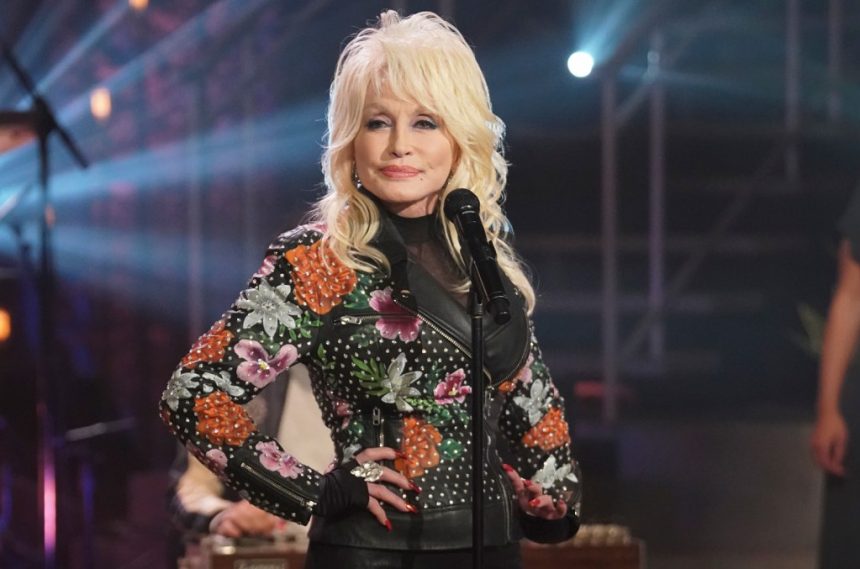
Dolly Parton, a name synonymous with country music, has cemented her legacy as a preeminent figure in the genre. With a staggering catalog of over 100 hits on Billboard’s Hot Country Songs chart and a record 25 No. 1 singles, she holds the title for the most No. 1s among women in music history. However, Parton’s artistic journey extends far beyond the boundaries of country music; her ventures into pop, rock, and even dance music showcase her versatility and enduring appeal in the entertainment landscape. Tragically, Parton passed away at the age of 80 in Nashville, leaving behind an unparalleled legacy that resonates across diverse musical genres.
Parton’s exploration of dance music began in 1978 with the release of her disco-tinged country album, Heartbreaker. This daring foray into an emerging genre landed her in the Top 5 of Billboard’s Top Country Albums chart, demonstrating her willingness to push creative boundaries. At a time when the dance scene was rapidly gaining momentum, Heartbreaker subtly incorporated elements of disco, setting the stage for her first foray into the dance music genre.
The album produced the dance hit “Baby I’m Burnin’”/“I Wanna Fall in Love,” which climbed to No. 15 on the now-inactive Dance Club Songs chart in early 1979. This marked a significant milestone, demonstrating that Parton could successfully transition her signature country sound into the dance music arena—an achievement not lost on fans and critics alike.
In 1981, Parton made her return to the Dance Club Songs chart with the double-sided hit “9 to 5”/“House of the Rising Sun.” The former song, an anthem that also served as the theme for the film of the same name, starred Parton and showcased her ability to resonate with audiences beyond the realm of country music. Her rendition of the traditional folk ballad “House of the Rising Sun” further displayed her versatility, blending various musical styles seamlessly.
Parton continued to make appearances on the Dance Club Songs chart throughout the years. In 1983, she released “Potential New Boyfriend,” which was accompanied by an extended dance mix that gained popularity on the dance floor. Her cover of Cat Stevens’ “Peace Train” in 1997 further enriched her dance music portfolio, receiving multiple remixes, one of which featured the acclaimed South African group Ladysmith Black Mambazo. After a lengthy hiatus from the dance music scene, she returned in 2020 with “Faith,” a collaboration with Galantis and Mr. Probz, further solidifying her presence across genres.
“Faith” transformed into a triumphant return as it topped the Dance Airplay chart in 2019, granting Parton her first No. 1 on this particular chart. The song also peaked at No. 10 on the Hot Dance/Electronic Songs chart, marking a watershed moment in her diverse career. The song, a reimagining of John Hiatt’s 1987 track “Have a Little Faith in Me,” allowed Parton to bring her message of positivity to a new generation of listeners.
During the announcement of “Faith” at the Grand Ole Opry in Nashville, Parton emphasized her commitment to releasing music that prioritizes positivity and upliftment. She exclaimed, “This world is just so dark and ugly and awful … so I’m going to make it my business to try to do songs that are more uplifting, not all Christian-based songs, but songs about better things.” Her intention to spread light and love through her music resonates deeply, further endearing her to fans across various platforms.
Throughout her illustrious career, Parton has topped five of Billboard’s major radio charts, including Adult Contemporary, Country Airplay, Christian Airplay, Christian AC Airplay, and Dance Airplay. This remarkable feat highlights her unparalleled ability to connect with listeners across a broad spectrum of musical tastes.
Parton’s genre-spanning explorations continued with her 2023 studio album, Rockstar, her 49th release. This album not only captured listeners’ attention but also earned her the distinction of topping a Billboard rock chart, becoming her first No. 1 on the Top Rock Albums list. Moreover, the album reached No. 3 on the Billboard 200, marking her highest-charting entry to date. Featuring collaborations with rock legends such as Lynyrd Skynyrd on “Free Bird,” Joan Jett on “I Hate Myself for Loving You,” and icons Paul McCartney and Ringo Starr on “Let It Be,” Parton reaffirmed her status as a transcendent musical figure.



