
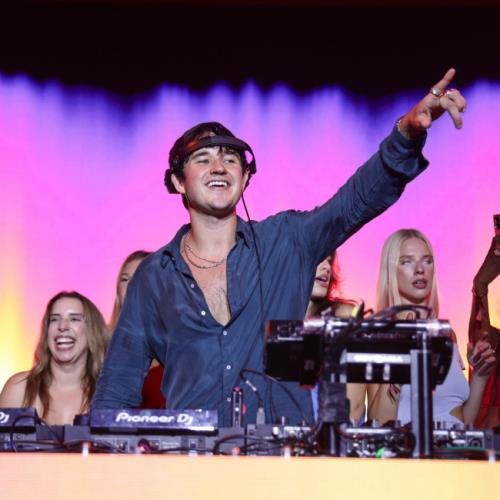
John Summit: A Rising Star at Lollapalooza
At 31, John Summit is poised to make a significant impact as he headlines this year’s Lollapalooza festival, a platform traditionally dominated by pop and rock icons. As the festival approaches, some fans from the pop realm have expressed confusion over his prominent spot on the line-up, questioning who he is and what he represents in the music industry.
The Dance vs. Pop Divide
In a revealing conversation with Billboard’s Kristin Robinson on her “On the Record” podcast, Summit discussed the nuances of being a dance artist in a world that often prioritizes pop acts. The Chicago native candidly acknowledged the challenges that dance musicians face when vying for prime festival slots: “Dance acts have to prove themselves more than pop artists.” His remarks echo a sentiment familiar to many in the dance community, illustrating the different standards applied across music genres.
Summit referenced the bewilderment of pop fans, remarking, “I still see the comments of all the pop fans being like, ‘Who the f*** is John Summit?’” While it’s easy to overlook the achievements of a rising star, he noted that his journey is far from over, indicating the need to “turn a lot of heads” as he continues to build his reputation within the industry.
Understanding the Dance Music Landscape
Despite his growing fame, Summit feels entrenched in the “dance music world,” emphasizing that while he has flirted with pop influences, he has yet to secure a place on the Billboard Hot 100. “They chart in dance music, it’s just a different world,” he remarked, drawing attention to the unique ecosystem of electronic music. This reflects a broader conversation within the industry about the various paths to success in music, especially for genres that are often sidelined.
As he noted, while pop artists may quickly gain visibility and recognition, dance musicians often have to work harder to establish their brand and audience. This sentiment resonates with many artists in the dance genre who feel that their music, while widely celebrated in clubs and festivals, doesn’t always receive comparable recognition on mainstream charts.
A Festival Full of Diverse Talent
This year’s Lollapalooza, set against the scenic backdrop of Chicago’s Grant Park, features a diverse lineup that includes not only Summit but also heavyweights like Lorde, Charli XCX, and The Smashing Pumpkins. Other noteworthy acts include Olivia Dean, Jennie, Tate McRae, The xx, 5 Seconds of Summer, and cultural phenomenon Finn Wolfhard from “Stranger Things.” This year’s festival marks a significant gathering of artists from various musical backgrounds, highlighting the breadth of talent and genres represented.
A Personal Journey to Headlining
For Summit, headlining Lollapalooza is not just a career milestone; it’s also a poignant homecoming. Growing up in Chicago, he recalls attending the festival as a teenager, where he was deeply inspired by seeing Canadian DJ deadmau5 perform in 2011. That experience was a transformative moment for him, igniting his passion for electronic music. “I feel like everyone always has that moment when they’re like, ‘Oh my god, this is my genre,’” he shared. Such early influences played a critical role in shaping his ambitions and aspirations as a music producer and artist.
Bridging the Gap Between Genres
As the festival approaches, Summit stands at an intersection of musical genres and fan expectations. The responses from both pop and dance fans illustrate the challenges faced by artists straddling different musical worlds. However, his commitment to his craft and dedication to dance music continue to resonate, even beyond the confines of traditional genre boundaries.
In an era where musical styles frequently blend and crossover, Summit symbolizes a new wave of artists carving a niche within the industry, while also challenging the perceptions of what it means to be a headliner at one of the world’s most iconic music festivals. The dialogue surrounding his performance at Lollapalooza encapsulates a larger conversation about recognition, versatility, and the evolving dynamics of the music scene.



