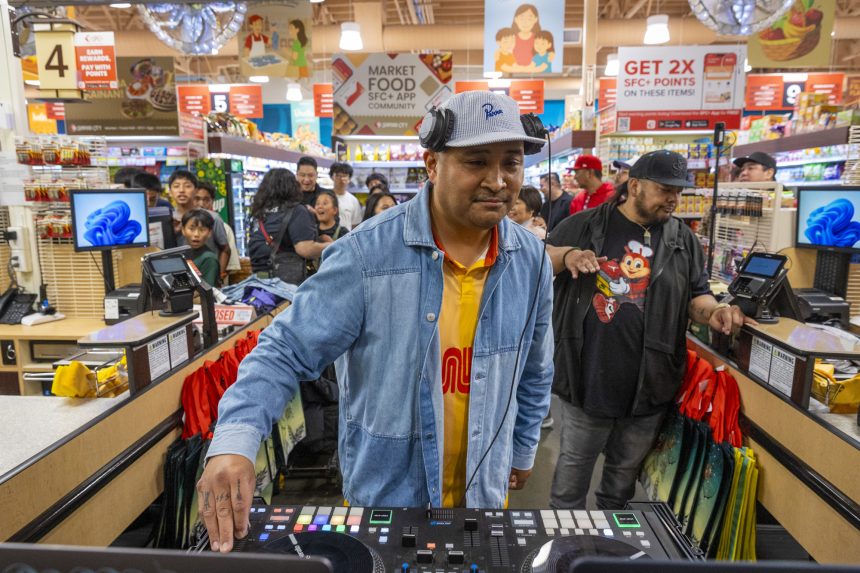
For Filipino Americans, dance parties at the Seafood City in Daly City are more than just a viral sensation.
DJ Boogie Brown performs a set during a dance party at Seafood City in Daly City on October 18, 2025. Seafood City, a Filipino supermarket chain, has been celebrating Filipino American History Month by throwing late-night DJ parties at store locations around the U.S. (Tâm Vũ/KQED)
“That whole set was to celebrate Filipino-dom in its entirety,” Breganza says about his selection of artists not usually heard outside of the Philippines.
The unique grocery store partnership might have never happened if Breganza hadn’t started thinking outside the box, going out of his way to play DJ sets in the most random places: an all-night Street Fighter 2 gaming session, on a cliffside, and even at a driving range. “I don’t like the club,” he says. “I don’t like what it offers, the environment that it brings and what it enables.
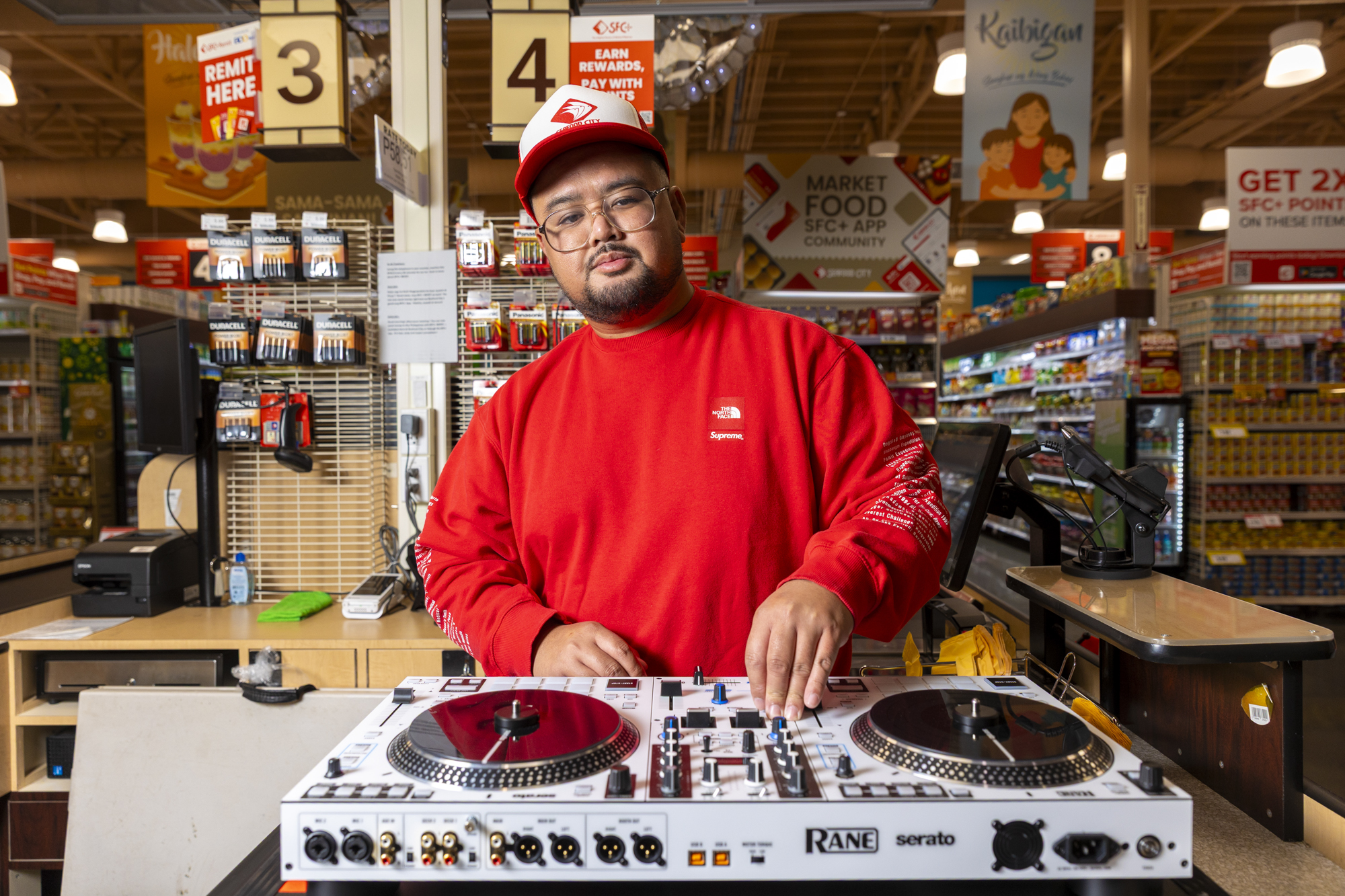
He began recording his more low-key live sets and posting them online. “Honestly speaking, I was being petty to the DJ community, saying [the scene] is oversaturated and that there’s nowhere to play. And I’m the type of person to go, ‘Well, have you played under a tree or on top of a rock?’”
In July, someone commented on one of those videos, “You should do this at Seafood City.” Breganza thought it was a dumb idea — but also exactly the kind of thing he was willing to try. Of course, every Filipino kid growing up in the States has memories of buying groceries at Seafood City, which has been a staple in Filipino American enclaves, especially in California, since the late ’80s. It was usually out of necessity, though, and not recreational. Still, Breganza reposted the comment, tagging Jollibee, Island Pacific Supermarket and Seafood City. Seafood City bit first, and the rest was history: Five hours later, they’d booked him for the series of night market events they were about to promote.
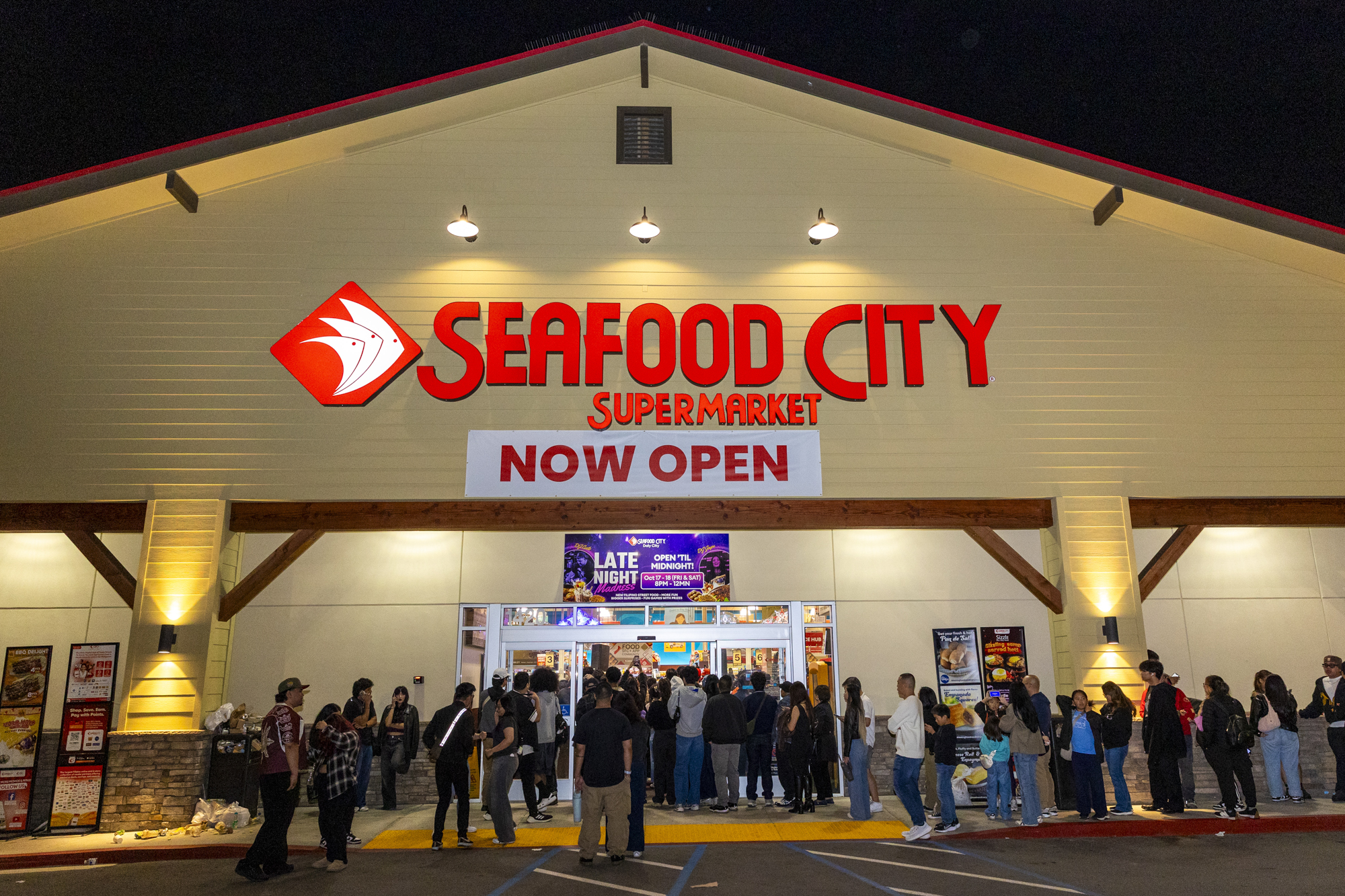
But at its core, the Seafood City dance party craze that Breganza started isn’t just about DJing in an unusual location. Growing up in the Bay Area’s Filipino American community, he says Daly City always had a special place in his heart. It’s the place he associates with the huge Filipino family parties where he watched his aunties and cousins and grandparents interact. “Whenever I went to Daly City, I always knew it was gonna be a big party. I had no idea who was going to be there,” he remembers. “I’m going to see all the aunties and uncles that I still don’t know their names because there’s so many of them. That’s also where I meet all the kids. I was absorbing it all.”
As the youngest among his family friends, Breganza was used to peeking in during these house parties and seeing people learn how to play a video game or set up turntables for a dance in the garage. That was exactly the type of intergenerational atmosphere he wanted to recreate at Seafood City. After all those treks between Vallejo and Daly City when he was growing up, it made sense for his set to pay homage to what he calls a “home that once was.”It wasn’t until the day of the first gig that Breganza learned that Seafood City would be shutting down two checkstands, and that he would actually be spinning inside of the store during store hours. That setup changed everything. “I brought the loudest speakers, just to make sure I filled up the whole store,” he says, explaining how he brought his own equipment for the two-hour drive from Rancho Cordova, where he now lives. “The most important part for me was also for the employees to experience it, because they’re not built for the nightlife and they need the music. I’m giving them a piece of home.”
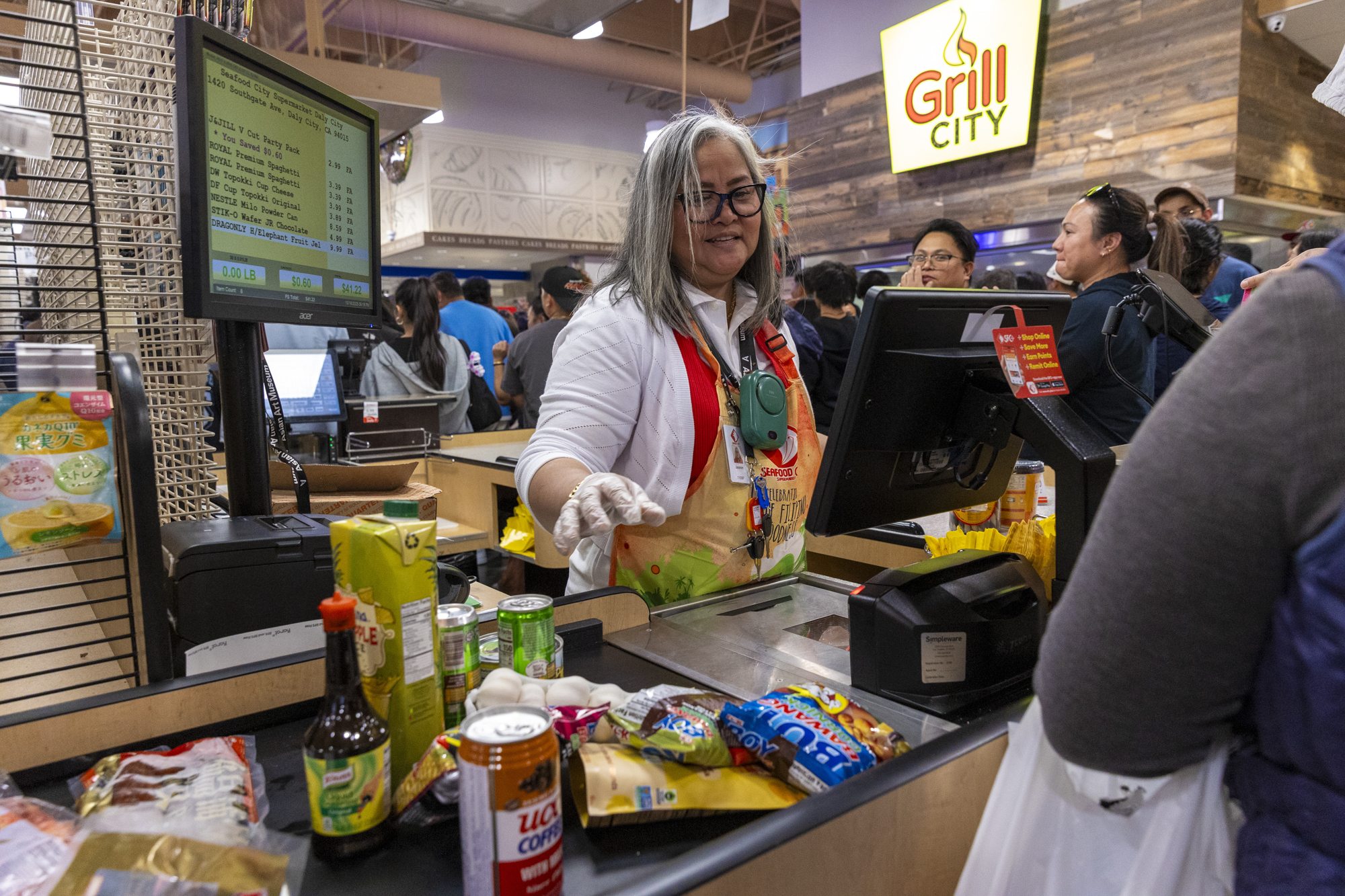
For other Filipino Americans who came out to the Seafood City parties after they’d turned into a full-blown phenomenon, the supermarket blowouts felt like more than just another store promotion. On the night I visited, DJ Illyst from San José was one of the DJs on deck, and she had, of course, never spun at a grocery store during the year and a half that she’d been DJing professionally. “It feels like a family party. Doing all the line dances, the singalongs — there’s way more energy than going to the club,” she says.
Meanwhile, Steph Balon, executive director of the nonprofit Kapwa Kultural Center & Café, was there in the crowd with her nine-year-old son, Koa, for the second night in a row. The previous night, when DJ Cutso was on the turntables, Koa had felt the spirit of the song so intensely that “before I knew it, he was gone,” Balon recalls. Eventually, she found him on top of the checkstand, dancing his heart out for the cheering crowd. It made Balon think about her own childhood growing up between San Ramon and the Peninsula. She remembers how at family parties, everyone would dance in a circle, egged on by their aunts and uncles. Now, her son was getting to partake in the same coming-of-age ritual. Only it was on a larger scale — and at the grocery store of all places.
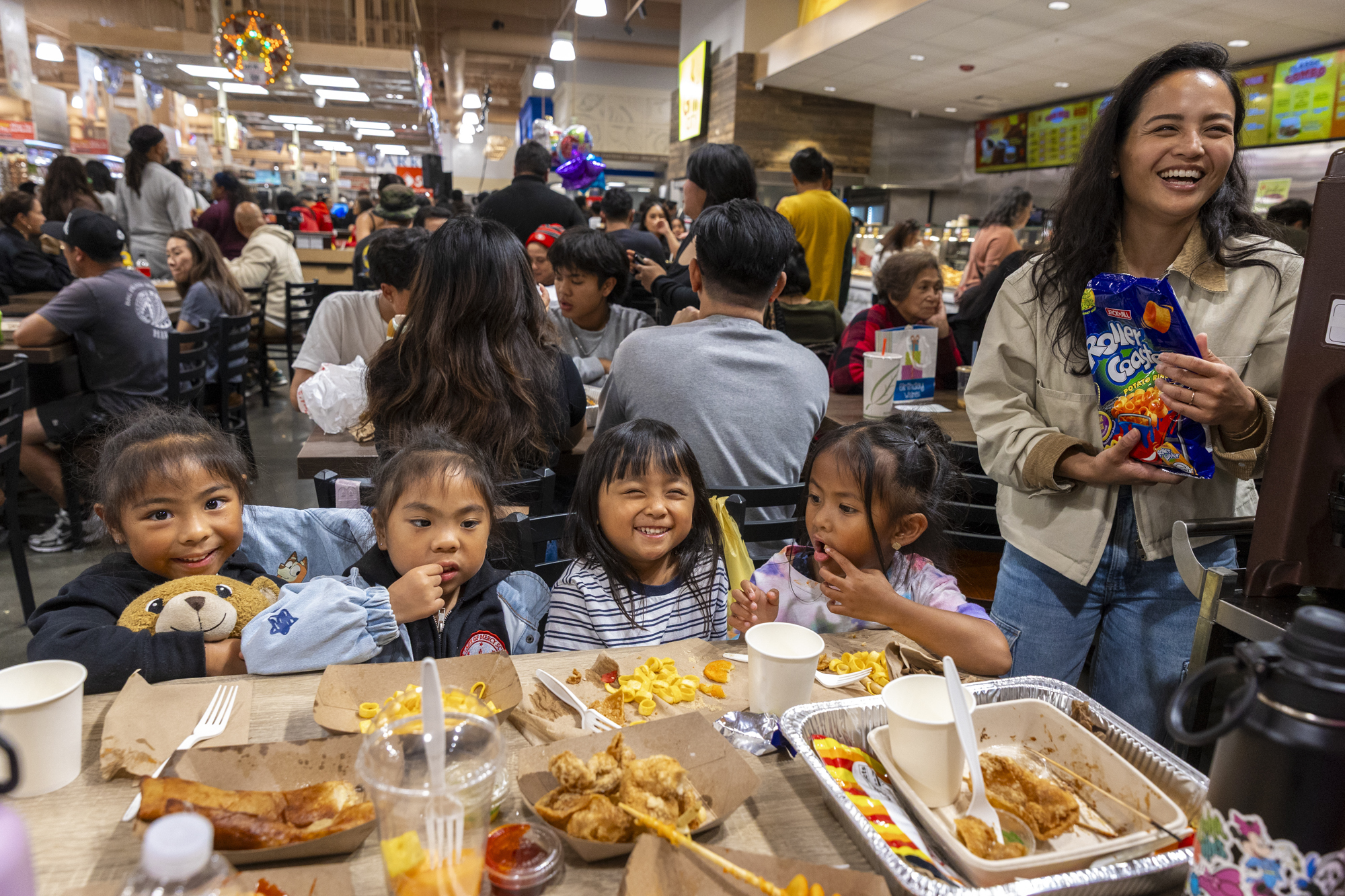
Now that the events’ popularity has spread all the way to L.A., Las Vegas and Houston, with flashier, more famous DJs, I ask Breganza whether he minds that Seafood City has taken his “dumb idea” and run with it. But Breganza says, “It was never about [claiming] it’s my terrain.” He’s just happy that the idea to spin a set in every Filipino enclave has taken off — with or without him.
“I want to work on a project where I can curate regional sound amongst the Filipino community,” he says of his ultimate goal. “What if the Houston DJs were playing chopped-and-screwed versions of OPM, or Chicago was playing house versions?”
For now, he’s focusing on the Bay Area, and instilling a sense of Filipino pride along with that early ’90s family party nostalgia. Starting with these Daly City supermarket gigs, he’s already done just that, turning a “dumb idea” into a brilliant marketing partnership — and also something much deeper. Whether it’s creating that perfect love ballad mashup for his set or grabbing the mic to entertain shoppers and workers alike, Breganza doesn’t want the important stuff to get lost in the virality of the moment, or competition between different Seafood City locations.
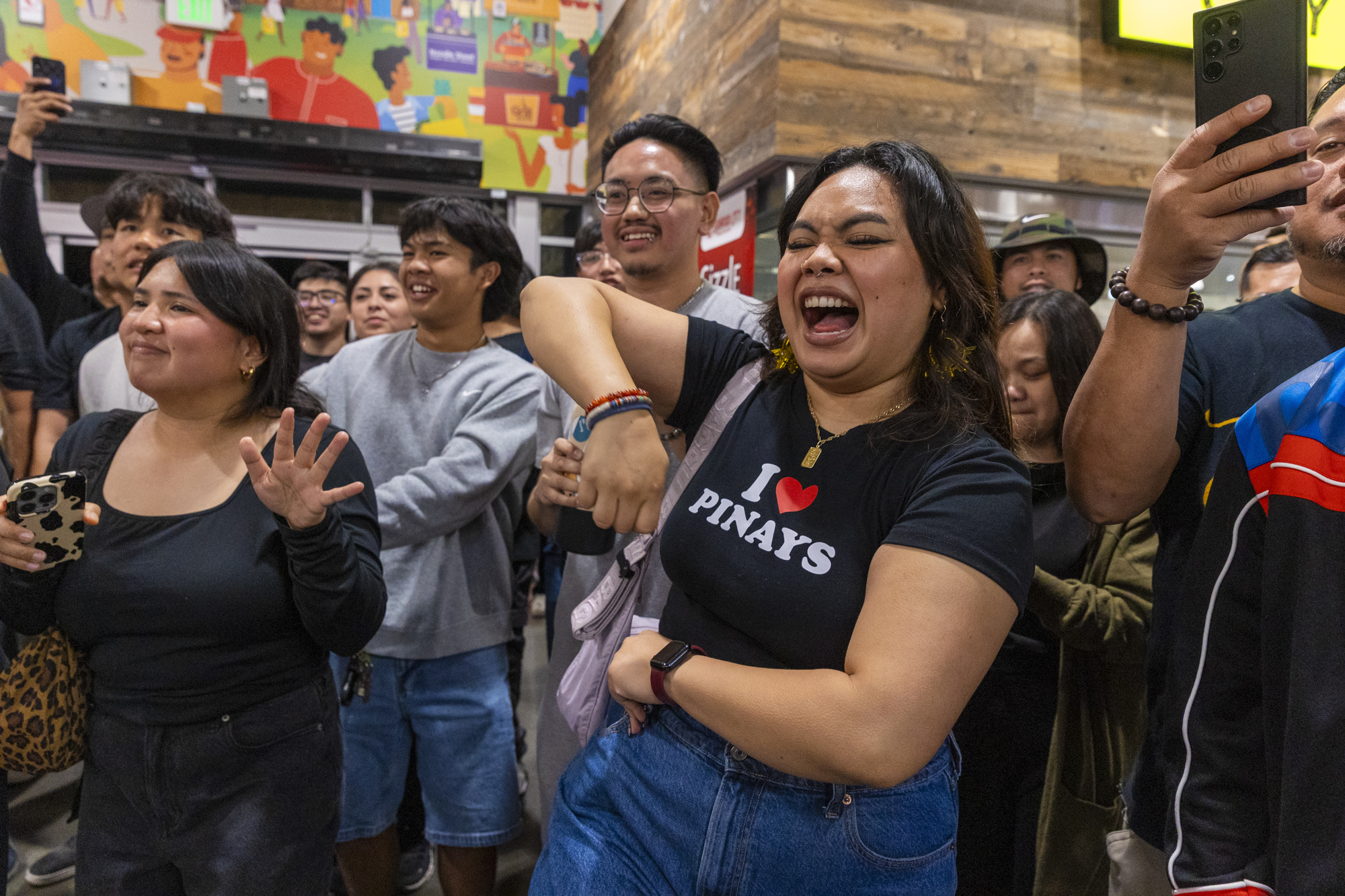
As SF Kollective co-founder Dean Urriza recently pointed out on Instagram: “This is and always will be about community, and showing up for each other, not showing out.”
What Breganza hopes to provide, then, is that missing piece — that feeling of being among family, even with people you’ve never met. On the night I came out to Seafood City, I’d brought four cousins with me. We all grew up in Daly City when our Lola and Lolo immigrated from the Philippines in the mid-’80s. For us, the party was a chance to relive childhood memories one Filipino love ballad at a time — in true Filipino tradition, with plenty of delicious food to share with our neighbors and friends.